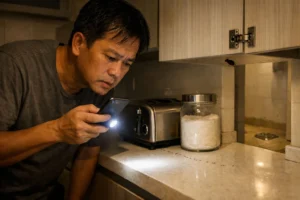
The Real Reason You Feel So Exhausted in Your HDB Every Weekend
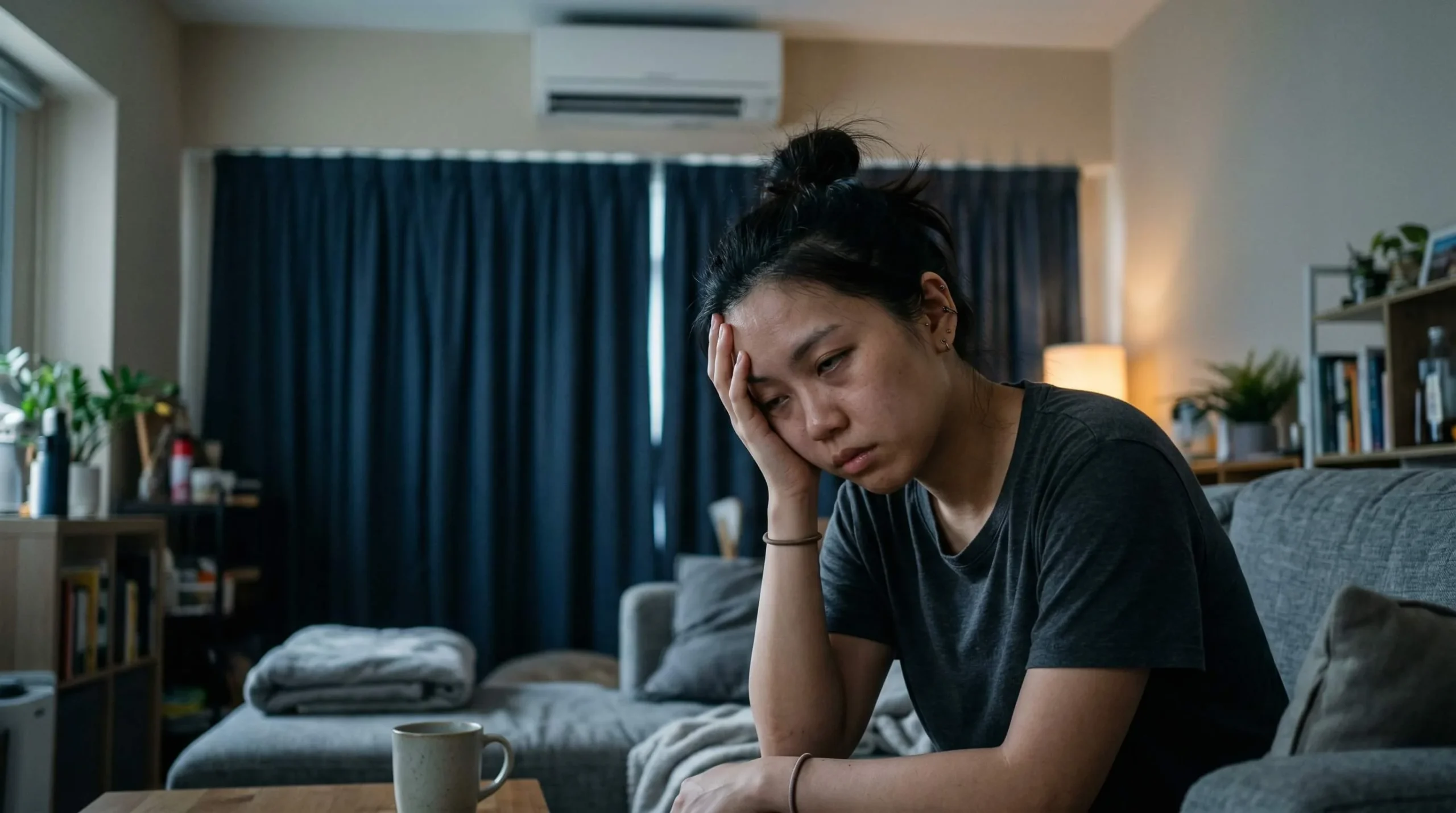

The intense lethargy you feel after spending a few hours inside your apartment is a measurable physiological reaction to a stagnant environment. By sealing our windows to blast the air-conditioning, we create localized spikes in carbon dioxide (CO2) that directly impair cognitive function and trigger severe brain fog. Combine this oxygen deficit with the thermal shock of overcooling, a lack of natural sunlight disrupting your circadian rhythm, and the heavy burden of trapped ambient moisture, and your home effectively functions as an exhaustion machine.
You wake up on a Saturday morning with zero plans. You decide to stay in. You lounge on the sofa, scroll through your phone, and maybe watch a few hours of streaming video. You haven’t run a marathon. You haven’t even walked down to the MRT station.
Yet, by 2 PM, gravity feels dialled up to eleven. Your eyelids are heavy. Your brain feels like it is operating through a thick layer of cotton wool.
This is the very specific, highly pervasive reality of indoor fatigue Singapore residents battle every single weekend. We instinctively blame ourselves. We assume we are just being lazy or that we didn’t drink enough coffee. The reality is far more clinical. The architecture of modern urban living, combined with our desperate attempts to engineer a cold micro-climate inside our flats, creates an atmospheric cocktail that actively suppresses human energy production.
Understanding why you feel more tired indoors in Singapore requires looking at your apartment not as a shelter, but as a sealed biological containment zone.
The Invisible Gas Chamber: CO2 Accumulation
The primary culprit behind your sudden drop in energy is invisible, odorless, and entirely self-generated.
To escape the relentless tropical heat, the standard local reflex is to slam all the windows shut and turn on the split-unit air-conditioner. We treat our homes like submarines. But standard residential air-conditioning units do not pull fresh air from the outside. They merely recirculate and chill the existing air inside the room.
Every time you exhale, you release carbon dioxide. In a sealed HDB bedroom or a small condo living room, CO2 levels spike dramatically faster than most people realize. Outdoor atmospheric CO2 sits at roughly 400 parts per million (ppm). When you shut the door of a standard bedroom with the AC running, the CO2 concentration can easily cross 1000 ppm within just two hours.
At 1000 ppm, cognitive function begins to demonstrably decline. You experience brain fog indoors. At 1500 ppm, which is incredibly common in poorly ventilated flats during the night, physical lethargy sets in. This stale air indoors is literally suffocating your cells at a microscopic level. Your body responds to the lower ratio of oxygen by slowing down your metabolic rate, forcing you into a state of deep indoor tiredness Singapore dwellers often mistake for simple boredom.
The Thermal Shock of the Icebox
Then there is the issue of temperature imbalance. We do not just cool our homes; we over-chill them.
Setting the thermostat to 19 degrees while wearing shorts and a t-shirt forces your body into a constant state of thermal defense. Your cardiovascular system has to work aggressively to maintain a core temperature of 37 degrees Celsius against the artificial winter you have created. This involves vasoconstriction—the narrowing of blood vessels near the skin to prevent heat loss.
This internal battle burns a massive amount of metabolic energy in the background. It is the exact same physiological stressor that feeds into the broader afternoon fatigue singapore causes for office workers, simply relocated to your living room. When you constantly transition from the hot kitchen to the freezing bedroom, you subject your nervous system to repeated thermal shocks. This phenomenon is closely related to the biological confusion that causes sticky skin after shower singapore bathrooms produce, where sudden temperature shifts wreck the body’s ability to efficiently regulate its own cooling mechanisms.
You are burning out your nervous system just sitting on the couch.
The Moisture Blanket and Ambient Decay
Air-conditioning removes some moisture, but it often operates on a thermostat that cuts the compressor off once the target temperature is reached, leaving the fan running. This pulls the condensation right back into the room.
If you try to save money by using a fan with the windows slightly open, you invite the crushing weight of tropical humidity indoors. The heavy, moisture-laden air acts as a physical blanket. High humidity energy levels are notoriously low because the body’s primary method of offloading slight ambient heat—insensible perspiration—fails completely.
The environment becomes stagnant. The very same trapped, heavy moisture that forces you to frantically search for a solution to a musty laundry smell singapore flats suffer from during indoor drying is also coating your skin. It is suffocating. This lack of proper air circulation home environments desperately need accelerates the breakdown of everything organic and synthetic within the four walls.
It is a holistic decay. The exact same stagnant, humid atmospheric conditions that dictate why trash smells faster singapore kitchens deal with are actively breaking down the polymer chains in your household goods. It is the exact reason you suddenly find yourself having to fix sticky plastic singapore humidity destroys in your dark, unventilated storage drawers. If the air is heavy enough to melt the rubber coating off a television remote, imagine what it is doing to your respiratory system.
Circadian Disruption and Sensory Deprivation
Human biology is ancient. It relies on extremely specific environmental cues to regulate hormones.
When you spend an entire day inside with the curtains drawn to block out the harsh glare of the sun, you are plunging your brain into a state of sensory deprivation. The lack of intense, broad-spectrum natural light suppresses the production of cortisol (the hormone that wakes you up) and prematurely triggers the release of melatonin (the hormone that puts you to sleep).
Your brain quite literally thinks you are existing inside a cave. This circadian rhythm disruption is a massive driver of low energy afternoon Singapore residents feel when working from home. You feel sleepy in aircon rooms Singapore style not just because it is cold, but because the lighting tells your biology that the day is over.
Furthermore, the sedentary lifestyle fatigue compounds this issue entirely. Moving from the bed to the desk to the sofa requires zero physical exertion. Without the kinetic trigger of elevated heart rates from simply walking around an outdoor environment, your body begins to downregulate energy production. It conserves fuel because the environment demands absolutely nothing of it.
The Nighttime Sabotage
The exhaustion loop doesn’t even stop when you finally go to sleep.
If you haven’t managed the ambient environment correctly, your recovery is ruined. Many people wake up in the middle of the night wondering why bedsheets feel damp singapore weather creates, completely unaware that their mattress is acting as a massive sponge for the trapped indoor humidity. Your body spends the entire night fighting this clammy, uncomfortable micro-climate, preventing your brain from dropping into the deep, restorative delta-wave sleep phases.
You wake up having spent eight hours in bed, but biologically, you have achieved zero actual recovery. You start the next day already deep in an energy deficit, guaranteeing the indoor fatigue Singapore cycle continues the moment you sit back down on the sofa.
Hacking the Indoor Environment
Breaking this cycle requires treating your apartment like an atmospheric system that needs active management.
Stop relying purely on closed-loop air-conditioning. You must introduce fresh oxygen. Even if it is hot outside, cracking a window at the opposite ends of the flat for just fifteen minutes creates a cross-breeze that flushes the accumulated CO2 out of the living space. Doing this once in the morning and once in the late afternoon drastically resets the oxygen ratio and instantly lifts the heavy brain fog.
Manage the cooling smartly. Instead of setting the AC to 19 degrees, set it to 25 degrees and use a standing fan to circulate the cooled air. This prevents the severe thermal shock that exhausts your cardiovascular system while still keeping you comfortable. Utilize the ‘Dry Mode’ on your remote to force the compressor to aggressively extract ambient water vapor without turning the room into an icebox.
Pull the curtains all the way back. Let the natural, harsh tropical daylight flood the room for at least a few hours. The visual exposure to natural lumens halts melatonin production and signals to your endocrine system that it is time to be alert.
✅ Do This
- Implement a “15-minute flush” twice a day by opening all windows and doors to push stagnant CO2 out of the flat.
- Set your air-conditioner to a reasonable 25°C and pair it with a fan to maintain comfort without causing metabolic thermal shock.
- Expose your eyes to bright, natural daylight immediately upon waking up to properly anchor your circadian rhythm.
- Stand up and stretch or walk around the flat every 45 minutes to break the biological signal of a purely sedentary state.
- Use a standalone dehumidifier in rooms where you spend the most time to strip the heavy, exhausting moisture out of the air.
❌ Avoid This
- Do not sit in a closed, sealed bedroom with the AC running all day; the CO2 buildup will guarantee severe cognitive lethargy.
- Do not keep thick blackout curtains drawn during daylight hours; the darkness tricks your brain into producing sleep hormones.
- Do not assume a standing fan is fixing the air quality; it only moves the same stale, oxygen-depleted air around the room.
- Do not ignore the physical weight of indoor humidity; treating the air temperature while ignoring the water vapor will leave you feeling sluggish.
Feeling exhausted inside your own home is not a character flaw. It is the direct result of living in a sealed, artificial environment that lacks the basic atmospheric components your biology requires to generate energy. Open a window, strip the moisture from the air, and let the light in. Your body will immediately respond to the change in the atmosphere.

Kun Kerssa | Urban Life & Environment Analyst
Kun dissects the mechanics of daily life in Singapore. They translate dense environmental and physiological data into the actual reality of existing inside a sealed HDB flat.
Expertise here is drawn directly from continuous on-the-ground analysis of local residential habits, stripping away the sterile language of lab reports to explain why your living room physically exhausts you.
Frequently Asked Questions
Official Context & Health Resources
For more official guidelines on managing indoor air quality, recognizing the symptoms of physical fatigue, and optimizing home ventilation, consult the following local resources: