
Why Doing Absolutely Nothing All Weekend Actually Leaves You Exhausted


Feeling entirely depleted after a day of zero physical exertion is not a psychological illusion; it is a rapid biological shutdown. When you remain horizontal for hours, your cardiovascular system drops into a low-power conservation mode, significantly reducing the volume of oxygen-rich blood reaching your brain. This lack of circulation, combined with the shallow breathing of a sedentary posture and the mental boredom of under-stimulation, creates a profound state of lethargy. You are not resting. You are actively suffocating your own metabolic engine.
You planned this. A whole Sunday of absolute, uncompromising zero.
No alarms. No corporate emails. You didn’t have to perform the silent, awkward dance outlined in any singapore elevator etiquette guide this morning. You didn’t waste forty minutes utilizing the singapore queue culture guide reading lines like a local just to buy a flat white. You successfully avoided the outside world entirely.
You sink into the sofa, scroll your feeds, ignore your messages, and wait for the deep relaxation to kick in.
By 4 PM, your limbs weigh fifty kilos each. Your brain is a bowl of lukewarm porridge. You feel like you have been hit by a truck. The paradox of being tired after literally doing nothing all day is deeply frustrating because it feels like a betrayal. You gave your body the ultimate gift of rest, and it responded by shutting down completely.
It is a biological rebellion.
The Cardiovascular Hibernation
Your body hates a vacuum. It operates on a brutal “use it or lose it” principle regarding energy allocation.
When you ask why inactivity makes you tired, you have to look at your blood. The human cardiovascular system relies on muscle contractions to pump blood efficiently back to the heart and up to the brain. When you lie horizontally watching Netflix for six hours, your muscles are dormant. Your heart rate plummets.
This low metabolism activity state signals to your central nervous system that you are preparing for a long period of hibernation.
The blood circulation low activity triggers means less oxygen is delivered to your prefrontal cortex. You begin to experience shallow breathing simply because your body doesn’t need to pull in extra oxygen to feed moving muscles. This slow, steady oxygen deprivation acts like a biological dimmer switch. The lights go down. The brain fog rolls in. You end up feeling completely tired after basically doing nothing because your body has literally powered down its energy production lines.
The Digital Drain and Stagnant Air
Absolute rest is rarely actual rest. It is usually just digital paralysis.
You aren’t meditating on a mountaintop. You are lying in an awkward posture, doomscrolling through short-form video content until you actively start wondering why phone makes hands hot because the glass is burning your palm. Your physical body is dormant, but your brain is being bombarded with cheap, high-frequency dopamine hits.
This creates severe mental boredom fatigue. The constant, shallow stimulation exhausts your attention span without providing any genuine cognitive engagement.
Then there is the physical environment.
You are marinating in your own stagnant indoor air. When you seal the windows and refuse to leave the flat, the indoor air quality decays. You start noticing the heavy atmospheric reality of the apartment—wondering why cooking smell lingers hdb singapore flats so aggressively, or trying to ignore the faint, sour reality of smelly kitchen cabinets singapore humidity constantly creates in closed spaces. Breathing in stagnant, unventilated air rich in CO2 and stale VOCs drastically accelerates the lazy day fatigue. Your environment is quite literally putting you to sleep.
Expert Insight / Exercise Physiology
“The profound lethargy associated with a sedentary lifestyle is often misdiagnosed by individuals as a need for more sleep. It is the opposite. When an individual engages in zero kinetic movement, the mitochondria—the cellular powerhouses responsible for generating ATP (energy)—downregulate their production. The body perceives no demand for energy, so it stops manufacturing it. Furthermore, extreme inactivity leads to ‘venous pooling’ in the lower extremities, reducing cerebral blood flow. To break this exhaustion cycle, the individual must manufacture artificial demand through immediate, brisk physical movement.”
The Circadian Sabotage
Your internal clock punishes you for staying indoors.
Humans require distinct contrast to regulate energy. We need bright, harsh sunlight during the day to suppress melatonin, and dark, quiet environments at night to release it. When you spend the entire day indoors with the curtains drawn, existing in a dim, temperature-controlled box, you destroy that contrast.
Your brain loses track of time.
This extreme daytime inactivity guarantees your circadian rhythm will violently misfire later. It leads directly to the exact scenario where you are wide alert at night singapore style, staring at the ceiling at 2 AM with a sudden burst of anxiety, precisely because you spent your daytime energy budget doing absolutely zero. You were asleep while awake, so now you are awake while you should be asleep.
The Momentum Trap
Physics dictates that an object at rest stays at rest.
The longer you do nothing, the harder it becomes to do anything. This mental resistance inactivity breeds is powerful. You tell yourself you will get up in five minutes. Five minutes becomes two hours. The lack of purpose tiredness sets in, making the simple act of walking to the kitchen to pour a glass of water feel like an insurmountable physical challenge.
You have to break the friction.
You cannot wait for motivation to strike. Motivation is a byproduct of action, not the prerequisite for it. If you want to figure out how to increase energy when inactive, you have to force the cardiovascular system to wake up.
✅ Do This
- Implement the “Vertical Rule.” For every two hours of lounging on the sofa, you must stand vertically and walk around the flat for ten minutes to force venous blood back up to your heart.
- Open the windows wide for at least twenty minutes in the morning. Flushing out the accumulated CO2 and stale indoor air instantly sharpens cognitive alertness.
- Take a cold shower mid-afternoon. The sudden thermal shock triggers an immediate release of adrenaline and noradrenaline, instantly wiping out the brain fog of a lazy day.
❌ Avoid This
- Do not try to cure the “couch coma” with a massive cup of coffee at 4 PM. You will not generate kinetic energy; you will just create anxious, jittery lethargy and ruin your night’s sleep.
- Do not equate resting your body with paralyzing your mind. You can rest your muscles while still reading a challenging book to keep your cognitive engagement high.
- Do not stay in the exact same room all day. The lack of visual novelty contributes heavily to psychological fatigue and the feeling that the day has simply evaporated.
True recovery is active, not passive. Lying perfectly still in a dark room is how you recover from the flu, not how you recover from a busy workweek. The next time you find yourself tired after doing nothing, recognize the trap. Your body doesn’t need more rest. It needs oxygen. Stand up.

Ege Sg | Senior Observer & Lifestyle Editor
Ege specializes in human-centered stories and on-the-ground observations of everyday life in Singapore. With years of experience covering local trends—from HDB living dynamics to Kopitiam culture—Ege bridges the gap between urban changes and everyday human experiences.
Frequently Asked Questions
Official Context & Lifestyle Health Resources
To understand the official medical consensus on the dangers of a sedentary lifestyle and how to manage daily energy regulation, consult the following local health authorities:
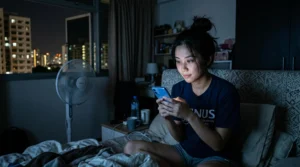



[…] to have the time to meal prep, the motivation is zero. You lie on the bed feeling strangely tired after doing nothing, completely paralyzed by the lack of kinetic momentum. Instead of cooking, you wander downstairs. […]