Singapore HDB Storage Guide: Fix Wardrobe & Shoe Odours

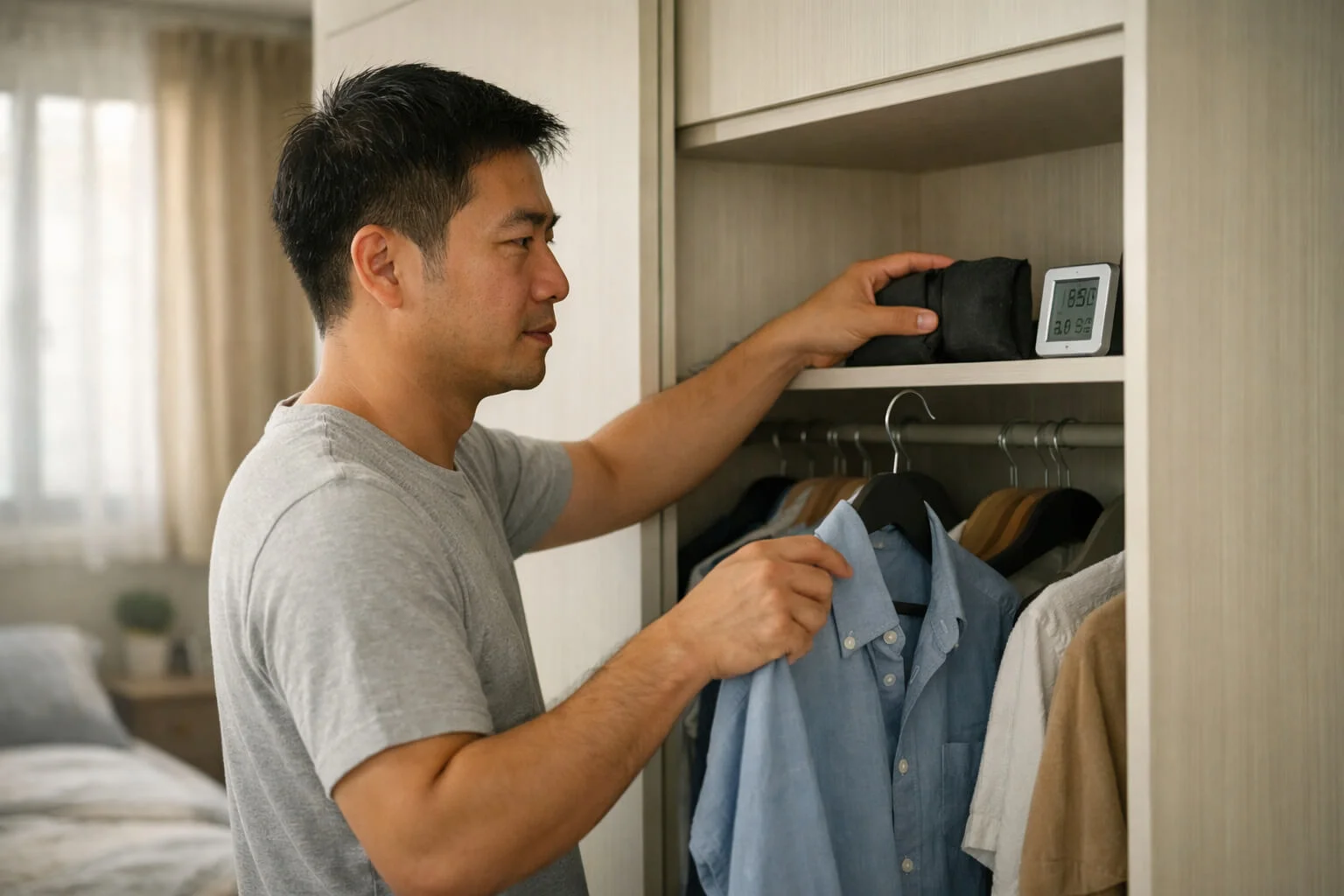

You spent thousands on custom built-in cabinets. You organized everything perfectly. But every time you open a door, you’re hit with that heavy, sour, “old book” scent. In Singapore, storage isn’t just about space; it’s a battle against the invisible weight of humidity.
HDB Freshness: The 30-Second Summary
- The Culprit: 90% humidity + zero airflow = “Old Book” scent.
- Wardrobe Fix: Use the “One-finger gap” rule; never pack clothes tight.
- Shoe Cabinet: Air out shoes for 12 hours before keeping. Don’t ganchiong!
- Must-Have: Charcoal bags are better for odors than “Thirsty Hippo” (which only traps water).
- Daily Habit: Open all cabinet doors for 15 mins while the fan is on.
The Singapore Storage Reality: You Can Clean It — But the Smell Returns
💡 Quick “BTO” Tip: Most of us living in newer HDB flats realize our built-in wardrobes are confirm plus chop moisture traps because of the concrete walls. If your unit is facing the morning sun, open those doors wide at 8 AM!
It’s Monday morning. You’re already running late for work. You swing open your wardrobe to grab your favorite white shirt, and there it is. A punch of stale, damp air. The shirt feels slightly clammy to the touch. It doesn’t look dirty, but it smells… off.
Small Singapore reality: When you’re rushing between work, MRT, and quick meals outside, it’s easy to neglect the tiny home habits that keep a flat fresh. If you’re doing more “dabao” and hawker meals lately, here’s a handy local read too: Hawker Centre Etiquette in Singapore.
This is the wardrobe musty smell Singapore residents know all too well. We live in a 90% humidity zone. When you take that moisture and trap it inside a dark, wooden box with no airflow, you aren’t just storing clothes; you’re managing a greenhouse for odors. This Singapore HDB storage guide isn’t about buying more plastic boxes. It’s about understanding why your storage is holding onto smells and how to break the cycle.
The 3 Reasons Everything Smells Musty (Plain English)
1. Trapped moisture (The Airflow Void): This is the big one. Most HDB wardrobes are built flush against the wall. There is no gap for air. Once moisture gets in (from the air or a slightly damp towel), it stays there forever.
2. Absorbed odors: Fabric, leather, and rubber are sponges. They don’t just sit there; they drink the humidity. If your shoe rack smell Singapore is getting out of hand, it’s because the rubber soles are absorbing the moisture from the air and the sweat from your feet.
3. The “Warm + Dark + Crowded” Combo: Bacteria and mold love three things: darkness, heat, and a lack of movement. If your cupboard is so full that you have to shove things in, you’ve created the perfect breeding ground.
The Wardrobe Problem (Clothes, Bags, Uniforms)
How to stop wardrobe smelling musty in Singapore starts with how you hang things.
Hangers vs Folded Stacks
Air is a part of storage. If you stack 15 t-shirts in a tight pile, the ones at the bottom will smell musty within a week. Hanging clothes allows air to circulate between the fabrics. Use the “one-finger gap” rule—if you can’t slide a finger between your hangers, the wardrobe is too full.
The “Just Spray Perfume” Mistake
Never spray perfume or room fragrance directly into a musty wardrobe. You aren’t removing the smell; you are just layering “Floral Scent” over “Damp Mold.” The result is a sickly, sour smell that is even harder to remove.
Shoe Racks & Shoe Cabinets (The Strongest Smell Zone)
The HDB shoe cabinet odor is a unique beast. It’s a mix of street grime, moisture, and enclosed space.
Don’t Be So Ganchiong! (Don’t Rush)
Putting your sweaty running shoes directly into the cabinet after a jog at East Coast Park is asking for trouble.
Pro-Tip: Buy those cheap charcoal bags from Daiso or Japan Home. Throw one inside each shoe. Settle liao!
The “Bomb Shelter” Mystery Smell
Most of us use our HDB household shelter as a storeroom. Because it’s a sealed room with a heavy steel door, it’s the #1 spot for mold.
⚠️ Avoid this: Storing empty cardboard boxes (from your Shopee/Lazada hauls) in the shelter. Cardboard is like “food” for silverfish and mold in Singapore’s heat. Use plastic bins or metal racks instead!
The “One Night” Mistake
The #1 cause of why shoe racks smell in humid weather? Putting shoes away immediately after wearing them. Your feet sweat. Even if it didn’t rain, the inside of your shoe is damp. If you put them in a closed cabinet immediately, you are sealing that moisture in. Simple shoe rotation habits: Leave your shoes on a mat outside the cabinet overnight to “air out” before storing them.
Kitchen Cabinets (Hidden Grease + Moisture Combo)
Kitchen cabinet smell Singapore homes suffer from is often a mix of old cooking oil and dampness.
Under-sink cabinet (The silent disaster zone)
This is where the most musty smell in cupboard Singapore issues begin. It’s dark, near pipes, and usually holds sponges or cleaning rags. If your kitchen cabinet smells like old oil and damp, check for small leaks in the P-trap. Even a tiny “sweating” pipe can keep the wood damp enough to rot and smell.
The “Thirsty Hippo” Rule
In Singapore, if you don’t see a pink or blue dehumidifier box under your sink, is it even a Singaporean kitchen? Check the water level: If it’s half-full, its absorption power drops by 40%. Don’t wait until it’s full to change!
A Weekly 20-Minute Routine That Keeps Storage Fresh
Why routines work: Musty smells create low-level irritation that quietly affects mood—especially when you’re already stretched thin. If you’ve noticed small daily annoyances piling up, this explains the “micro-stress” effect in Singapore life: Singapore Micro-Stress and Mood.
Best weekly routine to prevent musty smells in cabinets:
- Weekday Habit: Leave your wardrobe and kitchen cabinet doors open for 15 minutes while you have the fan or aircon on. Let the trapped air cycle out.
- Weekend Reset: Do a “sniff test” in the corners. If a corner smells damp, wipe it with a dry microfiber cloth and place a thirsty-hippo style moisture absorber there.
- Rainy Week Adjustment: During the monsoon, the risk of preventing mold in wardrobes Singapore increases. Turn on your aircon’s “Dry Mode” for two hours to suck the moisture out of the entire room, including the inside of the cabinets.
Small Space Storage That Doesn’t Create Smells
In a small space storage HDB, every inch counts. But don’t over-pack.
Containers vs Breathable Storage: For off-season items (like winter jackets for travel), use vacuum-sealed bags. For everyday items, avoid plastic boxes. Use fabric bins or wire baskets that allow air to reach the items. How to keep clothes fresh in small HDB rooms? Use charcoal bags. They are natural, reusable, and much better at absorbing odors than scented sachets.
Identifying the source is half the battle. Use this map to check your flat.
| Zone | Primary Risk | Quick Fix |
|---|---|---|
| Master Wardrobe | Wall condensation. | Keep a 2cm gap from the back wall. |
| Entrance Shoe Rack | Trapped foot moisture. | Air out shoes for 12 hours before storing. |
| Under-Sink Cabinet | Pipe humidity. | Use a moisture absorber pot (replace monthly). |
| Bomb Shelter | Stagnant air. | Keep door ajar when home to circulate air. |
Quick Checklist (Save This)
✅ Do This
- Leave wardrobe doors open for 15 mins daily to let air circulate.
- Use charcoal bags or silica gel to absorb odors naturally.
- Wipe the inside of cabinets with a dry cloth if they feel “cool” or damp.
- Hang bags and shoes with enough space between them (no touching!).
- Rotate your shoes—avoid wearing the same pair two days in a row.
- Stuff leather bags with plain paper to maintain shape and absorb moisture.
- Clean your kitchen cabinet hinges (grease traps smell there).
- Check the “Thirsty Hippo” pots monthly—if they’re full of water, they’re useless.
- Install louvered doors (slotted doors) for shoe cabinets for natural venting.
- Wash your “reusable” grocery bags; they are major smell carriers in the pantry.
❌ Avoid This
- Do not put away clothes that are even 5% damp from the laundry.
- Do not store dirty shoes directly in a closed cabinet.
- Do not use heavy perfumes to “hide” a musty cupboard smell.
- Do not pack your wardrobe so tight that the doors struggle to close.
- Do not store open food packets in the same cabinet as your pots and pans.
- Do not ignore a “wet earth” smell—it usually means mold is starting.
- Do not put moisture absorbers near the door; they’ll just try to “dehumidify” the whole room.
- Do not use plastic covers for long-term suit storage (use breathable fabric covers).
- Do not store cardboard boxes in the bomb shelter (they attract pests and moisture).
- Do not wait for a sunny day to fix a smell—humidity works 24/7.
Official Context
For persistent issues like how to prevent mold in wardrobe corners Singapore often sees, ensure your room’s relative humidity stays below 60%. You can monitor this with a cheap hygrometer. If you suspect structural water seepage, consult your HDB Town Council or building management for an inspection.
Extra context: Storage and ventilation problems can feel different in older HDB estates (layout, airflow, corridors, and daily rhythms). If you’ve ever wondered why older neighbourhoods feel “slower” or more breathable, this is a thoughtful read: Why Daily Life Feels Slower in Older HDB Neighbourhoods.
🕰️ One Small Moment
“I had this one leather jacket I kept in the back of my built-in wardrobe for two years. When I finally pulled it out for a trip to Japan, it was covered in white fuzz. I realized I had pushed it so far back that it was touching the external concrete wall. The wall was ‘sweating’ in the heat, and the jacket was drinking it. I lost the jacket, but I learned a lesson: Never let your favorite things touch the back of the cabinet.”
What’s your secret weapon against HDB mold?
Are you team Charcoal Bags or team Thirsty Hippo? Or maybe you have a Grandma’s secret hack involving dried tea leaves? Let us know in the comments below! 👇