Don’t Throw Away That Sticky Remote! The Real Reason Singapore’s Weather Ruins Plastic
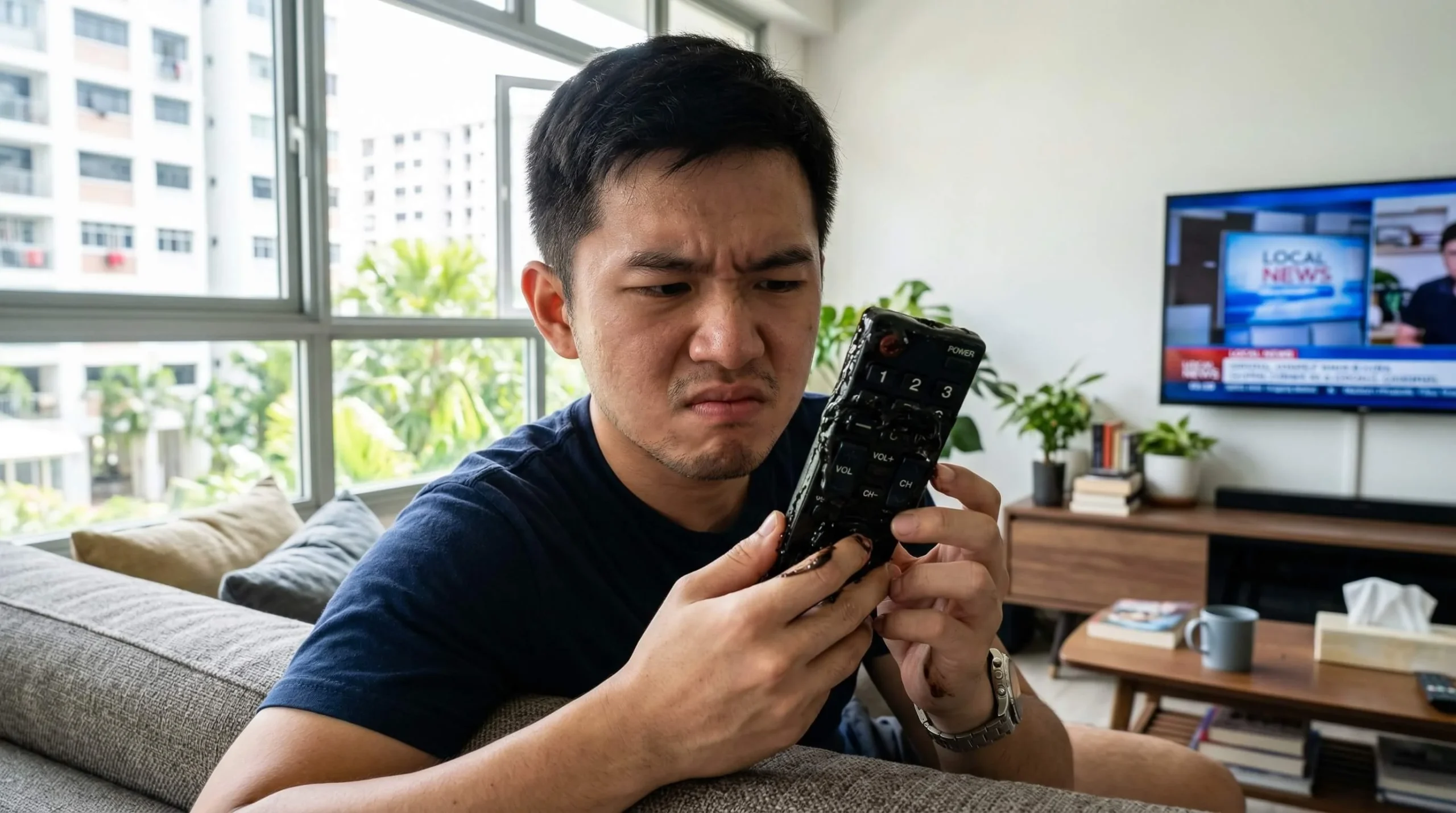

The phenomenon of sticky plastic Singapore residents constantly discover on old remote controls, umbrella handles, and camera grips is a chemical reaction, not dirt. High heat and extreme atmospheric moisture cause a process called hydrolysis, which breaks down the polyurethane rubber coatings and forces “plasticizers” to migrate to the surface. You cannot simply wash this goo off with soap and water. Restoring the item requires a strong solvent like isopropyl alcohol to strip the degraded layer completely, leaving the hard, bare plastic underneath.
You open a drawer you haven’t touched in six months. You reach in to grab an old video game controller, a high-end camera, or a travel umbrella. The moment your fingers wrap around the handle, you recoil. The surface feels like it has been dipped in warm maple syrup. Dust and hair are hopelessly fused to it.
You try to wipe it down with a wet cloth, but the water just smears the goo around. The item is ruined.
This intensely frustrating scenario is a universal tax on living one degree north of the equator. The issue of sticky plastic Singapore weather seemingly generates out of thin air is actually a highly predictable chemical breakdown. We spend a massive amount of time attempting to curate our homes, but the fundamental physics of tropical humidity constantly undermines our efforts, silently destroying the materials we bring into it.
Understanding why plastic feels sticky over time requires looking past simple wear and tear. Your apartment is functioning exactly like a low-grade chemical oven.
The Chemistry of the Goo: What Are Plasticizers?
To grasp why plastic items become sticky in Singapore, you have to look at how modern consumer goods are manufactured.
Hard plastics like ABS (Acrylonitrile Butadiene Styrene) are cheap and durable, but they feel cheap. To make a mouse, a hair dryer, or a steering wheel feel “premium,” manufacturers spray it with a “soft-touch” rubberized coating. Alternatively, they inject chemicals called plasticizers into the polymer matrix to make the rigid plastic flexible and grippy.
These plasticizers are not permanently bound to the chemical structure of the plastic; they are simply trapped within it. Enter the Singapore climate humidity. When you expose these materials to a constant ambient temperature of 30°C and a relative humidity hovering around 85%, a reaction called hydrolysis occurs. The heat and moisture penetrate the polymer chain, breaking it down. The plasticizers decouple from the matrix and slowly migrate to the surface of the item.
This sticky residue is the raw chemical plasticizer leaking out. This is exactly why rubber coating becomes sticky Singapore residents notice on practically every matte-black electronic device they own after three years.
The Environmental Catalyst
Our environment is hostile to synthetic polymers. The relentless moisture in the air coats everything. You already know this feeling intimately. The same atmospheric saturation that leaves you frustrated with sticky skin after shower singapore routines is constantly interacting with the surfaces of your household goods.
When you store items in a dark, poorly ventilated drawer or a TV console, the stagnant, humid air acts as an incubator. The moisture cannot evaporate. Just as stagnant airflow creates the perfect conditions for why bedsheets feel damp singapore nights generate, it accelerates the oxidation and degradation of soft-touch materials. The humid environment material degradation happens silently in the dark.
It is fascinating to compare this synthetic decay to biological decay. The mechanism is different, but the catalyst is identical. The heat and moisture that cause a plastic remote control to sweat toxic goo are the exact same thermodynamic triggers that explain why trash smells faster singapore kitchens suffer from. Heat and water accelerate the breakdown of complex structures, whether it is a discarded prawn shell or a high-end Bluetooth speaker.
The Psychological Toll of Tropical Decay
There is a unique fatigue that comes with managing a household in the tropics. You are not just cleaning; you are constantly fighting the environment.
Finding that your expensive electronics have melted into a sticky mess right when you need to use them is exasperating. It adds to the invisible mental load we carry. The relentless urban heat already drains our physical reserves, contributing heavily to the afternoon fatigue singapore causes that make us want to collapse by 3 PM. Finding out you have to spend an hour scrubbing chemical goo off an old appliance just to use it is enough to make anyone simply throw the item away.
And throwing it away is exactly what most people do. Frustrated by the plastic deterioration humidity causes, residents toss the sticky items and immediately turn to late night shopping singapore apps to buy replacements. This creates a massive cycle of electronic waste. Manufacturers know this soft-touch coating will fail in tropical climates, but they use it anyway because it feels luxurious on the showroom floor. They rely on the aging of plastic surfaces to drive future sales.
Expert Insight / Material Science Analysis
“The degradation of Thermoplastic Elastomers (TPE) and polyurethane coatings in Southeast Asia is a known industrial flaw. High humidity forces water molecules into the microscopic gaps of the polymer chains, severing the bonds. This process is irreversible. Once a surface begins exuding plasticizers, you cannot ‘cure’ or harden the rubber again. The only viable mechanical solution is the total chemical ablation of the degraded layer, exposing the stable, untreated ABS plastic substrate beneath. Consumers should actively avoid purchasing items with ‘matte soft-touch’ finishes if they do not possess a dedicated, humidity-controlled storage solution.”
How to Fix Sticky Plastic Surfaces Singapore Style
Do not use water. Do not use standard dish soap. They will not work. The goo is highly hydrophobic (water-repelling) and requires a solvent to break it down.
If you are wondering how to clean sticky plastic items without destroying the electronics inside, you need high-concentration isopropyl alcohol (at least 70%, preferably 90%).
The process is tedious but effective. Soak a microfiber cloth or a cotton pad in the rubbing alcohol. Begin rubbing the sticky plastic Singapore humidity has ruined. You have to apply serious elbow grease. The alcohol acts as a solvent, cutting through the migrated plasticizers and stripping the degraded polyurethane coating entirely off the device. You will see black goo coming off onto your cloth. Keep turning the cloth to a clean section and applying more alcohol until the surface feels smooth and hard.
You are essentially removing the “soft” layer completely. The device will lose its matte finish and appear slightly shiny, but the stickiness will be gone forever.
If the item is a non-electronic household good (like a spatula handle or an umbrella grip), you can use the baking soda method. Create a thick paste using baking soda and a few drops of water. Rub the paste over the sticky surface. The baking soda acts as a mild abrasive, physically lifting the sticky residue from the plastic while absorbing the chemical oils. Rinse it off, and the handle should feel solid again.
What Not to Use on Sticky Plastic
Desperation often leads to disastrous cleaning choices.
Never use acetone (nail polish remover) or harsh industrial thinners on consumer electronics. While acetone will strip the sticky coating in seconds, it is such a powerful solvent that it will instantly melt the underlying ABS plastic casing, permanently warping and destroying the item.
Similarly, avoid using oil-based cleaners or WD-40 on items you handle frequently. While WD-40 can sometimes displace the sticky residue, it leaves an oily film behind that is incredibly difficult to remove and will degrade the plastic further over time. Stick to rubbing alcohol; it evaporates cleanly and leaves no residue.
Prevention: Storing Items in a Humid Climate
How to prevent plastic from becoming sticky comes down to environmental control. You must starve the hydrolysis process of moisture.
For expensive camera gear, gaming controllers, or premium headphones, a dry cabinet is a mandatory investment. A dry cabinet is a digitally controlled sealed box that maintains the relative humidity below 45%. By removing the moisture from the air, you completely halt the degradation of rubberized coatings and prevent fungal growth on camera lenses.
If a dry cabinet is too expensive, utilize silica gel packets. Throw a handful of these desiccants into the drawers where you store your electronics. However, silica gel packets saturate quickly in our climate. You must replace them or “recharge” them (by baking them in the oven to evaporate the trapped moisture) every few months, otherwise, they become useless.
Many people try to run their air-conditioning on “Dry Mode” to act as a whole-room dehumidifier. While this works beautifully to protect the household items in that specific room, leaving an AC running continuously is financially punishing. With everyone highly sensitive to the latest sp group bill increase singapore aircon cost projections, running a 1500-watt compressor just to save a $50 remote control from turning sticky is terrible math. A dedicated 200-watt compressor dehumidifier is a much more efficient way to manage ambient moisture in enclosed spaces like walk-in wardrobes or storage rooms.
✅ Do This
- Use 90% Isopropyl Alcohol and a microfiber cloth to vigorously strip the degraded soft-touch coating off old electronics.
- Create a baking soda paste to scrub non-electronic household handles (like umbrellas or kitchen tools) to lift the sticky residue.
- Store high-value items with rubberized grips in a dedicated dry cabinet set to 45% relative humidity.
- Throw fresh silica gel packets into airtight storage boxes where you keep seasonal or rarely used gadgets.
- Actively avoid buying products marketed as having a “soft-touch matte finish” if you plan to keep them for years in a non-air-conditioned room.
❌ Avoid This
- Do not try to clean the goo with plain water or dish soap; the chemical plasticizers are hydrophobic and will just smear.
- Do not use acetone or nail polish remover; it will instantly melt the hard plastic shell of your electronics.
- Do not store electronics in dark, stagnant drawers without some form of desiccant (silica gel) to absorb trapped moisture.
- Do not assume the item is “dirty” and throw it away; it is a chemical reaction that can be scrubbed off with the right solvent.
The battle against sticky household items Singapore residents face is a chemical inevitability, but it does not mean your belongings are ruined. The environment is always going to push for rapid decay. By understanding what is actually happening to your polymers and keeping a bottle of rubbing alcohol nearby, you can reclaim your gadgets from the tropical tax.

Ege Sg
Senior Editor at SG Vital | Tropical Living & Home Maintenance Specialist
Having navigated the relentless humidity of Singapore for years, Ege understands the daily frustrations of the “tropical tax” on household goods. He regularly consults with material scientists and local technicians to break down the actual chemistry behind everyday problems. His mission is to provide Singaporeans with practical, tried-and-tested solutions that save both time and money.
📍 Tested in Singapore
Frequently Asked Questions
Official Context & Material Resources
For more official guidelines on managing indoor humidity, proper electronic waste disposal, and home maintenance, review the following local resources: