
Singapore Home Pests: Ants, Small Roaches, Drain Flies

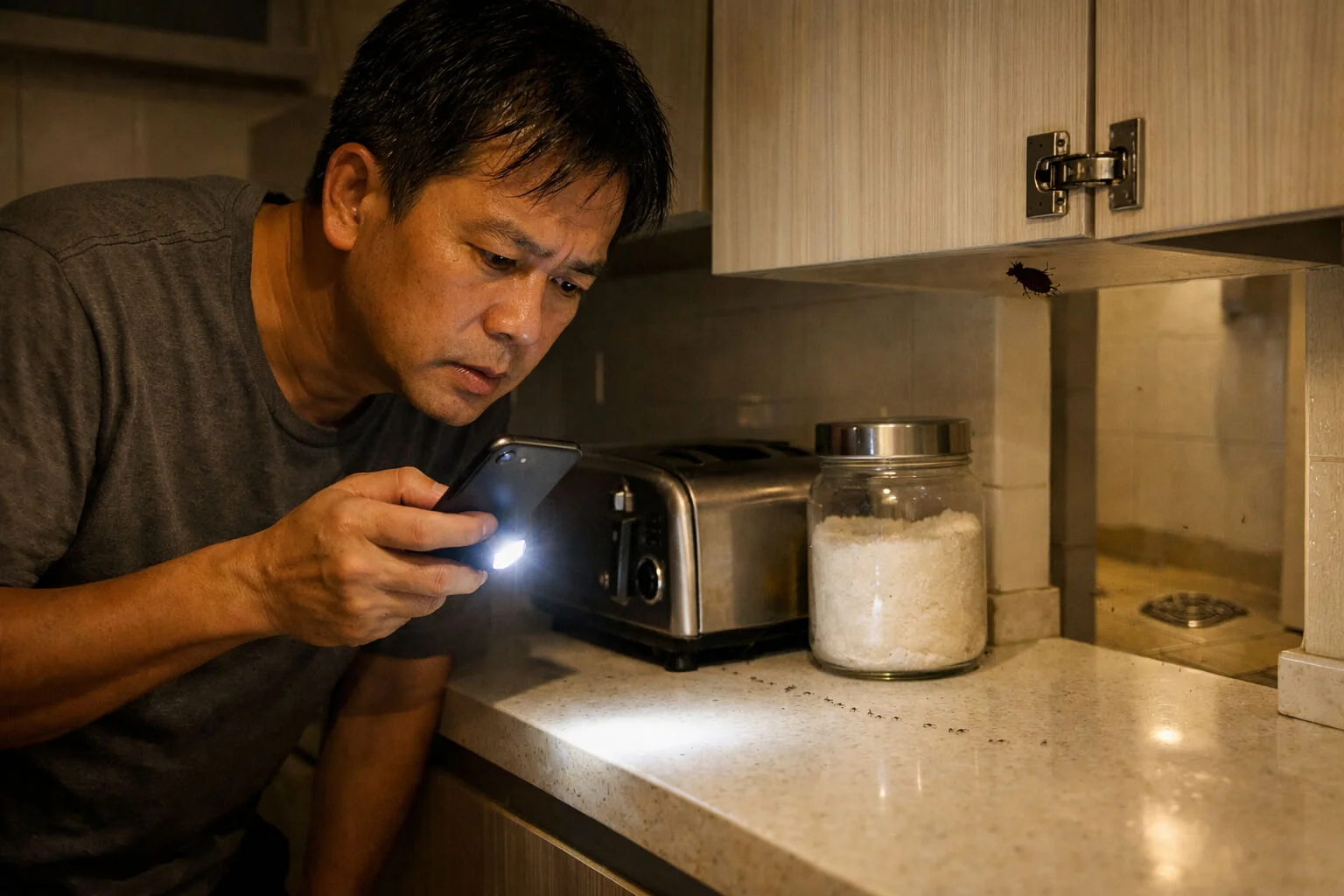

You’ve wiped the counters, you’ve mopped the floor, and you’ve emptied the bin. Yet, as soon as the sun goes down, the scouts return. In Singapore, managing pests isn’t a one-time battle; it’s a constant management of food, water, and entry points.
TL;DR: Beat SG Pests in 30 Seconds
- Ants: Wipe trails with vinegar/soap, not just water (break the pheromones).
- Small Roaches: Clear cardboard boxes immediately; they eat the glue.
- Drain Flies: Scrub the “biofilm” slime in floor traps; boiling water alone isn’t enough.
- The Secret: In HDBs, seal your door gaps. Most pests are “commuters” from corridors.
⛈️ The Monsoon Connection: Have you noticed more ants lately? During Singapore’s heavy rain periods, ground nests get flooded, forcing colonies to seek high ground—which usually means your kitchen cabinets. Keeping your home extra dry during the wet season is your first line of defense.
The Singapore Flat Problem: You Clean… and They Come Back
It’s 1:00 AM. You walk into the kitchen for a glass of water, flick on the light, and for a split second, you see them. Two or three tiny, light-brown shapes scuttling under the toaster. Or maybe you wake up at 7:00 AM to find a perfect, military-grade kitchen ants Singapore highway stretching from the window to a single grain of sugar on the floor.
In our high-density HDBs and condos, the Singapore home pest guide isn’t just about being “clean.” You can have a spotless home and still have ants keep coming back Singapore residents find so frustrating. Why? Because we live in a tropical climate where “outside” is only a few millimetres away, and your neighbors’ habits affect your reality. If you’ve seen drain flies Singapore bathroom corners seem to attract, you know that spraying a chemical doesn’t fix the source. It’s a system issue.
| Pest Type | Common Spot | The “Singapore” Trigger |
|---|---|---|
| Ghost Ants | Kitchen Counters | Open Milo tins or sugar packs |
| German Roaches | Fridge Motors | Humidity & cardboard delivery boxes |
| Drain Flies | Bathroom Floors | Gunk in HDB floor traps |
The Real Reason Pests Keep Returning
Pests are simple creatures. They need three things: water, food, and a safe place to hide. If they keep returning, it’s because one of those needs is still being met. Why ants return even after cleaning usually comes down to “scent trails.” When an ant finds food, it leaves an invisible chemical path. If you only wipe with water, the trail remains.
Furthermore, the “neighbour effect” is real. In a block of 100 units, if one person has a major infestation or leaves their garbage chute smell pests can detect unattended, the pests will migrate through the wall cavities and pipes to the next “clean” unit. You aren’t just defending your flat; you’re managing your perimeter.
(Related daily-life issue: shared corridors and access points also affect how parcels are handled—especially in condos with guardhouse or parcel rooms.)
For practical fixes on missed deliveries and corridor etiquette, see our Singapore Parcel Delivery Guide (POPStation, Parcel Lockers & Missed Deliveries).
🐜 Ants: Why They Form Highways
Ants are the ultimate scouts. What attracts ants in Singapore kitchens is often surprising—it’s not just honey. It can be a damp dishcloth, a drop of condensation on a cold bottle, or even the glue on a cardboard box.
Mistake #1: Wiping without removing scent trails. Use a mixture of soap or white vinegar to break the pheromone path.
Mistake #2: The “Open Milo” habit. In our humidity, sugar-based powders absorb moisture and become an all-you-can-eat buffet. Use airtight containers for everything.
Mistake #3: Pet food timing. Leaving a bowl of kibble out all day is like a neon sign for a colony. If your pet hasn’t eaten it in 20 minutes, pick it up.
🪳 Small Roaches: The “Baby Roach” Reality
If you see small roaches Singapore home environments tend to harbour (German Cockroaches), it usually means they are breeding *inside* your house. Why small roaches appear at night is because they are shy; they hide in the dark, warm crevices of your fridge motor, behind the microwave, or inside your kitchen cabinet hinges.
Long-term prevention: Reduce clutter. Cockroaches love cardboard and paper because they provide a place to hide and a source of food (the glue). Switch to plastic tubs. If you see cockroach nymphs Singapore residents often misidentify as “beetles,” it is time to check your moisture levels. A dry kitchen is a roach-free kitchen. If the population is growing despite your efforts, this is when professional help becomes necessary.
🕵️ Are You Accidentally Inviting Pests?
Quick check: Where do you keep your empty delivery boxes (Lazada/Shopee)?
Drain Flies: The Bathroom Problem
Those tiny, moth-like drain flies Singapore bathroom walls occasionally have aren’t coming from outside. They are breeding in the “biofilm” (the gunk and hair) inside your floor traps and sink overflows.
The Fix: Stop spraying them. It does nothing to the eggs. Instead, use a stiff brush and a basic household cleaner to physically scrub the inside of the floor trap. Pouring boiling water down the drain every few days can also help disrupt their life cycle. How to stop drain flies permanently? Keep your bathroom floor as dry as possible; they need the slime to survive.
HDB vs Condo: What Changes?
In an HDB, the garbage chute is often the main entry point. If you have an internal chute, ensure the seal is airtight. In a condo, pests often move through the centralized aircon ducts or balcony planters. Condo pest control tips usually involve coordinating with your management—if the whole building isn’t being treated, your unit will always be a target.
SGVital Tip: Don’t just spray inside. In many HDB blocks, pests travel via the common corridor or the void deck. If you see your neighbor leaving food for stray cats or old furniture in the corridor, that’s likely where your “scouts” are coming from. A quick door sweep (seal) on your main door is the best $20 investment you’ll make.
In an HDB, the garbage chute is often the main entry point. If you have an internal chute, ensure the seal is airtight. In a condo, pests often move through planters, shared shafts, or common service ducts—so building rules and management response matter more than people expect.
If you’re weighing the lifestyle differences (rules, noise, deliveries, and daily routines), see our Singapore Condo vs HDB Living Guide.
The “One-Week Reset” Plan
- Day 1: Identify hotspots. Look behind the fridge and under the sink. Clear out all old newspapers and cardboard.
- Day 2: Storage reset. Move all opened food into airtight glass or plastic containers. Wipe all “trails” with soapy water.
- Day 3: Drain routine. Scrub the bathroom floor traps and kitchen sink overflow.
- Day 4: Seal the gaps. Use a door sweep or sealant to seal entry points in HDB flats around pipes and doors.
- Day 5–7: Monitor. If you see one roach, don’t just kill it; see where it runs to. That is your next target.
Quick Checklist (Save This)
✅ Do This
- Wipe kitchen counters with soapy water or vinegar daily.
- Use airtight containers for all food, including pet kibble.
- Empty your kitchen trash every single night before bed.
- Scrub your bathroom floor traps once a week.
- Keep a 5cm gap between your furniture and the wall for airflow.
- Ensure your rubbish chute door has a tight, functional seal.
- Fix any “sweating” pipes or leaky taps immediately.
- Remove all unnecessary cardboard boxes and old newspapers.
- Vacuum the tracks of sliding doors and windows regularly.
- Call a licensed professional if you see roach droppings in your cabinets.
❌ Avoid This
- Do not leave dirty dishes in the sink overnight.
- Do not use aerosol sprays near food preparation surfaces.
- Do not leave wet towels or damp floor mats in dark corners.
- Do not assume a “clean” house cannot have pests.
- Do not mix bleach with ammonia or other cleaners (safety hazard).
- Do not store food in cardboard boxes on the floor.
- Do not ignore “scout” ants; they are telling their friends where to go.
- Do not leave the bathroom floor wet after showering.
- Do not procrastinate on sealing small gaps around your service yard pipes.
- Do not over-apply “harsh chemicals” without addressing the food source.
What’s your biggest pest headache lately?
We are gathering data for our 2026 Singapore Home Health Report. Let us know in the comments below!
Official Resources & Safety
For community-wide pest issues or Dengue updates, please refer to the National Environment Agency (NEA). For HDB estate maintenance, contact your local Town Council. For information on safe use of household pesticides, visit the Singapore Food Agency (SFA) portal.


