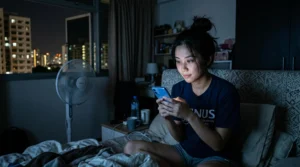
Stop Waking Up on Sticky Sheets: The 1-Button Aircon Trick for Singaporeans
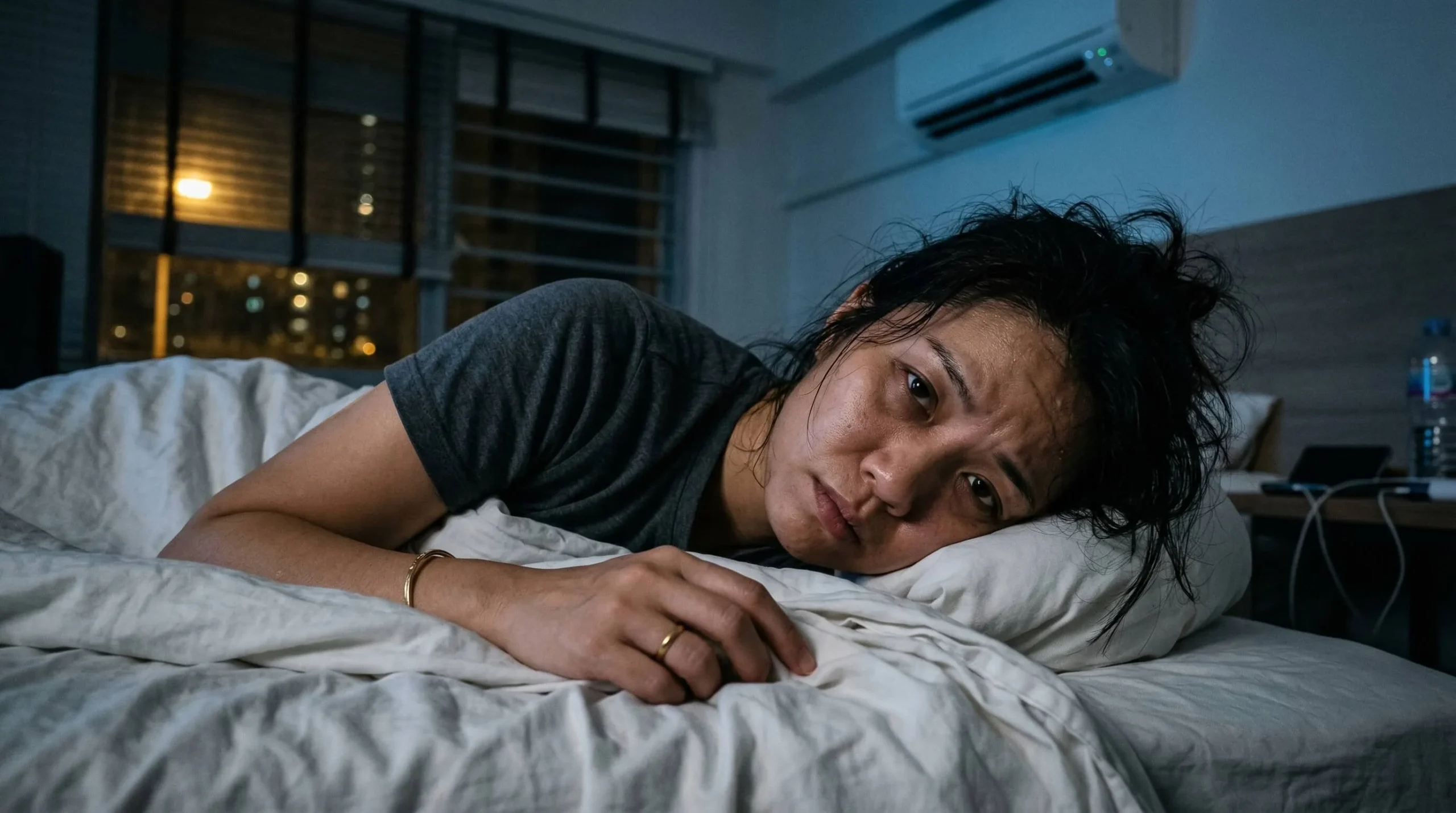

The phenomenon of damp bedsheets Singapore residents battle every night is rarely caused by actual body sweat. It is a physics problem. During the day, your porous mattress and cotton sheets act as massive sponges, absorbing the 85% ambient humidity from the air. When the temperature drops at night, or when you blast the air-conditioning, this trapped vapor reaches its “dew point” and condenses back into liquid moisture directly against your skin. Beating this requires shifting from simple temperature cooling to aggressive moisture extraction.
You take a cool shower before bed. The air-conditioning is humming at a reasonable 24 degrees. You slide under the covers, expecting crisp, clean comfort. Instead, the fabric clings to your legs. A strange, cold clamminess radiates from the mattress. You haven’t even closed your eyes yet, so you definitely are not sweating.
It feels like someone lightly misted your entire bed with a spray bottle.
This intensely frustrating scenario is a shared national grievance. The issue of damp bedsheets Singapore weather creates is an invisible atmospheric invasion of our most private sanctuaries. We spend a massive amount of time attempting to curate the perfect sleep environment, yet the fundamental physics of living one degree north of the equator constantly undermines those efforts.
Understanding why bed feels damp at night requires looking past the thermostat and examining the actual water content suspended in the air around you. Your bedroom is functioning exactly like a tropical rainforest canopy, and your mattress is the forest floor.
The Physics of the Unseen Swamp
To grasp why bedsheets feel damp in Singapore at night, you must understand relative humidity. Our air is incredibly saturated. During the day, warm air expands and can hold a massive volume of water vapor.
When the sun goes down, the ambient temperature drops slightly. Cooler air cannot hold as much moisture as warm air. As a result, the relative humidity percentage spikes violently, frequently hitting 90% or higher in the early hours of the morning. That suspended moisture has to go somewhere. It settles. It seeps into every porous surface in your flat. The very same relentless, heavy moisture that explains why food spoils faster singapore style also infiltrates your bedding.
Your mattress, pillows, and sheets are essentially giant blocks of open-cell foam and woven fibers. They pull moisture in bedroom Singapore environments generate directly into their cores. This is hygroscopy—the ability of a substance to attract and hold water molecules from the surrounding environment. By the time you get into bed at 11 PM, your sheets have spent the last sixteen hours drinking the humid air.
The Aircon Paradox and Dew Point
People naturally assume that turning on the air-conditioner solves the problem. It often makes it worse initially.
Imagine your mattress has been absorbing ambient heat and moisture all day. You walk into the room and blast the AC at 20 degrees. The sudden introduction of freezing, dry air hits the warm, moisture-laden surface of your bed. This causes the trapped water vapor inside the mattress to rapidly hit its “dew point”—the temperature at which gas turns back into liquid.
This is exactly why bed feels wet without sweating Singapore residents often note. The air-conditioning is literally forcing the humidity trapped inside your mattress to condense into microscopic water droplets right beneath your body.
Many residents, terrified of the latest sp group bill increase singapore aircon cost updates, try to rely solely on ceiling fans to stay cool. This is a massive tactical error for sleep hygiene. A fan does not extract a single drop of water from the air. It merely pushes the highly saturated, wet air across your skin at a higher velocity. This creates the infamous sticky bed feeling Singapore flats suffer from. You achieve zero latent cooling (the removal of moisture), leaving your sheets feeling like a damp towel.
The Thread Count Trap and Fabric Failures
We need to address the materials you are sleeping on. There is a persistent myth that a higher thread count equals better quality and comfort. In a tropical climate, high thread count cotton is your worst enemy.
A 1000-thread-count sheet means the fibers are woven incredibly tightly together. There is absolutely no space for air to pass through. It creates an impermeable barrier. When you combine tight weaves with the ambient humidity, you create an unbreathable trap. If you are comparing grocery prices singapore supermarkets offer to household goods and decide to grab a cheap poly-cotton blend on sale, you are guaranteeing a miserable night. Polyester is a petroleum-based plastic. It does not absorb moisture; it repels it, forcing the condensation to sit directly on your skin.
If you want to know how to keep bedsheets dry in humid weather, you have to shift your purchasing habits toward highly breathable, moisture-wicking textiles. Linen, pure bamboo lyocell, and Tencel are vastly superior. These fabrics possess a naturally loose weave that allows indoor air circulation to pass directly through the fibers, carrying ambient moisture away from the mattress surface rather than trapping it against your body.
The Biological Fallout of a Wet Bed
This is not just a minor tactile annoyance. It is a severe biological disruptor.
To initiate the deep, restorative delta-wave phases of the sleep cycle, your core body temperature must drop by about one degree. If you are lying on a clammy, humid surface, your body’s thermoregulation system panics. It cannot efficiently vent heat. Your heart rate remains elevated as your vascular system struggles to cool you down.
This nightly physiological battle is a primary, often ignored contributor to the severe afternoon fatigue singapore causes. You are spending eight hours in bed, but you are not actually resting. The sleep discomfort humidity creates leaves you waking up feeling heavy, lethargic, and neurologically drained. The frustration of tossing and turning on sticky sheets is exactly why so many people find themselves awake at 3 AM, angrily scrolling through late night shopping singapore apps instead of sleeping. Your environment is actively blocking your recovery.
The Hidden Ecosystem: Dust Mites
There is a darker side to the dampness. When people ask why mattress feels damp Singapore style, they rarely consider what is thriving in that moisture.
Dust mites do not drink standing water. They absorb moisture directly from the air through their exoskeletons. They absolutely require a relative humidity of over 70% to survive and reproduce. A warm, damp mattress filled with human skin cells is their perfect utopian ecosystem. The same moisture dynamics that explain why trash smells faster singapore environments generate also fuel the invisible biological explosions happening inside your bedding.
If you wake up with a blocked nose, itchy eyes, or unexplained skin rashes, you are likely reacting to the protein in dust mite droppings, which have multiplied exponentially because your bedsheets are functioning as a humid greenhouse.
Aggressive Dehumidification Strategies
Stop relying on the “Cool” mode on your air-conditioner.
To actually achieve sleep comfort humid climate standards, you need to extract the water. Switch your air-conditioner to “Dry Mode” (usually indicated by a water drop icon on the remote) for the first two hours of the evening. Dry mode runs the compressor at a lower speed specifically designed to pull maximum moisture out of the air without drastically dropping the temperature.
For the ultimate fix, invest in a standalone compressor dehumidifier. Place it in the bedroom and run it for three hours before you go to sleep, with the doors and windows sealed tight. Pulling two liters of water out of the bedroom air physically changes the texture of the room. The sheets will feel hotel-crisp. The air will feel lighter in your lungs.
How to stop damp bedsheets in humid climate realities requires treating the ambient air as a liquid that needs to be drained, rather than a gas that needs to be chilled.
✅ Do This
- Run your air-conditioner on ‘Dry Mode’ for at least an hour before getting into bed to strip the ambient vapor from the room.
- Invest in 100% bamboo lyocell or pure French linen bedsheets; prioritize loose weaves over high thread counts.
- Use a standalone dehumidifier in the bedroom during the day with the door closed to physically extract water from the mattress core.
- Lift your mattress slightly when changing sheets to allow trapped condensation beneath it to evaporate.
- Use a waterproof but highly breathable mattress protector to stop ambient moisture from sinking deep into the foam.
❌ Avoid This
- Do not buy high thread count (800+) cotton sheets; they create an impermeable barrier that traps condensation.
- Do not rely solely on a ceiling fan if the room feels clammy; fans only move wet air around and provide zero dehumidification.
- Do not make your bed immediately after waking up; pull the covers back to let the overnight moisture naturally vent.
- Do not use poly-cotton blend fabrics; petroleum-based textiles repel moisture directly back onto your skin.
The battle against a sticky bedroom is entirely winnable once you acknowledge the physics of the tropics. Your mattress is a sponge. The air is a swamp. Sever the moisture supply, change the textiles, and you will finally remember what a genuinely dry, restorative night of sleep feels like.

Ella Dirlasso
Senior Lifestyle & Home Editor
Ella is a Singapore-based journalist specializing in HDB living, tropical climate adaptations, and daily life hacks. With over 6 years of on-the-ground experience researching everyday Singaporean challenges, her work focuses on providing practical, science-backed solutions for optimal home comfort in humid environments.
Frequently Asked Questions
Official Context & Environmental Resources
For more official data on local humidity levels, weather patterns, and guidelines on managing indoor air quality and sleep health, review the following resources: