
Why Your Body Actually Hurts After Doing Absolutely Nothing All Day
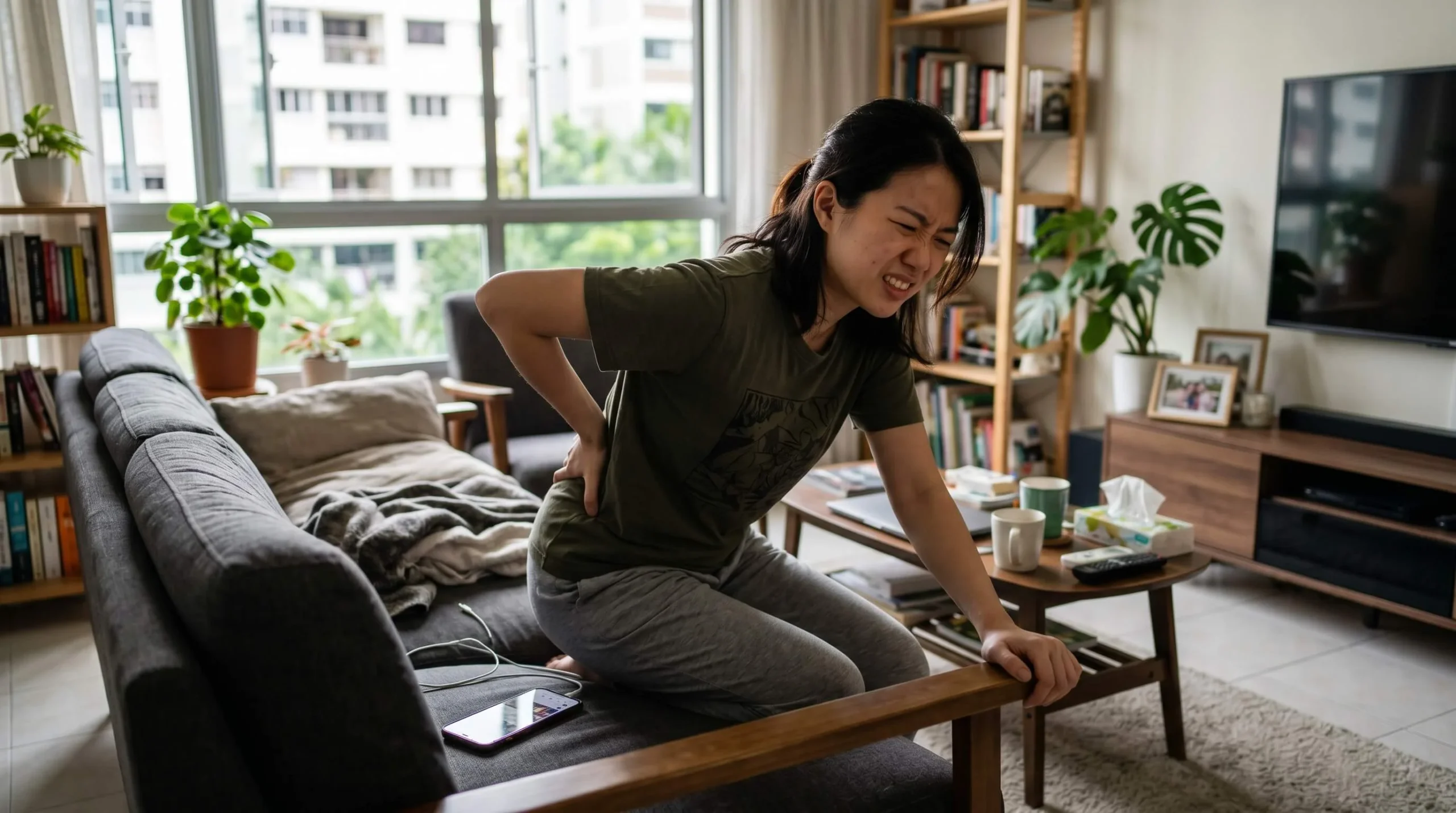

The bizarre, buzzing discomfort you experience after remaining entirely still for hours is a mechanical failure of your own biology. By sitting perfectly motionless, you physically compress major nerve pathways and allow blood to pool in your extremities, depriving tissues of oxygen. When you finally stand up, the sudden rush of oxygenated blood and the chaotic misfiring of “rebooting” nerves creates a sensory overload. Your body feels sensitive after inactivity because your nervous system is violently transitioning from a dormant state back to active duty.
You spend five hours molded into the exact shape of your living room sofa. You are completely relaxed.
Then you stand up.
Instantly, the soles of your feet feel like they are made of television static. Your clothes feel uncomfortably heavy against your skin. Every joint in your lower half screams in protest, and you perform a bizarre, stiff-legged zombie walk to the kitchen. The sheer level of sensitivity after sitting long hours makes absolutely no sense. You didn’t exert any physical effort. You didn’t injure yourself.
You literally did nothing.
This is not a psychological illusion. The reason your body feels sensitive after inactivity is heavily rooted in fluid dynamics and nerve compression. You treated your biological machine like a piece of furniture, and the machine is punishing you for the stasis.
The Oxygen Drought
Your cardiovascular system relies on movement to function optimally.
When you sit motionless, gravity takes over. The blood pools in your lower extremities, causing significant blood flow restriction. Because your muscles are not contracting, they are not acting as secondary pumps to push that venous blood back up to your heart. The tissues in your legs and glutes are temporarily starved of optimal oxygen.
This sluggish internal environment perfectly mirrors the total energetic crash explored in why we feel tired after doing nothing. Your body enters a profound low-power mode.
When you finally stand, a massive surge of oxygenated blood floods back into those deprived tissues. This sudden reperfusion is physically jarring. The blood vessels rapidly dilate. The sudden rush causes a heavy, throbbing sensation. Your brain processes this rapid internal atmospheric shift as raw discomfort.
Cutting the Communication Cables
The poor posture sitting introduces does more than just ruin your spine. It literally cuts off the communication lines to your brain.
When you cross your legs or sit on a hard chair for hours, you apply immense, localized pressure to peripheral nerves. This nerve compression sitting causes disrupts the electrochemical signals traveling from your limbs to your central nervous system. The nerve goes to sleep.
The moment you shift your weight, the pressure is released. The nerve suddenly wakes up and begins misfiring wildly, sending chaotic, disorganized signals to the brain. This is the exact mechanical cause behind the pins and needles feeling.
Your brain doesn’t know how to interpret this chaotic data, so it registers the static as heightened, unpleasant sensitivity.
You sit there doomscrolling, completely numb to the world, until you suddenly realize why phone makes hands hot against your palm, triggering you to finally move. That sudden movement sensitivity hits you like an electrical shock. The tingling after sitting long periods is just your hardware rebooting.
The Fascia Freeze
Your muscles and joints are wrapped in a web of connective tissue called fascia.
Fascia requires constant movement and hydration to remain pliable and smooth. When you engage in total inactivity, the lubricating fluids between your fascial layers thicken. They turn from a slick oil into a sticky glue.
The machine seizes up.
This is the primary driver of the body stiffness after inactivity you experience every morning or after a long gaming session. The temporary mobility loss makes every movement feel strained and abnormally heavy. It is the exact same concept of environmental stagnation that forces you to constantly battle the damp air outlined in the singapore bathroom humidity mold drying guide or question why cooking smell lingers hdb singapore residents hate so much. When things don’t move, they degrade. When your joints don’t move, they cement themselves in place.
Expert Insight / Neuromuscular Physiology
“The phenomenon of why the body feels uncomfortable after long inactivity is a localized, minor version of ischemia-reperfusion. The sustained pressure of sitting restricts capillary blood flow and compresses the myelin sheath of peripheral nerves. Upon standing, the sudden influx of blood and the rapid reactivation of the nerve pathways create sensory dysregulation. The brain is flooded with intense proprioceptive feedback, which the individual interprets as the limbs feeling overly sensitive, heavy, or painfully ‘asleep’.”
The Urban Sensory Overload
This physical hyper-sensitivity bleeds directly into your psychological state.
When your body feels sensitive after inactivity, the external world suddenly feels entirely too loud and demanding. You drag yourself out of the flat to grab a coffee. Because your spatial awareness is temporarily scrambled by the stiff fascia, you awkwardly navigate the silent tension of the singapore elevator etiquette guide, terrified of bumping into your neighbors.
You reach the coffee shop and stare blankly at the crowd, relying entirely on the singapore queue culture guide reading lines like a local because your brain refuses to process the ambient noise.
You go back home, highly irritable, and suddenly notice the faint rot of smelly kitchen cabinets singapore humidity constantly creates. Your sensory gates are wide open. Because you spent the entire day physically dormant but mentally overstimulated, your circadian rhythm shatters. This guarantees you will be completely wired and alert at night singapore style, staring at the ceiling because your nervous system finally woke up right when you needed it to shut down.
Breaking the Stasis
You cannot negotiate with connective tissue. You have to force it to melt.
If your body feels sensitive after inactivity regularly, you must introduce micro-frictions into your resting hours. You do not need to do jumping jacks during a movie, but you must shift your pelvis and uncross your legs every twenty minutes.
✅ Do This
- Implement the “ankle pump” technique. Even while sitting, flex and point your toes repeatedly for thirty seconds to manually force pooled blood out of your calves and back up to your heart.
- Hydrate aggressively. The fascia surrounding your muscles requires water to remain lubricated; dehydration accelerates the “gluing” effect of prolonged sitting.
- When standing up after a long period of rest, do so slowly and immediately perform a light hamstring stretch to gently wake up the compressed nerve pathways without shocking them.
❌ Avoid This
- Do not sit cross-legged for hours. This creates severe, focused pressure on the peroneal nerve behind the knee, guaranteeing a violent “pins and needles” reaction when you finally stand.
- Do not attempt explosive physical movements (like suddenly sprinting for a bus) immediately after a prolonged period of sitting; your cold, stiff fascia is highly prone to micro-tears.
- Do not ignore chronic numbness. If the tingling does not fade within a few minutes of walking, it could indicate deeper spinal or ergonomic issues rather than just temporary compression.
Absolute stillness is not a state of recovery for the human body; it is a state of decay. The jarring sensation of coming back online is just your biology reminding you that it was built for motion, not for the sofa. Move the machine before it rusts completely.

Ella Dirlasso
Senior Features Writer | Urban Wellness & Daily Life
Ella specializes in observing and documenting the intersection of modern urban habits and physical well-being in Singapore. With over 5 years of experience writing human-centered stories for the SG Vital Editorial Desk, she focuses on translating complex physiological concepts and ergonomic research into actionable, everyday advice for HDB residents navigating a fast-paced lifestyle.
Frequently Asked Questions
Official Context & Ergonomic Health Resources
To understand the official medical guidelines on preventing sedentary injuries, managing poor circulation, and improving occupational ergonomics, consult the following local authorities: