Why Your Trash Smells Faster in Singapore (And The 1 Mistake You’re Making)
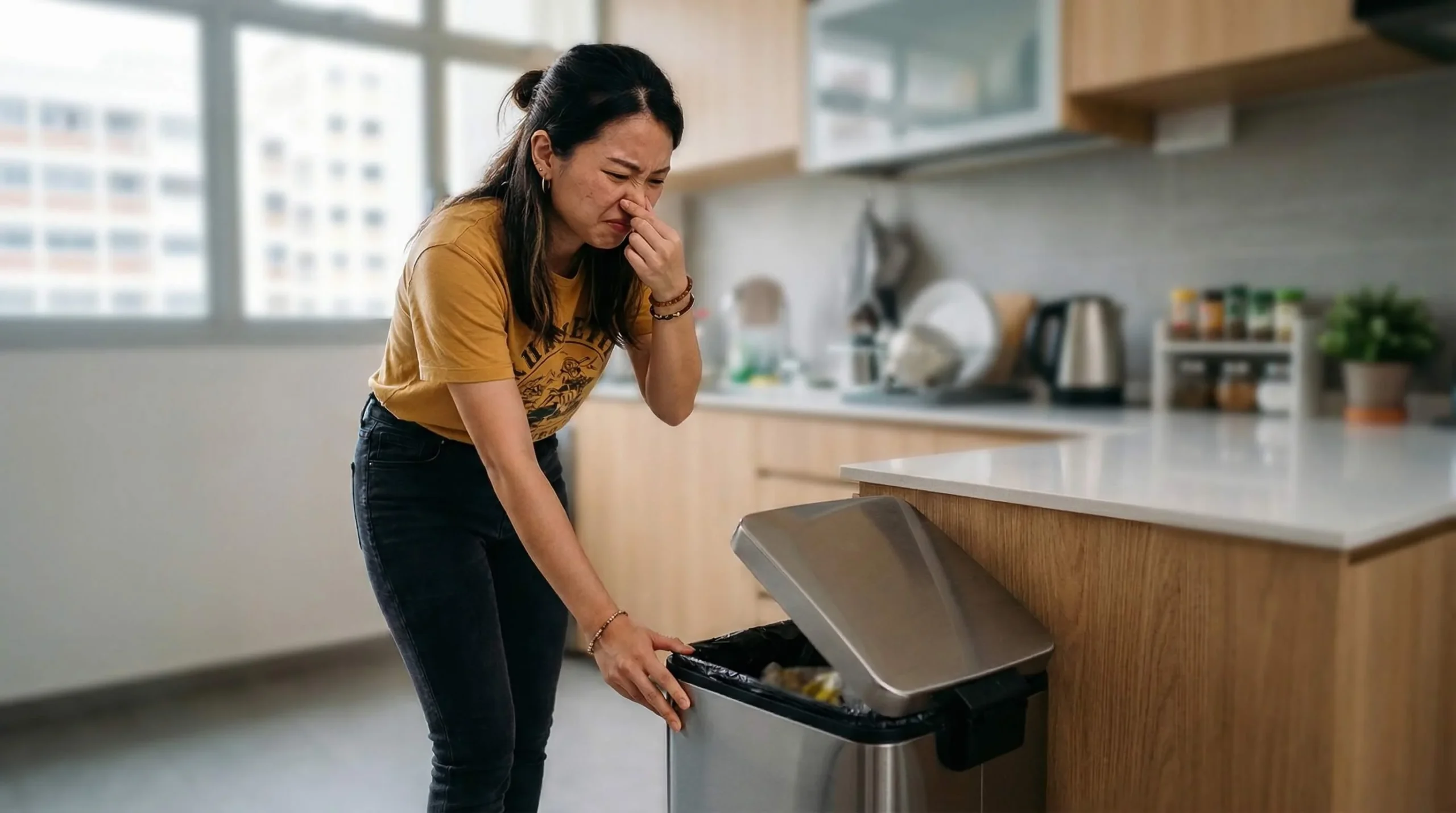

The baseline trash smell Singapore residents battle is a product of accelerated microbial reproduction. At 30 degrees Celsius and 85% humidity, the bacteria responsible for breaking down organic matter multiply exponentially faster than in temperate climates. Tossing wet, protein-rich local food waste into a plastic bag creates an instant anaerobic greenhouse. Stopping the stench requires severing the moisture supply using newspaper liners, freezing highly volatile organic scraps like seafood shells, and managing the temperature fluctuations in your kitchen.
You drop a single discarded prawn shell into the kitchen bin after dinner. You tie off the plastic bag, thinking it is perfectly sealed. Fast forward twelve hours. You step into the kitchen for your morning coffee and are immediately hit by a wall of airborne decay. It smells like something died under the sink.
This is not a reflection of your household sanitation skills. It is the ruthless, unavoidable reality of organic chemistry operating near the equator. The speed at which a smelly trash bin Singapore style develops is staggering to anyone who has recently relocated here from a colder climate. A bin that might take a week to produce a mild odor in London or Melbourne becomes a biological hazard within a single day here on the island.
Understanding why trash smells faster in Singapore homes requires a deep dive into the microscopic world. We are living in a giant, open-air incubator. The very same atmospheric conditions that define our daily lives also dictate the rapid breakdown of everything we discard.
The Biological Engine of Decay
To comprehend the sheer velocity of the garbage smell humid climate produces, you have to look at the primary actors: bacteria.
Microorganisms are everywhere, sitting dormant on the surfaces of your vegetables, meats, and leftovers. They require three things to initiate organic waste decomposition: a food source, warmth, and moisture. Our environment provides all three in infinite abundance. Just as the relentless humidity explains the severe afternoon fatigue singapore causes by disrupting our biological thermoregulation, that exact same moisture acts as a hyper-accelerant for microbial life.
When the ambient temperature sits constantly between 28 and 32 degrees Celsius, bacterial colonies double in size every twenty minutes. As they gorge on your discarded food, they emit gases. Anaerobic bacteria—the kind that thrive at the bottom of a tightly packed, airless trash bag—are particularly notorious. They produce hydrogen sulfide (which smells like rotten eggs) and methanethiol (which smells like rotting cabbage).
This rapid microbial explosion is exactly why food spoils faster singapore style if left unprotected on the kitchen counter for even a short period. By the time that slightly bruised fruit or leftover rice makes it into your bin, the decay process is already violently underway.
The Condensation Trap in Your Kitchen
You might assume that keeping the bin out of direct sunlight solves the problem. It doesn’t. The real issue is the micro-climate created inside your waste receptacle, heavily influenced by our reliance on indoor cooling.
Consider the daily routine. People blast their cooling units at night, subsequently complaining about the inevitable sp group bill increase singapore aircon cost, and then switch the unit off when they leave the flat for work in the morning. This causes the indoor temperature to swing from a dry 22 degrees to a highly humid 31 degrees within an hour.
This rapid temperature cycling creates massive condensation. Water droplets form on the inside of your plastic bin liners. Even if you throw away relatively dry items, this ambient condensation drips down, creating a dark, incredibly wet puddle at the bottom of the bag. Bacteria require water to metabolize food. By inadvertently creating this condensation trap, you are supplying the bacteria with the exact liquid medium they need to maximize their gas production, which directly answers why garbage smells worse in hot weather and fluctuating indoor temperatures.
The Protein Problem: Local Dietary Habits
Our local diet significantly impacts the specific waste odor Singapore homes generate. The food culture here is incredibly rich in wet, sauce-heavy dishes and high-protein seafood.
Throwing away dry bread crusts or potato peels generates very little odor because carbohydrates break down relatively cleanly. Throwing away fish bones, prawn heads, raw chicken trimmings, or leftover sambal triggers a completely different chemical reaction. Proteins and fats break down into highly volatile organic compounds. The nitrogen and sulfur contained in meat produce a significantly more pungent, aggressive stench than decaying plant matter.
The financial frustration of tossing out premium cuts of meat or expensive seafood—especially given the current grocery prices singapore supermarkets command today—is instantly compounded by the foul, lingering odor that immediately dominates your living space. You aren’t just losing money; you are compromising your home’s air quality.
The Pest Pipeline
Where there is gas, there are scavengers. The gases emitted by rotting food are not just unpleasant to human noses; they act as a biological beacon for insects.
Fruit flies and cockroaches possess highly specialized olfactory receptors designed to detect the faintest trace of fermentation and decay from hundreds of meters away. Once a kitchen trash smell Singapore style begins to emanate from your service yard or under-sink cabinet, the pests arrive. They navigate through the microscopic gaps in your window screens and follow the invisible odor pipeline directly to the source.
If you notice a sudden airborne foulness, it is often as jarring as suddenly wondering why tap water tastes different singapore older estates sometimes experience; it signals an immediate micro-environmental shift that needs investigating. Once insects breach the bin, they don’t just feed. They lay eggs. The presence of larvae accelerates the mechanical breakdown of the waste, increasing the surface area for bacteria, which in turn generates even more gas. It is a vicious, self-sustaining cycle of sanitation failure.
Expert Insight / Sector Analysis
“Municipal waste management data highlights a critical failure point in high-density tropical housing: the improper sealing of high-moisture organic waste. Most residents rely on thin, porous grocery bags that easily suffer micro-tears from sharp packaging or bones. Once the physical barrier is compromised, the high humidity interacts with the exposed biological matter, initiating rapid putrefaction. Effective odor control home systems rely entirely on ‘moisture sequestration’—physically separating the wet waste from the ambient warm air before it enters the communal chute system.”
Severing the Moisture Supply
To figure out how to prevent trash odor Singapore heat creates, you must aggressively target the moisture. You cannot change the temperature of the country, but you can change the hydration level of your garbage.
Never throw wet food directly into the main bin. Strain soups, gravies, and wet noodles entirely before disposal. The single best way to manage trash smell Singapore households can adopt is lining the bottom of the plastic bag with two layers of old newspaper or highly absorbent recycled paper towels. This creates a functional barrier that soaks up the toxic liquid pooling at the bottom, depriving the anaerobic bacteria of their swimming pool.
For highly volatile items like raw meat scraps, prawn shells, or durian seeds, the absolute most effective strategy is the “freeze-until-throw” method. Place these items in a small, repurposed plastic bag or airtight container and keep them in your freezer. The sub-zero temperature halts all microbial activity entirely. You simply take the frozen block of organic waste out and throw it directly down the central rubbish chute on your way out the door the next morning. It never gets the chance to thaw and rot inside your kitchen.
Strategic Bin Management
Your hardware matters just as much as your habits.
Open-top bins are a massive liability in a humid environment. You need a bin with a heavy, tightly sealing lid, preferably operated by a foot pedal so you aren’t transferring bacteria to the lid with your hands. Even with a good lid, the plastic interior of the bin absorbs odors over time. Washing the physical bin with hot water and white vinegar every single weekend is a mandatory hygiene practice humid climates demand.
You might find yourself staying up doing some late night shopping singapore style, scrolling through e-commerce apps looking for expensive carbon filters, automated sealing bins, or heavy-duty chemical deodorizers. While commercial odor absorbers certainly help mask the issue, they are treating the symptom, not the disease. Sprinkling a heavy layer of cheap baking soda at the bottom of the bin beneath the plastic bag is often vastly more effective at neutralizing acidic odors than an expensive floral spray that just mixes with the smell of rotting fish to create an even worse olfactory nightmare.
✅ Do This
- Line the bottom of every new trash bag with thick layers of newspaper to absorb rogue moisture.
- Store highly pungent organic waste (seafood shells, meat trimmings) in the freezer until you are ready to take the garbage out.
- Rinse out takeaway containers and plastic bottles before throwing them away to remove lingering food residue.
- Sprinkle a generous handful of baking soda at the bottom of the physical plastic bin to neutralize acidic airborne odors.
- Empty your kitchen bin daily, regardless of whether the plastic bag is completely full.
❌ Avoid This
- Do not pour liquid soups, curries, or cooking oils directly into the trash bag.
- Do not use thin, flimsy plastic bags for food waste; sharp bones will puncture them and leak biological fluids into the bin structure.
- Do not place your main kitchen bin in direct sunlight near the service yard window; the radiant heat acts as an incubator.
- Do not rely on chemical air fresheners to solve the problem; they only mask the scent and do nothing to stop the underlying bacterial growth.
The fight against a foul-smelling home is won through strict, uncompromising moisture management. The environment is always going to push for rapid decay. By changing how you stage, bag, and discard your organic waste, you can keep your kitchen smelling like a kitchen, rather than a municipal landfill.

Ege Sg
Senior Lifestyle & Environment Editor
Based in Singapore, Ege specializes in adapting everyday living to our unique tropical climate. With years of on-the-ground experience navigating high-density HDB living, Ege combines practical household hacks with fact-checked data from local environmental guidelines (NEA, SFA) to help Singaporeans live smarter and cleaner.
Frequently Asked Questions
Official Context & Hygiene Resources
For more official guidelines on managing household waste, improving public sanitation, and dealing with tropical pest control, review the following local resources: