Why You Still Sweat After a Shower in Singapore (And the 1-Minute Fix)
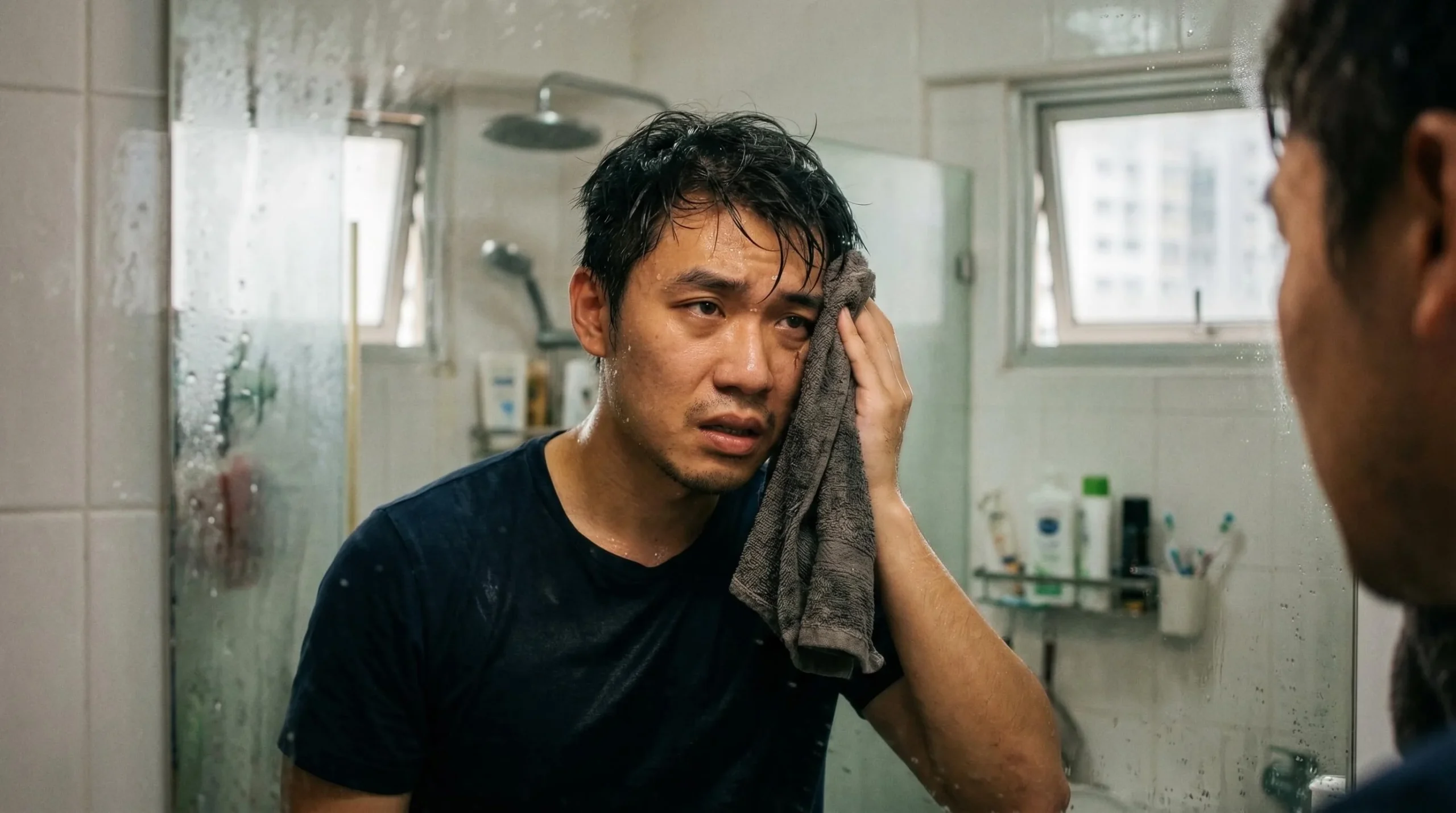

The phenomenon of sticky skin after shower Singapore residents constantly complain about is a clash of thermoregulation and physics. Taking a warm shower raises your core body temperature, prompting your sweat glands to activate precisely as you step out of the water. Because the bathroom air is already 100% saturated with steam, this new sweat cannot evaporate. Furthermore, moving from a hot bathroom into a cold, air-conditioned bedroom causes ambient water vapor to condense directly onto your epidermis, creating a fake layer of sweat that leaves you feeling instantly oily and unwashed.
You just turned off the water. You reach for your towel, feeling thoroughly cleansed and refreshed. You dry off, wrap the towel around your waist, and open the bathroom door. By the time you take three steps into your bedroom to find your clothes, it happens. A thin, uncomfortable layer of moisture begins to bead on your forehead. Your back feels clammy. Your thighs stick together.
You have been out of the shower for exactly two minutes, and you already feel the desperate urge to take another one.
This maddening cycle is a shared national experience. Experiencing sticky skin after shower Singapore style is not a reflection of the soap you use or your personal hygiene standards. It is a brutal, uncompromising physics lesson courtesy of living one degree north of the equator. Our environment severely compromises the human body’s ability to dry itself. To break the cycle of perpetual dampness, you have to understand the specific atmospheric mechanics operating inside your bathroom and how your body desperately tries to regulate its own internal thermostat.
The Biological Furnace and Sweat Glands Activity
To understand why you feel sweaty right after shower Singapore weather throws at you, you must look at your own biological furnace.
Many people enjoy taking warm or hot showers to relax their muscles after a long day of work. While this feels incredible on a muscular level, it actively sabotages your body temperature regulation. The hot water transfers massive amounts of thermal energy into your body, raising your core temperature.
Your brain interprets this spike in core temperature as a threat and immediately triggers your perspiration triggers to cool the system down. However, while you are standing under the running water, the sweat is washed away unnoticed. The moment you turn the tap off, your body is still frantically trying to cool down. You are essentially sweating profusely while toweling off. This invisible cardiovascular workout is a quiet contributor to the overarching afternoon fatigue singapore causes, as your body is forced to expend massive amounts of metabolic energy just fighting the ambient temperature of your own apartment.
The Bathroom Greenhouse Effect
Sweating after cooling down only works if the sweat can evaporate. Evaporation is an endothermic reaction; as liquid turns into gas, it pulls heat away from the surface of your skin.
Herein lies the geographical problem. The tropical humidity Singapore is famous for means the air is already holding an enormous amount of moisture. When you take a shower in a typical HDB or condo bathroom, the steam buildup bathroom environments suffer from pushes the local relative humidity to an absolute 100%. The air simply cannot accept another drop of water vapor.
Therefore, the sweat your body is producing to cool you down has nowhere to go. It sits entirely stagnant on your epidermis. The heavy moisture in air Singapore produces essentially suffocates your skin’s ability to breathe. This exact same atmospheric saturation is the primary catalyst behind why food spoils faster singapore environments generate, as the omnipresent moisture acts as a hyper-accelerant for biological and chemical reactions everywhere in your home.
The Condensation Illusion: Why You Feel Oily
Sometimes, the moisture on your skin isn’t actually sweat. It is condensation.
Many residents blast their bedroom air-conditioning to an icy 20 degrees to combat the heat, often ignoring the impending sp group bill increase singapore aircon cost updates just for a few hours of thermal relief. When you step out of a steamy, 32-degree bathroom directly into a freezing bedroom, physics takes over.
Your skin is still warm from the shower. The cold, conditioned air hits the warm, humid boundary layer of air clinging to your body. The water vapor immediately condenses back into liquid directly on the surface of your skin. This creates a fake sweat. It mixes with your natural sebum (skin oils), which is exactly why skin feels oily after shower even if you just scrubbed it with soap. This irritating condensation effect is the exact same physical principle that explains why bedsheets feel damp singapore nights produce; the sudden clash of temperatures forces ambient vapor to turn into microscopic water droplets on porous surfaces.
Expert Insight / Dermatological Analysis
“The sensation of post shower stickiness is frequently misdiagnosed by consumers as a product failure, leading them to aggressively over-wash with harsh sulfates. This destroys the skin’s natural lipid barrier. In a highly humid climate, trans-epidermal water loss (TEWL) functions differently. The skin feels ‘sticky’ because the atmospheric vapor pressure equals or exceeds the vapor pressure on the skin’s surface, completely halting the evaporation of eccrine gland secretions. Transitioning from hot water to a sudden cold environment induces immediate vasoconstriction, trapping heat internally and causing a rebound sweating effect minutes later.”
The Towel Trap and Friction Heat
How you dry yourself plays a massive role in the severity of the humidity skin discomfort Singapore residents feel.
When you grab a thick bath towel and vigorously rub it rapidly across your arms, chest, and back, you are generating intense friction. Friction creates localized heat. You are literally warming your skin back up the moment you step out of the water, signaling your brain to pump out more sweat.
Furthermore, if your bathroom ventilation Singapore flats typically have is poor, your towel itself is likely already holding a significant amount of ambient moisture before you even touch it. You are essentially wiping yourself down with a warm, damp sponge. The lack of proper airflow allows biological matter to thrive in damp environments, which is the underlying science behind why trash smells faster singapore kitchens deal with. Moisture is the enemy of freshness. To actually get dry, you must pat your skin gently, absorbing the water without creating kinetic thermal energy.
Skincare Formulations in the Tropics
The products you apply immediately after bathing dictate how long your skin freshness lasts. Skincare humid climate strategies must fundamentally differ from temperate climates.
If you are using thick, cream-based body washes or heavy, occlusive body lotions imported from European or North American brands, you are creating a plastic-wrap effect on your body. These products are designed to trap moisture in dry winter environments. Applying them here completely prevents your skin from breathing, trapping your natural body heat and sweat beneath a layer of cosmetic grease.
To mitigate sticky skin after shower Singapore conditions cause, you must pivot to gel-based body washes that rinse away cleanly without leaving a heavy moisturizing film. If you need hydration, use lightweight, water-based serums or hyaluronic acid gels that absorb instantly rather than sitting on top of the epidermis.
The Art of the Cool-Down Routine
Stopping the post-shower sweat requires a strategic cool-down process. You cannot rush from the shower straight into a tight pair of jeans.
Towards the end of your shower, gradually lower the water temperature. You do not need an ice bath, but bringing the water down to a lukewarm or slightly cool temperature for the final sixty seconds forces your blood vessels to gently constrict, lowering your core temperature and signaling your sweat glands to power down.
Do not immediately get dressed. Give your body ten to fifteen minutes to acclimate to the ambient indoor humidity after shower. Many locals instinctively practice this by sitting in front of a standing fan in loose clothing or a towel while catching up on emails or casually browsing late night shopping singapore platforms. This crucial buffer period allows your internal thermostat to stabilize and any residual skin condensation to flash off before you trap it under a layer of restrictive clothing.
✅ Do This
- Gradually reduce the water temperature to cool for the last minute of your shower to lower your core body heat.
- Leave the bathroom door slightly ajar while showering to prevent severe steam buildup and 100% relative humidity.
- Pat your skin dry gently with your towel to avoid creating friction-induced heat on your epidermis.
- Use a standing fan to accelerate evaporation on your skin before attempting to put on tight clothing.
- Switch from heavy cream-based body washes to clear, gel-based formulas that rinse off completely.
❌ Avoid This
- Do not take extremely hot showers right before getting dressed; your body will continue to sweat for 20 minutes afterwards.
- Do not step directly from a steaming hot bathroom into a freezing air-conditioned room (this causes immediate skin condensation).
- Do not vigorously rub your skin with a towel, which stimulates circulation and raises surface temperature.
- Do not apply thick, occlusive body lotions immediately after drying off; they trap heat and sweat against the skin.
Navigating the tropical climate skin issues requires an understanding that feeling clean is not just about soap and water; it is about managing heat transfer. By altering how you end your shower and giving your body the necessary atmospheric buffer time to regulate its temperature, you can finally step out of the bathroom and actually stay dry.

Kun Kerssa
📍Singapore | Senior Daily Life & Health Writer
Experience & Expertise: Living in the heart of Singapore, Kun specializes in translating complex environmental physics and dermatological science into practical, everyday solutions for locals. By analyzing data from the National Environment Agency (NEA) and consulting with local health professionals, Kun ensures every piece of advice is scientifically backed and tailored specifically to the unique challenges of our tropical climate.
Frequently Asked Questions
Official Context & Dermatological Resources
For more official guidelines on managing skin health in tropical climates, dealing with heat-related discomfort, and proper hygiene practices, review the following resources: