Why Singapore’s Heartland Shops Are Busier on Tuesday Mornings



The rush hour crowds in the CBD are thinning, but the void deck cafes are packed at 10 AM. We are witnessing the decentralization of Singapore’s spending power.
⚡ Too Long; Didn’t Read (TL;DR)
- The Shift: Tuesdays are the new Saturdays. Heartland shops are booming as CBD crowds thin out.
- The Why: Hybrid work means your “coffee money” stays in the neighborhood, not Raffles Place.
- Spending Habit: We’re “bipolar” spenders—saving on groceries with CDC vouchers but splurging on $8 sourdough loaves for sanity.
- The Human Factor: Digital fatigue is real; people want to chat with the “Uncle” or “Auntie” at the shop again.
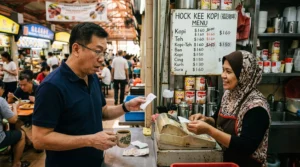
Mr. Tan wipes the counter of his traditional bakery in Ang Mo Kio. It is 10:30 AM on a Tuesday.
Usually, this is the “dead hour.” The time when everyone is supposed to be in a glass tower in Raffles Place, freezing in air-conditioning. But the shop is full. There is a young guy with a laptop in the corner. There is a mother who just dropped her kids off. There are two neighbors chatting over kopi.
“Last time, weekday morning quiet quiet,” Mr. Tan says, packing a pandan cake. “Now? All day got people. I think they never go office.”
He isn’t looking at economic charts. He is looking at his cash register. And he is spotting a trend that economists are still trying to quantify. The centre of gravity in Singapore is shifting. Money is moving away from the city centre and settling deep into the heartlands.
This is the “Donut Effect”—hollow in the middle, heavy on the edges—and for small business owners, it is changing the rules of survival.
The Rise of the “Work-Near-Home” Economy
We talk a lot about “Work From Home.” We don’t talk enough about “Spend Near Home.”
When you don’t commute to the CBD five days a week, you don’t buy your $6 coffee there. You don’t buy your lunch there. That money doesn’t disappear; it relocates. It goes to the cafe downstairs. It goes to the neighborhood hardware store.
When you don’t commute to the CBD five days a week, you don’t buy your $6 coffee there. You don’t buy your lunch there. That money doesn’t disappear; it relocates.
This shift is also tied to the quiet end of Singapore’s “wayang” work culture, where being seen in the office matters less than actually getting work done.
I spoke to a cafe owner in Tampines who told me her weekday revenue has overtaken her weekend revenue.
“It’s the hybrid workers,” she explains. “They come in at 11 AM. They order a latte. They stay for two hours. They want to escape their house, but they don’t want to go to the office. So they come here. We became the co-working space.”
📍 The “New” Heartland Hotspots
How different estates are transforming during Tuesday mornings:
The “Laptop Battalions” filling up every cafe with a plug socket.
Traditional bakeries seeing a “younger” queue for morning waffles.
Wait times for artisanal coffee hitting weekend levels by 10 AM.
Young parents balancing “WFH” and “Stroller runs” at the void deck.
This is breathing new life into HDB estates. The sleepy “bedroom communities” are waking up. They are becoming self-sufficient ecosystems where you live, work, and spend within a 1km radius.
The Craving for Recognition
There is another shift, harder to see but easier to feel. It’s a pushback against the “Smart Nation” sterility.
We spend our days dealing with chatbots, QR codes, and silent delivery riders. By the time we log off, we are starved for human interaction. Small businesses are noticing that customers are lingering longer. They want to chat.
At a provision shop in Yishun, the owner told me customers are asking for recommendations again. They don’t want to just grab and go. They want to ask, “Uncle, this rice nice or not?”
In a world of algorithmic suggestions, the opinion of a human being has become a premium service.
It’s strange. The more digital our lives become, the more we value the shopkeeper who remembers we don’t like spring onions.
Overheard at the Wet Market:
“Last time, morning only got retirees. Now, got so many ‘office people’ in T-shirts buying Kopi-C Kosong. I ask them why never go office, they say ‘Office far, heartland near, and Uncle’s coffee is better!'”
— Uncle Ah Bee, Drink Stall Owner since 1994
| The Behavior | The Old Pattern (Pre-2020) | The New Heartland Pattern |
|---|---|---|
| Peak Hour | Weekends & Evenings only | Tuesday 10 AM (The “Hybrid” crowd) |
| Loyalty | Brand loyalty (Starbucks) | Relationship loyalty (“The auntie knows me”) |
| Spending | Large weekly haul | Frequent, small “treats” (Mental health spending) |
| Vibe | Transactional (Fast) | Community (Slow) |
🧐 Quick Poll: What kind of Heartland Spender are you?
*Click an option to see your profile!*
The “Bipolar” Spender
However, it’s not all rosy. The spending is weird. It’s… bipolar.
Small business owners are confused. They see customers using CDC vouchers to pay for essential rice and oil, counting every cent. Then, the same customer walks to the bakery next door and drops $8 on a fancy sourdough loaf without blinking.
It’s the “Save on Needs, Splurge on Sanity” mindset.
Inflation hurts. We know this. The Monetary Authority of Singapore (MAS) reports say core inflation is stabilizing, but try telling that to the auntie buying eggs. People are cutting back on the boring stuff—utilities, transport, bulk groceries. But they refuse to cut back on the small joys that keep them sane.
“They complain price of fish rise,” a wet market fishmonger tells me. “But they still buy the expensive prawn on Sunday. Say ‘long time no eat, must pamper.’ Life stress, cannot save everything.”
The CDC Voucher Effect
You cannot talk about small business today without mentioning the teal-colored lifelines.
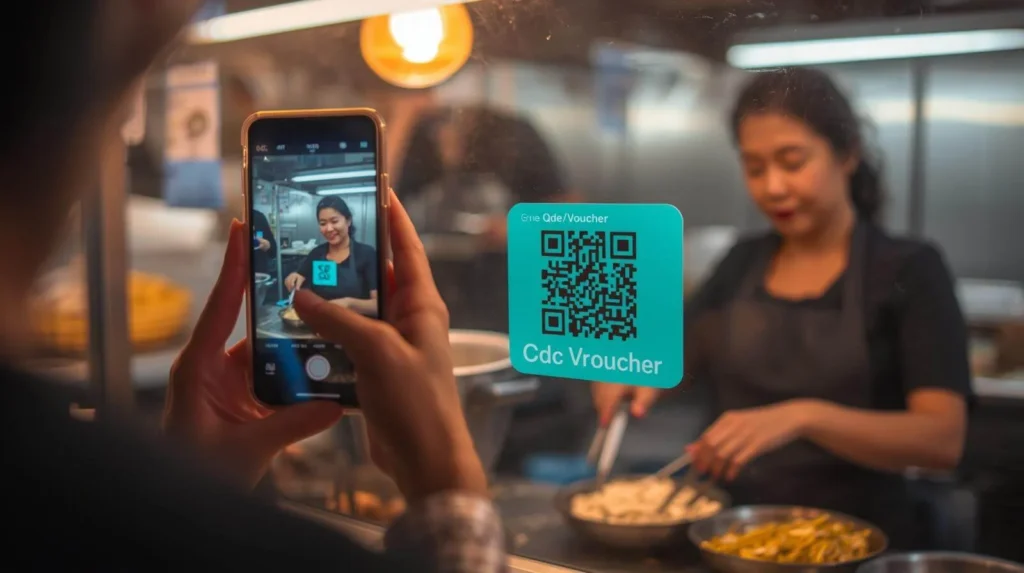
The CDC Vouchers have fundamentally altered the relationship between the government, the merchant, and the resident. It’s no longer just a policy; it’s a currency.
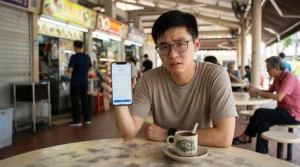
For the hawker, it’s a hassle to scan. But for the resident, it’s an invitation to spend locally. I’ve watched residents stand in front of a stall, check their phone balance, and say, “Okay lah, add one more egg.” That small decision, multiplied by thousands of residents, is keeping the lights on in the heartlands.
💡 Heartland Survival Hack
Want to support your local merchant? Check the RedeemSG app before heading out. Many heartland shops now offer “CDC Bundle Deals”—for example, use a $5 voucher and get a free extra topping or a larger drink. Always ask: “Auntie, got CDC special promo or not?”
What This Means for Residents
We are returning to the “Kampung” style of commerce, but with a modern twist.
We are realizing that if we want the uncle downstairs to stay open, we have to spend there. We are trading the convenience of Amazon for the connection of the neighborhood.
It’s a subtle shift. It’s the decision to walk downstairs instead of ordering delivery. It’s the decision to say “Hello” instead of just scanning a QR code. And for the small businesses fighting rising rents and GST hikes, that shift is everything.
👟 From the Ground
“I sat in a small barbershop in Jurong yesterday. It was packed. Not with people getting fancy cuts, but just… hanging out. The barber knew every name. He knew whose son was taking PSLE. He knew whose car broke down. In a city that is obsessed with being a ‘Smart Nation,’ these little pockets of dumb, slow, analog humanity are becoming the most valuable real estate we have.”
Join the Heartland Conversation 🇸🇬
Has your neighborhood become busier since you started working from home? Which “Hidden Gem” in your heartland deserves more love?
“Support local, stay vital.” — The SG Vital Team