Cleaned Your Bathroom But It Still Smells? Here’s Why in Singapore
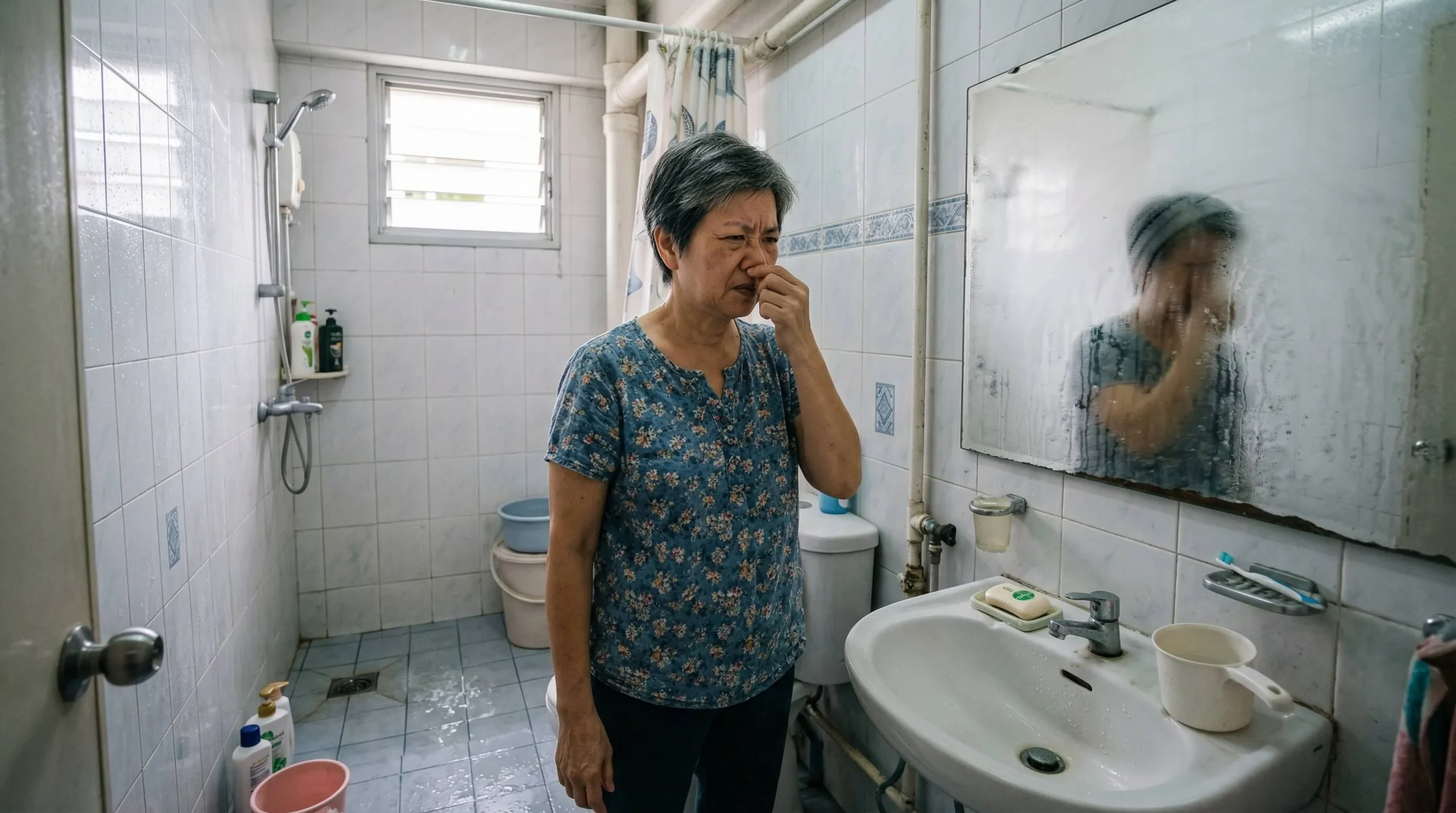

You step out of the shower, the tiles look sparkling clean, but ten minutes later that familiar musty bathroom smell Singapore hits you again. It’s damp, slightly earthy, and no matter how many times you scrub the grout or spray the walls, it comes back. This is one of the most common complaints in HDB flats and older condos. The combination of our constant humidity, trapped moisture, and poor air flow creates the perfect environment for that lingering odor even when the bathroom looks spotless. Most of the time it’s not dangerous, just annoying, and the fix is usually simpler than you think.
TL;DR – Key Takeaways
- Musty bathroom smell Singapore is almost always caused by hidden moisture and poor ventilation.
- Even after cleaning, the smell returns because mold or mildew is growing behind tiles or in the grout.
- Running the exhaust fan longer and controlling humidity solves it for most people.
- If the smell is very strong or comes with visible black spots, deeper cleaning or waterproofing may be needed.
- Simple daily habits can stop the odor from coming back.
If your bathroom smells damp again just hours after cleaning, you’re not imagining it — and you’re definitely not alone in Singapore.
Why the Musty Smell Keeps Returning No Matter How Much You Clean
You’ve wiped the walls, bleached the grout, and left the door open for hours, yet the next morning the bathroom still smells damp and musty. This happens because the real problem is rarely on the surface. Singapore’s humidity means moisture gets trapped in places you can’t easily reach – behind tiles, under the shower tray, or inside the exhaust fan duct. Once moisture sits there, mildew starts growing and the smell keeps coming back even when the visible surfaces look perfect.
Why does my bathroom still smell after cleaning?
In Singapore, a musty bathroom smell usually comes from trapped humidity, hidden mold behind tiles, or poor ventilation — not from surface dirt.
Because cleaning only removes surface dirt. The moisture trapped in walls, grout lines, or the drainage system continues to feed hidden mold, so the odor returns quickly.
The Biggest Culprit: Humidity and Poor Air Flow
After a hot shower the steam has nowhere to go in most small HDB bathrooms. The exhaust fan is often too weak or blocked with dust, so the moist air lingers for hours. That constant dampness is what creates the musty bathroom odor. Many residents notice the smell is strongest in the morning after the bathroom has been closed all night.
Does humidity cause bathroom odor?
Yes – high humidity is the main reason. When moisture can’t escape, it creates the perfect environment for mildew and that characteristic earthy smell.
If you also notice condensation on the windows or black spots appearing after rain, our condensation on windows guide explains how the same moisture problems spread from the bathroom to the rest of the flat.
Hidden Mold and Mildew Behind the Scenes
The black or dark spots you sometimes see in the corners are just the tip of the iceberg. Mold can grow inside the wall cavity or under the floor tiles where water slowly seeps from small grout cracks. In older HDB blocks this is extremely common because the original waterproofing starts to fail after 10–15 years.
Can mold grow behind bathroom tiles?
Yes, and it does in many Singapore homes. The mold stays hidden but releases spores and that musty smell into the air every time you use the shower.
If you’re also fighting ants that seem to appear out of nowhere near the wet areas, our Singapore ant infestation control guide shows how moisture problems attract them too.
Shower Drain and Plumbing Odors
Sometimes the smell is strongest right at the shower drain or toilet. This usually means the U-trap (the curved pipe under the drain) has dried out or has gunk buildup. In Singapore’s heat the water in the trap evaporates faster than in cooler countries, letting sewer gas come back up.
Why does shower drain smell at night?
The water in the trap evaporates during the day when the bathroom isn’t used, so sewer gases rise up when you walk in at night.
When the Smell Is More Than Just Annoying
Most musty bathroom smell Singapore is harmless but persistent. However, if the odor is very strong, you see spreading black patches, or family members start having more sinus issues or coughing, it’s worth taking a closer look. In rare cases hidden water damage behind the wall can affect air quality over time.
Is musty bathroom smell dangerous?
Usually not in small amounts, but long-term exposure to high mold levels can irritate airways. If the smell is very strong or getting worse, better to investigate.
Mini Quiz: What’s Causing Your Bathroom Smell? (Tap to reveal)
- Smell is strongest right after shower and disappears after a few hours:
Click for answer
Poor ventilation – run the exhaust fan longer.
- Smell is always there and gets stronger at night:
Click for answer
Dried drain trap or hidden mold behind tiles.
- Smell comes with visible black spots in corners:
Click for answer
Active mold growth – time for deeper cleaning and humidity control.
How Residents Actually Get Rid of the Smell for Good
The ones who finally win this battle do three things consistently: run the exhaust fan for at least 20–30 minutes after every shower, keep a small dehumidifier or moisture absorber in the bathroom, and clean the drain trap with hot water and baking soda once a month. Some also switch to anti-mold grout or paint in problem areas.
If your bathroom feels extra humid and you’re also noticing higher electricity bills from running the aircon more, our electricity bill spike guide shows the connection between bathroom moisture and overall home costs.
✅ Do These Every Day
- Run the exhaust fan 20–30 minutes after shower
- Wipe walls and floor dry after use
- Leave the door or window slightly open when possible
- Pour hot water down the drain once a week
❌ Stop Doing These
- Closing the bathroom door immediately after shower
- Drying towels inside the bathroom
- Ignoring black spots even if they are small
Real Stories from Singapore Bathrooms
“I cleaned every week but the smell never left. Turned out the exhaust fan duct was completely blocked with dust. Cleaned it and the smell was gone in two days.” – Mei Ling, 3-room HDB in Jurong
“My bathroom smelled musty every morning until I started using a small dehumidifier at night. Now it smells neutral even after two showers a day.” – Ahmad, condo in Tampines
Expert Insight – Home Maintenance Specialist (12 years in HDB and condos)
“The musty smell is almost always moisture that can’t escape. Fix the ventilation and humidity first and 80% of cases improve without any expensive repairs.”
A Personal Note
I’ve dealt with this musty bathroom smell in every flat I’ve lived in. The first time I thought I was just bad at cleaning. Then I learned it was the fan not working properly and moisture trapped behind the tiles. Once I started running the fan longer and using a cheap dehumidifier, the smell finally disappeared. Now whenever a friend complains about the same thing I know exactly what to tell them.
Official Resources & Further Reading
Your bathroom also has that musty smell?
Tell us in the comments what finally worked for you – longer fan time, dehumidifier, drain trick? Your tip might be exactly what someone else needs to finally get rid of the odor.
A musty bathroom smell in Singapore is almost always a sign that moisture is winning the battle against ventilation. Once you understand where the moisture is hiding and give it a way out, the smell usually fades quickly. Small daily habits make the biggest difference. Your bathroom can smell fresh again – it just takes a little consistency and the right focus on humidity and air flow.
While you’re fixing the bathroom, don’t forget the other small things around the home that affect comfort and costs. Our tap water taste guide (if the water in the shower also tastes off), polyclinic vs GP guide (if the damp air leaves you needing a check-up), ant infestation control guide (ants love damp bathrooms), circuit breaker trip reset guide (when moisture meets electrics), and small kitchen heat layout guide all help keep the whole flat drier, cleaner and more comfortable.

About the Author: Ella Dirlasso
Ella is a Singapore-based home maintenance specialist and resident writer at SG Vital. With over 12 years of hands-on experience navigating the quirks of HDB and condo living, she translates technical guidelines from local authorities like the NEA and PUB into practical, everyday solutions for Singaporean homeowners.