
Singapore Rainy Season Laundry: Dry Clothes Fast in HDBs

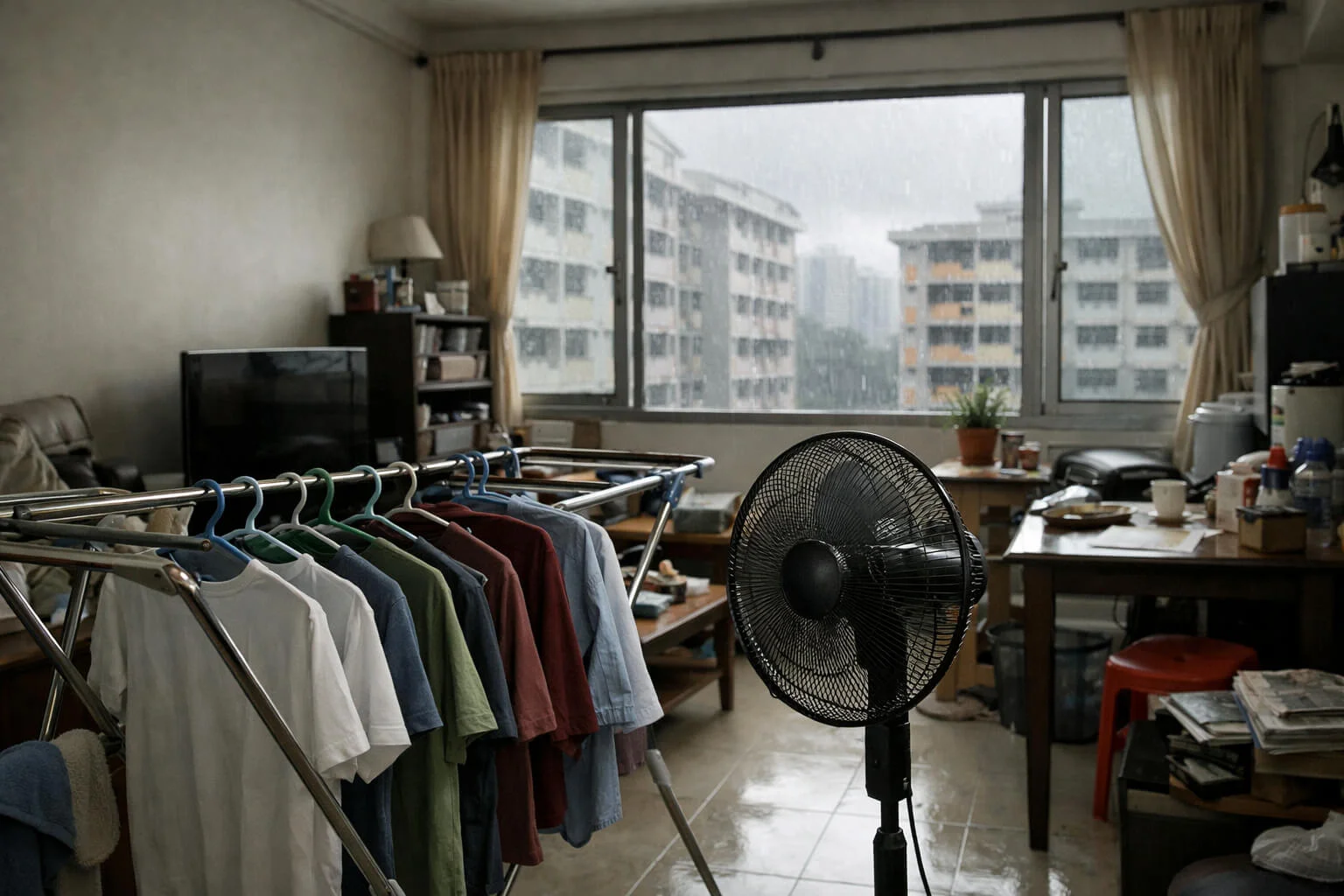

The monsoon season in Singapore brings cool breezes, heavy rain, and the dreaded household crisis: a mountain of wet clothes that refuse to dry. Here is how to stop the dampness from taking over your flat.
⏱️ TL;DR: The 30-Second HDB Drying Hack
- Location: Move racks out of the service yard. Place them between your living room window and front door.
- Spacing: Use the “3-finger rule” between hangers.
- The Secret Weapon: Turn your Aircon to “Dry Mode” (water drop icon) and close all windows for 4 hours. It works like an industrial dehumidifier.
The Singapore Problem: It’s Clean, But It Smells… Damp
Look out the window of your HDB flat in December. The sky is grey. The rain is relentless. And out in the service yard, hanging from the bamboo poles or the automated laundry rack, is yesterday’s wash. You touch the hem of a t-shirt. It is cold and clammy.
You bring it inside. It doesn’t smell like the lavender detergent you used. It smells like a wet dog.
This is the ultimate domestic frustration in the tropics. During the rainy season, our humidity Singapore home tips are put to the ultimate test. The air is so saturated with water that nothing evaporates. The result is clothes not drying in HDB service yards, and a slow, creeping dampness that invades our wardrobes, our bedsheets, and our patience.
Why Laundry Dries So Slowly Here (Plain English)
We often think laundry needs heat to dry. It doesn’t. It needs dry air.
Humidity vs Heat
Imagine the air in your living room is a sponge. On a sunny day, the sponge is dry; it sucks the water right out of your wet clothes. On a rainy day, that sponge is already 90% full of water (humidity). It cannot absorb the water from your jeans. The clothes just sit there, wet.
Airflow is the real hero
If the air is saturated, you need to replace it. Wind pushes the wet air away and brings in slightly drier air. That is why drying clothes indoors Singapore-style without any windows open is a disaster. You are trapping the moisture inside a concrete box.
The Fast-Dry Setup for HDB Homes (No fancy gear)
If you live in a newer BTO flat, your service yard is likely tiny. Stacking clothes vertically here during the monsoon is a recipe for the dreaded musty smell. You need to leverage your living room’s airflow.
🌬️ The HDB Cross-Wind Formula
Open your front door (keep the gate locked) and your living room windows. Place your drying rack directly in this path. The natural breeze funneling through your flat creates a low-pressure zone, pulling moisture off your clothes faster than a fan alone.
You don’t need an expensive dryer to dry laundry fast Singapore. You just need geometry and physics.
Where to hang (best airflow spots)
Move the rack out of the small service yard and into the living room near an open window. Yes, it ruins the interior design for a day, but the best way to dry laundry inside HDB flat is placing it directly in a cross-breeze channel (e.g., between the living room window and the front door).
Spacing rules: the “finger gap” trick
Never pack your clothes tightly. You need at least a “three-finger gap” between each hanger. If clothes are touching, the air cannot pass between them. Alternate long items (jeans) with short items (socks) to create an “air tunnel” underneath.
Fan placement: what direction actually helps
Pointing a fan directly at a wall of clothes doesn’t help much. You need the air to pass through the clothes. Place a standing fan at one end of the drying rack, aiming down the length of the rack so the wind ripples through the gaps.
Indoor Drying Without Musty Smell
When you are forced to dry indoors, heavy items become a liability.
The #1 mistake: thick bundles and folded hems
Musty smell clothes Singapore residents complain about almost always starts at the thickest part of the fabric: the waistbands of jeans, the folded hems of towels, and the armpits of hoodies. When hanging jeans, turn them inside out to expose the thick pockets, and use pants clips to hang them upside down by the ankles.
When to rotate and re-hang
If clothes have been hanging for 12 hours and are still damp, you need to flip them. Unfold that towel and hang it a different way. The parts hidden from the airflow are where the bacteria start to grow.
The Musty Smell Problem (And Why It Lingers)
We need to be clear about one thing: why clothes smell damp even after washing Singapore style. The smell isn’t “dirt.” It is biological.
Smell is trapped moisture + time
When moisture sits in a fabric for too long, naturally occurring bacteria and fungi begin to feed on it. The sour, musty smell is actually the byproduct of these microorganisms. That is how to prevent mould smell in clothes—deny them time. If the clothes dry in under 8 hours, the bacteria don’t have time to multiply.
Washing machine habits that cause it
Often, the smell doesn’t come from the clothes; it comes from the machine. Closing the washing machine door immediately after a cycle traps moisture inside the dark drum. This breeds mould. Always leave the door open for at least an hour after washing.
Wardrobes, Rooms, and That Quiet Dampness
The dampness doesn’t stop at the laundry rack. Musty smell in room Singapore homes is common because our built-in wardrobes are practically sealed vaults for moisture.
🛒 Budget Lifesavers (Get these at NTUC or Daiso)
Don’t want to invest $300 in a mechanical dehumidifier? Stock up on these HDB essentials before the rain hits:
- Thirsty Hippo (or generic equivalents): Place at the bottom of your wardrobe. Change them when the water reaches the replacement line.
- Daiso Charcoal Bags ($2.16): Stuff these into your work shoes and leather bags. They absorb both moisture and odours naturally.
- Pants Clips/Hangers: Essential for hanging jeans upside down to dry the heavy waistbands first.
In close HDB living, damp smells can spill into shared spaces and trigger friction. If it turns into a neighbour issue, follow this calm escalation roadmap:Singapore HDB neighbour disputes guide.
The wardrobe trap
A closed wardrobe in 85% humidity is a mould factory. How to prevent mould in wardrobes Singapore requires active management. Do not pack clothes too tightly. Moisture needs somewhere to escape.
Simple ventilation habits
Leave your wardrobe doors open for a few hours on weekend mornings. Place moisture absorbers (the generic charcoal bags or silica gel pots) in the corners. For leather shoes and bags, which attract mould easily, stuff them with newspaper to absorb ambient moisture.
Dehumidifier vs Fan vs Aircon Dry Mode
When natural wind fails during the rainy season laundry Singapore suffers through, you need mechanical help. Dehumidifier vs fan Singapore is a common debate. Here is the breakdown:
If your aircon’s Dry Mode isn’t helping (or the unit smells, leaks, or isn’t cold), use this quick troubleshooting guide before calling a technician:Singapore aircon fix guide.
The Fan
Cheap, accessible. It doesn’t remove water from the air, but it moves the wet air away from the clothes. Effective if windows are open.

Aircon “Dry Mode” (The Water Drop Icon)
Most people ignore the “Dry Mode” on their aircon. In this mode, the aircon runs the compressor slowly to extract moisture from the room without making it freezing cold. Hang clothes inside, turn on Dry Mode for 4 hours, and shut the windows. It works wonders.
The Dehumidifier
If you ask how to reduce humidity at home in Singapore permanently, this is the answer. It is a dedicated machine that sucks water out of the air. Dehumidifier settings for Singapore humidity usually target keeping the room at 50-60%. It is highly effective for drying clothes in a closed room, but it consumes electricity and costs money upfront.
Wet Weather Weekly Routine (So it doesn’t snowball)
During the monsoon season, you cannot do laundry once a week. If you wash a massive pile on Saturday and it rains, your entire house becomes a wet market.
Instead, do smaller loads every two days. It is easier to find space to properly space out 10 items than 30 items. If heavy rain hits for three days straight, prioritize washing essentials (underwear, work shirts) and leave the bedsheets for a sunny day.
Quick Checklist (Save This)
✅ Do This
- Leave the washing machine door open after every wash.
- Use the “three-finger gap” rule when hanging clothes on the rack.
- Hang jeans upside down and inside out.
- Use the Aircon “Dry Mode” if the rain just won’t stop.
- Aim standing fans to blow through the clothes, not at them.
- Do smaller loads of laundry more frequently during the monsoon.
- Put moisture absorber pots inside dark wardrobes.
- Sniff heavy towels before folding them (if they smell damp, don’t fold).
- Open bedroom windows for an hour every morning to flush out night moisture.
- Wash your washing machine drum with a cleaner cycle once a month.
❌ Avoid This
- Do not dry clothes in a room with the windows and doors shut (unless using a dehumidifier).
- Do not hang wet towels over each other.
- Do not pack clothes tightly on the HDB bamboo poles.
- Do not put slightly damp clothes into the wardrobe.
- Do not leave wet laundry in the machine basket overnight.
- Do not use extra fabric softener on rainy days (it traps moisture).
- Do not stack wet shoes on top of each other.
- Do not hang laundry directly over cooking areas.
- Do not ignore dark spots (mould) forming on the ceiling above your drying rack.
- Do not wait for a sunny day to wash your only work shirt.
Official Context
The Meteorological Service Singapore (MSS) provides daily humidity and rainfall updates. During the Northeast Monsoon (typically December to March), relative humidity in Singapore frequently reaches 90-100% during prolonged rain events, requiring active moisture management in homes.
Editor’s Note: This guide offers practical wet-weather habits for Singapore homes. If you see persistent mould growth (walls/ceiling/wardrobes) or strong musty odours that return quickly, consider professional assessment—especially for households with asthma or young children.
🕰️ One Small Moment
“I was complaining to my mother about my gym clothes smelling sour. She didn’t say anything. She just walked into my room, opened my wardrobe, took out my damp towel, and hung it over the back of a dining chair right under the ceiling fan. ‘Air,’ she said. ‘You need air, not more soap.’ The next day, the smell was gone. The old HDB auntie wisdom still beats modern tech every time.”