Singapore’s Quiet Redesign: When ‘Smart’ Efficiency Leaves People Behind

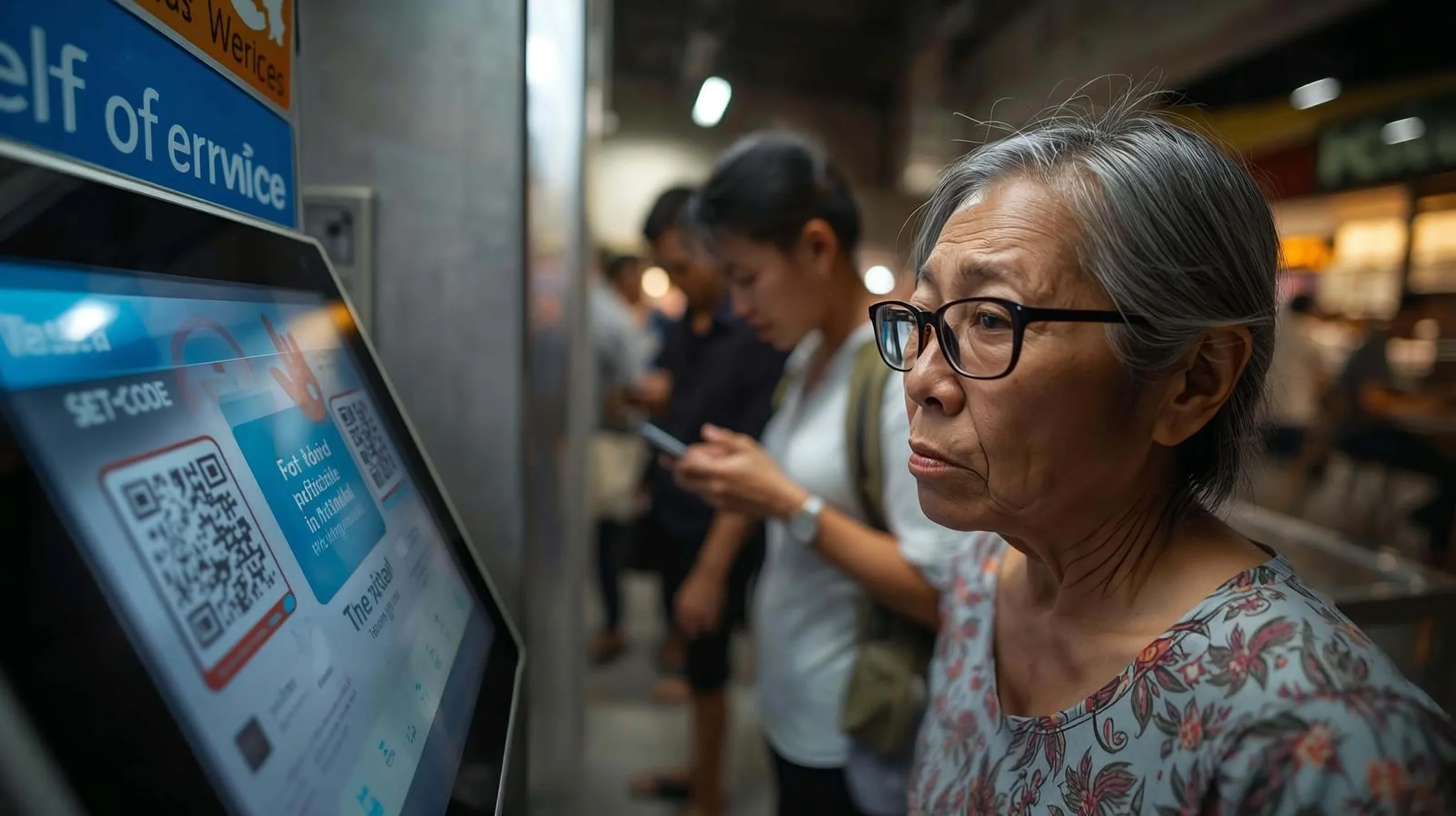

It’s not just one app or one kiosk. It’s the cumulative weight of a city redesigning itself for speed, often forgetting the people who can’t keep up.
Madam Teo stands at the entrance of the Community Club. She just wants to book a badminton court for her grandson.
Five years ago, she would walk to the counter, say hello to the clerk, pay cash, and get a paper receipt. A two-minute interaction. A smile exchanged.
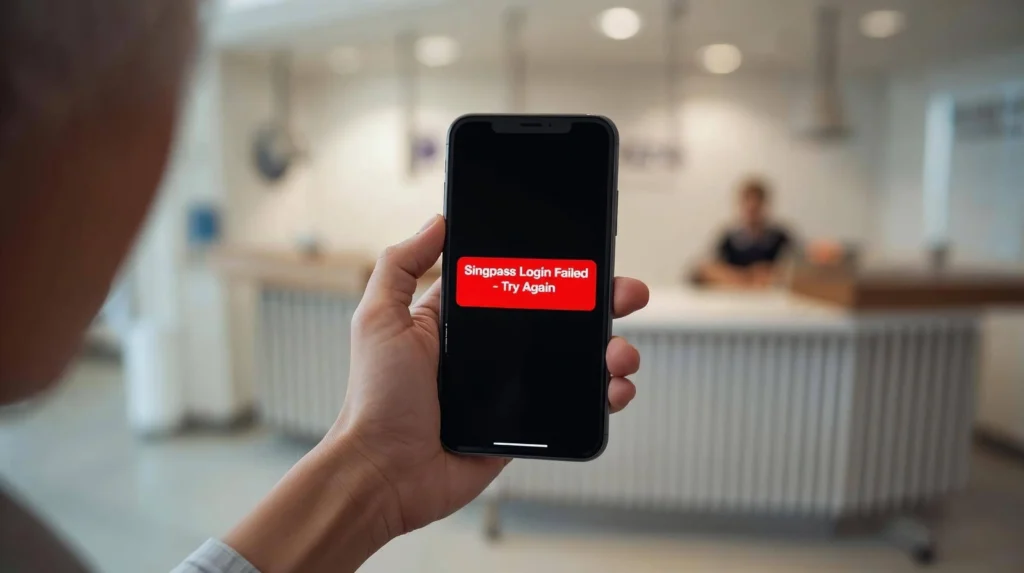
Today, she is stopped by a glass barrier. There is a QR code. A sign says “Scan with Singpass.” She fumbles for her phone, her reading glasses sliding down her nose. The app requires Face ID. It fails. She tries her passcode. Wrong digit. The queue behind her isn’t saying anything, but she can feel the heat of their impatience.
Many residents are already sensing that something fundamental has shifted in everyday Singapore.
“Never mind,” she mutters, turning around and walking away.
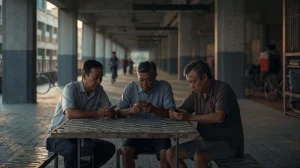
This scene is playing out everywhere in Singapore. From the ERP 2.0 units hidden in footwells to the silent kiosks in kopitiams, we are witnessing a quiet, aggressive redesign of public life. This shift is already reshaping everyday social spaces, especially neighbourhood kopitiams where seniors are quietly disappearing. The goal is frictionlessness. But for a significant slice of the population, we are just building glass walls.
As Singapore doubles down on optimisation, a growing question is emerging: should every system be built for maximum speed?
Why a deliberate ‘slow lane’ may be essential
is now part of the national conversation.
The Cult of Optimization
Singapore runs on efficiency. We have no natural resources; we only have time and manpower. So, we optimize. We automate.
Look at our roads. The new ERP 2.0 system is a marvel of data collection, designed to erase physical gantries. But on the ground, it forces drivers to manage apps, auto-top-ups, and touchscreen alerts. It demands cognitive load.
Look at our food. The “productive” coffee shop has no cashier. You order on a screen. You pay via cashless transfer. You wait for a number. The human element—the banter, the customization, the cash—is stripped away because it is “inefficient.”
But efficiency has a hidden tax. It transfers the labour from the service provider to the user. You are now the cashier. You are the data entry clerk. And if you aren’t tech-savvy? You are effectively locked out of the economy.
Why This Matters to the System
This shift is driven by the Smart Nation mandate and a critical labour crunch. Singapore’s workforce is shrinking. We simply don’t have enough people to man every counter or collect every toll manually. Digitization is the only way to keep the city running at scale. However, the speed of implementation is outpacing the digital literacy of the “Super-Aged” demographic, creating a temporary but painful societal fracture.
The “Proxy” Citizen
The result is the rise of the “Proxy Citizen.”
Talk to any young adult in Singapore. Ask them about their parents. You will hear the same story. “I handle my dad’s CDC vouchers.” “I book my mum’s polyclinic appointments.” “I set up the auto-top-up for their car.”
Seniors are becoming dependent on their children not just for money, but for access. They have the rights of citizens but lack the digital keys to exercise them.
We saw this at a FairPrice supermarket. An uncle with a handful of vouchers stood confused at the self-checkout. He didn’t know how to toggle the menu to “CDC Voucher.” He eventually waved over a staff member. The staff member, overworked and managing six machines, tapped the screen aggressively without explaining. The problem was solved, but the agency was lost.
| Interaction | The Analog Past | The Digital Present |
|---|---|---|
| Paying for Parking | Tearing a coupon (Physical) | Parking.sg App (Requires Data/Login) |
| Seeing a Doctor | Walk-in registration | App Booking / Tele-consult |
| Banking | Passbook update at branch | 2FA Token / Face ID / App |
| Failure Mode | “Queue is long” | “Account Locked / System Error” |
What This Means for Residents
We need to be honest about the trade-offs.
The Mental Load:
Living in Singapore now requires a high level of executive function. You need to remember passwords, update apps, manage notifications, and troubleshoot connectivity. For the cognitively frail, this is an impossible bar to clear.
The Loss of Spontaneity:
Everything requires a booking. You can’t just show up. You need to reserve the BBQ pit via OnePA. You need to book the swimming slot. Life becomes a series of calendar appointments managed by algorithms, killing the spontaneous joy of “just going downstairs.”
Official Context
The government acknowledges these gaps. The Smart Nation and Digital Government Group (SNDGG) has launched initiatives like “Tech Connect” at community centres to help residents navigate government digital services. The mandate is “Digital to the Core, and Serve with Heart,” implying that offline options should remain available for the vulnerable.
This article is based on on-the-ground observations across multiple heartland neighbourhoods.
🧠 Editor’s Bottom Line
“I love that I can pay my taxes in 30 seconds on my phone. But I hate that my 70-year-old neighbour feels useless because she can’t buy a meal without navigating a touchscreen maze. A Smart Nation isn’t truly smart if it makes its founders feel stupid.”