Singapore Waste Disposal Guide: Recycling Habits Explained

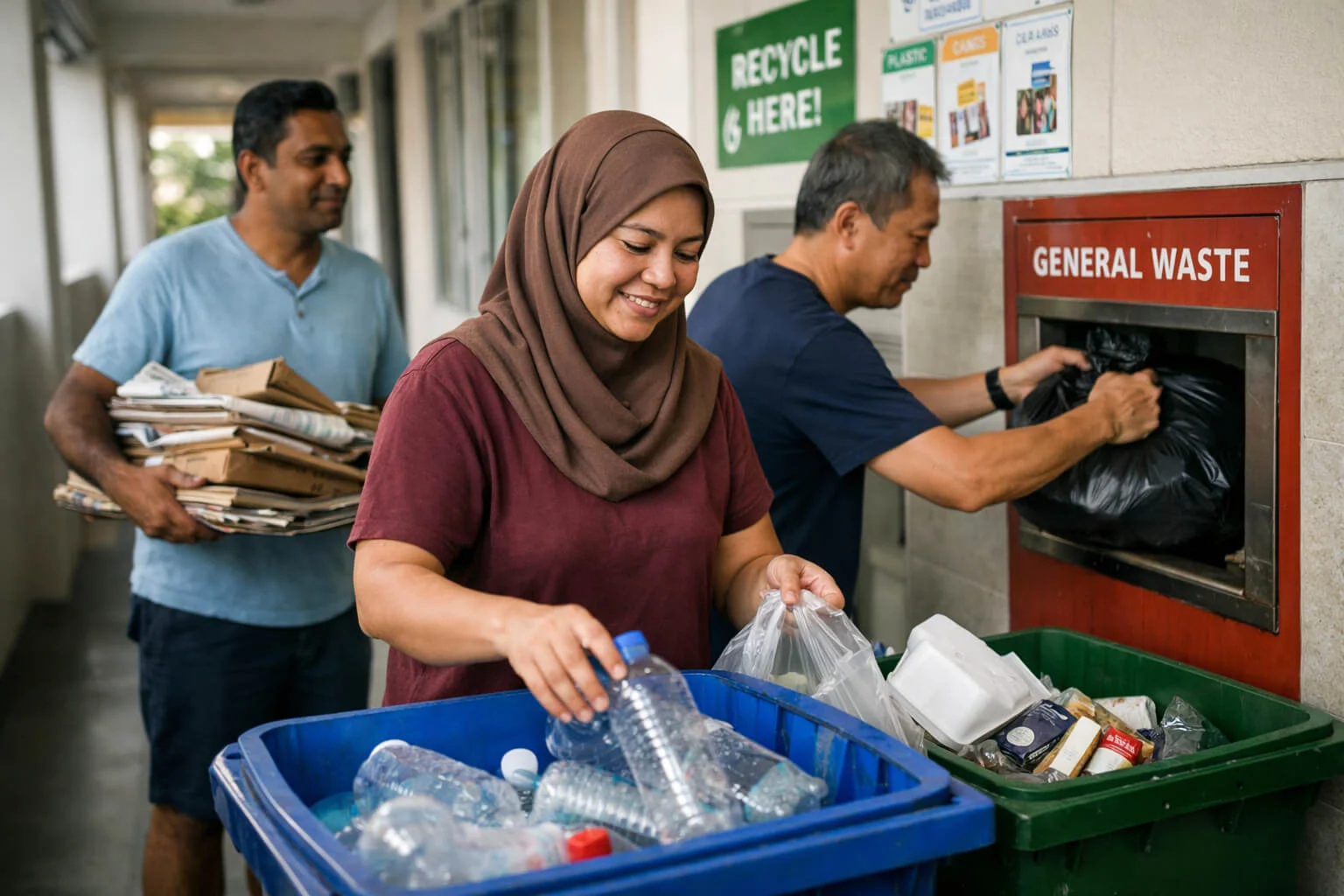

In most cities, taking out the trash is a chore. In Singapore, it’s a flick of the wrist. But what happens behind that metal flap in your wall, and why is the blue bin outside still so misunderstood? Here is the reality of waste in the Lion City.
📍 Too Long; Didn’t Read (Quick Recap)
- HDB Chute Rules: Bag everything tight, no burning items, and please, no bulky furniture down the hole!
- Blue Bin Strategy: Only “Clean & Dry” items. If it’s oily from your dabao lunch, it’s general waste.
- The Journey: Your trash becomes electricity at WTE plants, and the ash goes to Semakau Landfill.
- Bulky Items: Don’t leave them at the lift lobby. Call your Town Council for free removal (HDB).
For most of us, our daily interaction with waste ends at the rubbish chute. We bag it, drop it, and it vanishes. This convenience is a marvel of urban engineering, but it also creates a “out of sight, out of mind” culture. This singapore trash disposal guide aims to pull back the curtain on that invisible infrastructure and address the singapore waste sorting confusion that leads to high contamination rates in our recycling bins.
Daily disposal habits are often tied to broader routines — from morning coffee packaging to commute takeaway waste. These micro-patterns reflect the same behavioural loops explored in our
Singapore Morning Routine Reality guide
.
Why Trash Disposal in Singapore Feels Simple — But Isn’t
We live in one of the densest cities on earth. Because of this, household waste singapore guide principles are built on speed and hygiene. The hdb rubbish chute rules we follow aren’t just about smell; they are about preventing fires and pest infestations in a building where 100 families share a single vertical tunnel.
How dense housing shapes waste habits is fascinating. Because we have chutes in our kitchens or common corridors, we don’t “see” our trash accumulate like people in landed properties do. This creates an illusion of infinite space, which often makes us less mindful of what we are throwing away.
Large household fixes or renovation cleanups often create disposal confusion, especially when contractors are involved. If you’re planning maintenance work, see our
Singapore Home Repair Contractor Guide
for preparation tips before waste removal becomes an issue.
Understanding the HDB Rubbish Chute System
Behind the wall of your kitchen is a vertical shaft that drops directly into a large compactor or bin at the void deck. While it feels like a bottomless pit, there are strict throwing trash down chute etiquette rules to follow:
- Never throw burning items: A single cigarette butt or uncooled charcoal can start a fire in the main bin.
- Bag everything: Loose wet waste leads to rubbish chute smell prevention singapore failures and attracts cockroaches.
- Avoid bulky items: Large boxes or furniture will jam the chute, causing a backup for every neighbor above you.
Recycling in Singapore: Why People Get Confused
This is where the singapore blue bin recycling system often breaks down. Many residents practice “wishcycling”—throwing something in the blue bin because they hope it’s recyclable, even if it’s covered in food sauce.
Recycling singapore how it works: Unlike some countries that require you to sort paper, plastic, and glass into different bins, Singapore uses a “commingled” system. You put all recyclables in the blue bin, and they are sorted at a Materials Recovery Facility (MRF). However, if you throw a half-full bubble tea cup into the blue bin, you might contaminate the entire load, turning potentially recyclable paper into wet trash.
What Goes Where: A Practical Sorting Guide
To solve the recycling bin singapore what goes where puzzle, remember the “Clean and Dry” rule.
- Blue Bin (Recyclables): Clean plastic bottles, glass jars, metal cans, and dry paper/cardboard.
- Chute (General Waste): Food waste, soiled tissue, styrofoam, and contaminated plastic (like oily dabao containers).
- Electronics: These should never go in either. Use E-waste bins found at malls or Community Clubs.
🧐 Quick Check: Are you a Recycling Pro?
Which of these can actually go into the Blue Bin?
*Remember: When in doubt, throw it out (in the general waste)!
After You Throw It Away: The Hidden Journey
What happens to trash after disposal singapore? It’s a three-step process:
1. **Collection:** Waste is trucked to one of Singapore’s four waste-to-energy (WTE) plants.
2. **Incineration:** Trash is burned at high temperatures. The heat creates steam that turns turbines to produce electricity.
3. **Landfill:** The remaining ash is shipped to Semakau Landfill—Singapore’s only offshore landfill.
This is the singapore waste management process step by step. We don’t just “dump” trash; we burn it to save space and create power. However, Semakau is filling up, which is why can you recycle plastics singapore guide awareness is more important than ever.
Appliance replacements — such as heaters or pressure systems — also generate disposal decisions many residents overlook. For context on household system upgrades, refer to
Singapore Water Pressure & Heater Guide
.
🇸🇬 Quick Check: Can or Cannot?
| Item | Recyclable? | Reason / Action |
|---|---|---|
| Oily Dabao Box | ❌ Cannot | Grease ruins the paper batch. |
| Milk Cartons | ✅ Can | Must rinse and flatten first! |
| Shattered Glass | ❌ Cannot | Safety risk for workers. Wrap and throw in chute. |
| Empty Drink Cans | ✅ Can | Aluminum is highly recyclable. |
Bulky Items and Non-Routine Disposal
Moving house? Don’t leave your sofa at the lift lobby. Singapore town council trash rules usually offer free bulky item removal services for HDB residents (usually limited to a certain number of items per month). For condos, you’ll need to coordinate with your private managing agent. Always book at least 3-5 days in advance.
💡 Pro-Tip: Don’t Pay for Bulky Disposal!
If you live in an HDB, you don’t need to hire private movers to throw your old sofa. Most Town Councils offer free removal services for up to 3 items per month. Just call them 3 days in advance. Saves you money and keeps our corridors clear!
A personal note: I used to be a “wishcycler.” I felt guilty throwing plastic food containers in the chute, so I’d put them in the blue bin. Then I visited a sorting facility and saw how one dirty laksa bowl could ruin a whole bag of clean cardboard. Now, if I can’t wash the grease off a plastic container, it goes in the chute. It feels wrong, but it’s actually better for the system than contaminating the recycling.
Poor waste sealing or food residue buildup can unintentionally attract household pests — an issue many residents encounter. For prevention insights, explore the
Singapore Home Pest Reality Guide
.
👗 What About Old Clothes & Electronics?
The Blue Bin is not for your old clothes or dead batteries. Here’s what to do instead:
- Old Clothes: Look for Cloop or Greensquare bins at your void deck or CC.
- Batteries & Laptops: Use ALBA E-waste bins found in major supermarkets like NTUC or Cold Storage.
- Shoes: Look for the “Step Up” sports shoe recycling points at ActiveSG stadiums.
Quick Checklist (Save This)
✅ Do This
- Bag and tie your general waste tightly before dropping it down the chute.
- Rinse plastic bottles and metal cans before putting them in the blue bin.
- Flatten cardboard boxes to save space in the recycling bin.
- Remove plastic wrap from magazines and flyers before recycling the paper.
- Use dedicated E-waste bins for batteries and old phones.
- Check your Town Council’s website for free bulky item removal dates.
- Dispose of heavy items (like glass) carefully to avoid breaking the chute lining.
- Double-bag food waste to prevent rubbish chute smell issues.
- Educate your household members on the recycling vs general waste singapore explained differences.
- Keep the area around the common chute clean as a courtesy to neighbours.
❌ Avoid This
- Do not throw liquids down the rubbish chute.
- Do not recycle styrofoam (it’s general waste in Singapore).
- Do not put food-stained pizza boxes in the blue bin (the grease ruins it).
- Do not leave bulky trash in the corridor (fire hazard and fineable).
- Do not throw loose flour or fine powders down the chute (dust explosion risk).
- Do not put mirrors or porcelain in the blue bin; they aren’t the same as bottle glass.
- Do not throw rechargeable batteries in the chute (fire risk at the plant).
- Do not “wishcycle”—if it’s dirty and unwashable, throw it in the chute.
- Do not use the blue bin as a dumping ground for old clothes (use donation bins).
- Do not ignore hdb rubbish chute rules; they exist for building safety.
Official Resources & Support
For official waste management policies and recycling search tools, visit:
Editorial Note
This article reflects everyday disposal behaviour observations and public information rather than regulatory enforcement guidance. Waste sorting practices and recycling compliance can vary between estates, building types, and households across Singapore.
📢 Join the Kampong Spirit!
We’ve all seen some “interesting” things in our HDB chutes or blue bins. What’s the weirdest thing you’ve spotted? Or do you have a pro-tip for keeping the chute area smell-free?
Share this guide with your neighbors so we can keep our estate clean and green! 🇸🇬