
Why Some HDB Corridors Feel Like Ovens After Sunset
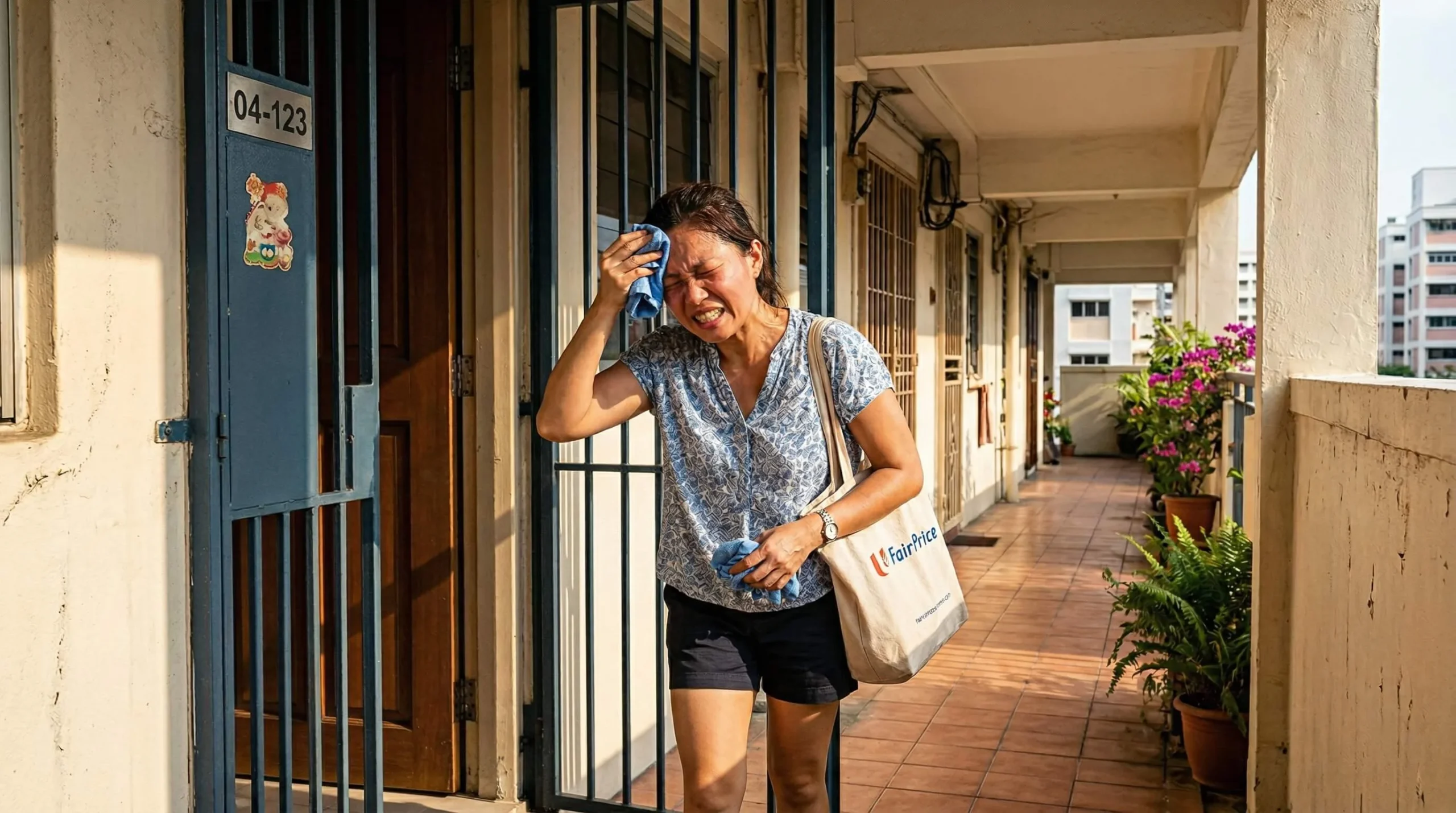

You step out of your flat into the corridor and it hits you — the air feels thicker and hotter than the open space outside. Even when the temperature reading says the same number, your corridor feels like an oven while the void deck below has a breeze. This is one of the most common complaints in HDB blocks, especially in slab-type buildings with long corridors. The design, materials, and our tropical climate combine to trap heat and block airflow in ways most people never expect. The good news is that once you understand why it happens, there are practical steps you can take to make your corridor noticeably cooler without waiting for a major renovation.
TL;DR – Why Your Corridor Feels Hotter
- HDB corridors trap heat because of concrete thermal mass and poor cross-ventilation.
- West-facing or mid-floor corridors get the worst heat buildup, especially after sunset.
- Single-loaded corridors and high block density create wind shadows that stop breeze.
- Simple fixes like reflective film, better spacing of items, and small fans make a real difference.
- The problem is worse in older blocks but common even in newer ones.
Quick Answer: HDB corridors feel hotter than outside because concrete walls store heat all day and release it at night, while narrow layouts block cross-ventilation. This creates stagnant, heat-trapped air even when outside temperatures are lower.
How HDB Design Turns Corridors Into Heat Traps
Most Singaporeans live in slab blocks with long, straight corridors. These designs were built for density and cost efficiency, not for natural breeze. When corridors face west or are sandwiched between two rows of units, they become heat canyons. Sunlight hits the long concrete walls for hours, and the narrow space stops wind from flowing through. Even on a breezy day outside, the corridor can feel completely still and stuffy.
Why does my corridor feel hotter than outside?
Because the building itself stores and re-releases heat while blocking natural airflow. The corridor acts like a narrow oven with concrete walls that absorb sunlight all day.
Concrete Walls and the Night-Time Heat Problem
Concrete is excellent at holding heat. During the day the walls soak up solar energy like a sponge. After sunset, that stored heat radiates back into the corridor, making it feel warmer than the open air outside. This is why many residents notice the corridor is actually hotter at 8 p.m. than it was at 3 p.m. — the thermal mass is giving back what it collected earlier.
If you also notice your fridge sweating or clothes taking forever to dry because of the same humidity, our fridge sweating guide and clothes smell musty after drying guide show how corridor-level heat and moisture problems spread into your flat.
💡 Did You Know?
Concrete in HDB corridors can absorb heat all day and re-radiate it at night, raising the air temperature by 3–5°C even when the official weather station shows cooler readings. This “thermal lag” is why many corridors feel hotter after sunset than they did at noon.
Why Some Corridors Have Zero Breeze
Block orientation and surrounding buildings create wind shadows. If your corridor is on the leeward side or blocked by a taller block nearby, natural wind simply never reaches it. High floor corridors sometimes feel even worse because the wind is blocked by the building’s own structure. This lack of air movement turns the corridor into a stagnant heat pocket.
How to improve corridor airflow in HDB?
While you can’t change the building design, small personal solutions like strategic placement of small fans or reflective materials on your gate can create local air movement and reduce the heat you feel.
Mini Quiz: Why Does Your Corridor Feel Like an Oven? (Tap to reveal)
- Corridor feels hottest in the late afternoon or evening:
Click for answer
Heat stored in concrete walls is being released back into the air.
- No breeze even when it’s windy outside:
Click for answer
Building layout creates a wind shadow zone that blocks airflow.
- Metal gates and railings are burning hot to touch:
Click for answer
Radiant heat from direct sunlight on surfaces.
The Role of Humidity and Stagnant Air
High humidity makes the heat feel heavier and more oppressive. When air doesn’t move, moisture lingers and the heat index rises. This is why the same temperature can feel unbearable in a corridor but comfortable outside where breeze is present.
If you notice similar damp or musty smells in other areas of your home, our musty bathroom smell guide explains how trapped moisture creates the same heavy feeling across different parts of the flat.
When Corridor Heat Signals a Bigger Building Issue
Occasional heat is normal, but if the corridor feels consistently 4–5°C hotter than the open area or you notice metal gates burning hot even in the shade, it may point to poor overall building ventilation or recent modifications that blocked airflow. Top-floor corridors and west-facing blocks are most affected.
Is corridor heat dangerous?
It’s uncomfortable and can increase indoor heat load, but it is rarely dangerous on its own. However, it does make your aircon work harder and can raise your electricity bill noticeably.
If your electricity bill has been climbing along with the corridor heat, our electricity bill spike guide shows the direct connection between poor corridor airflow and higher cooling costs.
✅ Practical Things You Can Do
- Install reflective window film or light-coloured shading on your gate
- Use a small portable fan pointed outward to push hot air away
- Keep potted plants low and away from blocking airflow
- Consider heat-reflective paint on your front door and gate (if allowed)
❌ Avoid These Mistakes
- Adding solid partitions or heavy curtains that block breeze
- Storing items that trap heat against the corridor wall
- Ignoring the problem and just running aircon harder
Real Resident Experiences
“My corridor is west-facing and felt like a sauna every evening. Added reflective film to the gate and a small fan — temperature dropped enough that I noticed it immediately.” – Wei Ming, 12th floor, Tampines
“We live on a corner unit. The corridor used to be unbearable until we realised the lift lobby heat was pushing into our area. Simple shading and better spacing helped a lot.” – Priya, corner unit owner
Expert Insight – Architect Specialising in Tropical HDB Design
“Corridors were designed for density and cost, not comfort. The heat issue is built into the system. Residents can only mitigate it locally with shading, fans and reflective materials. The real long-term solution needs to come at the building design stage.”
A Personal Note
I’ve lived on three different floors in two HDB blocks. The worst corridor heat was on the 12th floor of a west-facing block. It felt like stepping into a microwave every evening. After trying everything from fans to plants, the biggest improvement came from simple reflective material and better spacing. Now I actually enjoy stepping out instead of dreading it. Small changes really do make daily life more bearable.
Official Resources & Further Reading
Your corridor also feels like an oven?
Tell us in the comments what you tried — reflective film, fan, shading? Did it make a difference? Your real experience helps other HDB residents who are melting every time they step outside their door.
Your HDB corridor doesn’t have to feel like a sauna. Understanding how the building design and our climate work together lets you make small, effective changes that improve daily comfort. The heat is built into the system, but you are not powerless against it. Start with one or two simple fixes and you’ll notice the difference immediately.
While you’re making your corridor more comfortable, don’t forget the other small things around the home that affect how you feel. Our polyclinic vs GP guide (if the heat leaves you needing a check-up), tap water taste guide, ant infestation control guide, circuit breaker trip reset guide and bathroom humidity mold drying guide all help keep the whole flat cooler and more liveable.

About the Author: Ege Sg
Singapore Daily Life & Urban Layout Observer
Ege has spent years navigating different HDB estates across Singapore, from the older slab blocks of Ang Mo Kio to the newer BTOs in Punggol. With a keen eye for urban design and practical everyday hacks, Ege shares field-tested advice to help fellow residents live more comfortably.