
Why Your HDB Bathroom Always Smells Damp (And The $2 Fix)

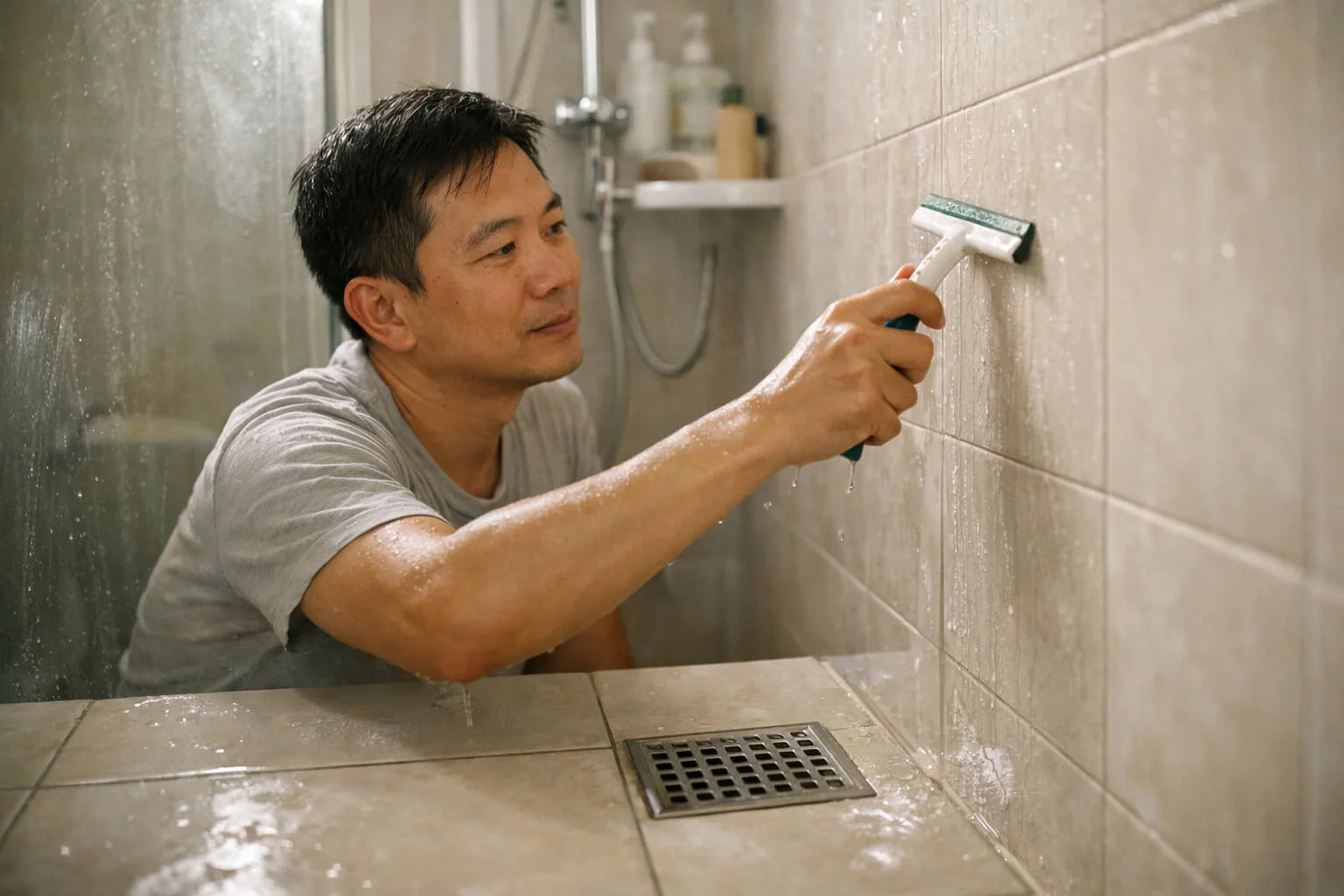

You scrubbed the tiles on Sunday. By Wednesday, that familiar sour, damp smell is back. In Singapore, cleaning isn’t just about removing dirt; it is a constant, strategic war against moisture. Here is the routine that actually works.
🇸🇬 The Ultimate “Lazy Singaporean” Mold Hack
- ✅ Ditch the expensive sprays: Buy a $2 squeegee from Daiso or Valu$.
- ✅ The 30-Second Rule: Squeegee the shower glass and wall tiles immediately after your last shower of the day.
- ✅ The Result: By removing the water before it evaporates, you cut bathroom humidity by 80%. No water = no mold.
The Singapore Home Problem: It’s Clean… But It Never Feels Fresh
It’s 7:00 AM. You groggily walk into your master bedroom toilet, close the door, and there it is. That heavy, damp air. It smells faintly of wet earth, old soap, and something sour. You look around. The sink is clean. The toilet bowl is clean. So where is the bathroom smell Singapore climate is so famous for coming from?
This is the ultimate domestic frustration on our island. You can spend your entire Saturday scrubbing, but if you don’t manage the invisible enemy—humidity—your flat will never feel crisp. A standard Singapore home cleaning guide often focuses on what detergents to buy. But the reality is simpler and cheaper: cleaning here is 20% scrubbing and 80% drying.
Why Mold Loves Singapore Homes (Plain English)
We live on the equator. Why mold keeps coming back in Singapore homes isn’t because you are a bad housekeeper. It is physics.
Humidity + poor airflow = perfect storm
Mold spores are everywhere in the air. They only need two things to grow: moisture and a food source (like dust or skin cells). With our humidity often hovering above 80%, moisture is practically the default state of your flat. Humidity home cleaning tips always start with airflow because still air allows moisture to settle onto surfaces.
Condensation vs leaks
If your bedroom windows get foggy because the aircon is too cold, that is condensation. It causes surface mold. But if you see bubbling paint on your ceiling, that is a leak from the neighbor upstairs. Cleaning won’t fix a leak.
The silent culprit: closed doors
The biggest mistake we make? Showering with hot water and then immediately closing the bathroom door. You have just created a tropical greenhouse inside your flat.
The Mold-Prone Map: Where It Starts (Room by Room)
Knowing the mold-prone spots Singapore home environments create helps you target your cleaning time efficiently.
Bathroom ceilings, grout lines, silicone edges
The mold on ceiling Singapore bathrooms get is usually black and patchy. Hot steam rises, hits the cooler ceiling, and condenses. The silicone sealant around your sink and the grout between tiles are also notorious traps. Once mold roots deep into the silicone, scrubbing doesn’t work; you just have to replace the seal.
Window frames and curtains
Condensation loves glass. The moisture drips down the window and collects at the aluminum tracks. Over time, your curtains brush against this wet track and absorb the moisture, quietly growing spores.
Behind furniture against outer walls
The 5cm Rule: In high-humidity climates like Singapore, trapping air behind large furniture against an external wall creates a condensation trap. Always leave a two-finger gap.
Push a sofa or a heavy wardrobe flush against a wall, and you cut off airflow. Months later, you pull it away and find a massive green patch on the wall. This is a classic mold-prone spots in Singapore HDB flats scenario.
Wardrobes and shoe cabinets
The wardrobe musty smell Singapore residents dread comes from storing slightly damp clothes in a dark, stagnant box. Leather jackets and shoes are prime real estate for white, fuzzy mold.
Aircon areas
We won’t go deep into aircon maintenance here, but know this: if the flaps of your aircon have black dots, the unit is blowing mold spores into your room every night.
If your aircon smells “damp” or blows black specks: it may be more than surface mold. Here’s a practical step-by-step guide on what to check (and when to call a pro): Singapore Aircon Fix Guide.
Bathroom Smells: The 5 Usual Causes
If you are wondering how to stop bathroom smelling in humid weather Singapore style, check these five suspects.
1. The floor trap / drain smell
Why bathroom drain smells even after cleaning? It’s usually the floor trap. Singapore plumbing uses a “P-trap” system holding a small amount of water to block sewer gases. If the bathroom isn’t used often, the water dries up. Sewer gas rises. The drain smell bathroom Singapore flats experience is easily fixed by pouring a bucket of water down the floor trap to refill the seal.
2. Damp towels and mats
A thick cotton bathmat that never fully dries is a bacteria factory. The HDB bathroom smell is often just your wet towel hanging behind the door.
3. Hidden mold in corners
Under the vanity sink, behind the toilet pedestal. We mop the center of the floor, but dirt and moisture accumulate in the dark corners.
4. Poor ventilation habits
Many older HDB flats do not have mechanical exhaust fans. If you don’t open the louver windows after a shower, the steam has nowhere to go.
5. “Cleaned” but still smells
Sometimes, the smell is dried urine trapped in the porous grout around the toilet bowl. A standard floor cleaner masks it, but an enzyme-based cleaner is needed to break it down.
A Safe “First Response” Routine (Before You Deep Clean)
When you spot a new mold patch, don’t panic-buy industrial chemicals.
Drying strategy: airflow and timing
Before you wipe, dry the room. Open the windows. Turn on a standing fan facing the wet area. Removing the moisture stops the active growth.
What to wipe first
Use a microfiber cloth with warm water and a basic household soap. For stubborn spots, standard white vinegar is highly effective against mold spores. Wipe, don’t scrub violently, as you might spread spores into the air.
What to avoid (Safety check)
Never, ever mix bleach with other cleaning agents (especially vinegar or ammonia). This creates toxic gas. Keep it simple and safe.
The Weekly Routine That Keeps Flats Fresh (15–30 Minutes)
Best weekly cleaning routine for humid flats doesn’t mean cleaning the whole house at once. Break it down.
Monday: Bathroom quick reset
Squeegee the glass doors. Pour a cup of water down the unused floor traps. Wash the bathmats.
Midweek: Wardrobe/bedroom airflow
Open all your wardrobe doors for two hours while the bedroom window is open. Let the trapped air cycle out. How to remove musty smell from wardrobe Singapore? Airflow is your answer.
Weekend: Deeper clean
Scrub the shower tiles. Check the back of curtains for moisture. Vacuum the dust bunnies (dust holds moisture and feeds mold).
The “rainy week” adjustment
During the monsoon, the routine changes. You might need to turn on the aircon’s “Dry Mode” for a few hours in the living room to suck the excess moisture out of the air.
Preventing the Comeback (This is the sticky section)
Cleaning removes the symptom. Habits prevent the disease. How to prevent mold in HDB bathroom corners permanently?
Ventilation habits
Keep the bathroom door and window open after a shower. If you have an exhaust fan, let it run for 15 minutes after you leave the bathroom.
Placement tricks
Pull all heavy furniture (sofas, beds, wardrobes) at least 5cm away from the wall. This gap allows air to circulate, stopping the “condo mold problem” behind cabinets.
Storage habits
Use thirsty hippo tubs or silica gel packets inside shoe cabinets. Do not pack wardrobes tightly; clothes need to breathe.
Sometimes, the house itself is the problem.
When It’s Not “Just Humidity”
You can’t clean your way out of a structural issue.
Signs it may be a leak
If a mold spot keeps returning to the exact same ceiling corner despite cleaning, or if the paint starts to flake and bubble, there is water trapped inside the concrete. This is an inter-floor leak.
When to contact management/landlord
Take photos. If you are in an HDB, check the HDB guidelines for ceiling leaks (usually a 50/50 cost share with the upstairs neighbor). In a condo, contact your MCST.
Tip: If the issue involves an upstairs neighbour (leaks, repeated damp patches, or water seepage disputes), this guide helps you handle it calmly and properly: Singapore HDB Neighbour Disputes Guide.
Quick Checklist (Save This)
✅ Do This
- Squeegee shower walls after your bath to remove 80% of the water instantly.
- Run the exhaust fan during and 15 mins after showering.
- Pour water down rarely used floor drains to block sewer gas.
- Wash bathmats weekly in hot water.
- Keep a 5cm gap between heavy furniture and walls.
- Leave wardrobe doors open on weekend mornings.
- Dry clothes thoroughly before putting them away.
- Use a dehumidifier or aircon ‘Dry Mode’ during heavy rain days.
- Clean aircon filters monthly to improve airflow.
- Replace old, moldy silicone sealant.
❌ Avoid This
- Do not close the bathroom door immediately after a hot shower.
- Do not mix bleach with vinegar or any other acidic cleaner.
- Do not hang damp towels on top of each other.
- Do not pack your wardrobe so full that air cannot circulate.
- Do not dry laundry inside a closed room without a fan or dehumidifier.
- Do not ignore mold on the ceiling (it spreads quickly).
- Do not use highly abrasive brushes on silicone; it creates micro-scratches where mold breeds.
- Do not store leather goods in dark, unventilated bottom drawers.
- Do not let wet curtains touch the window frame for days.
- Do not assume a chemical spray solves the root cause (moisture).
Official Context
If you suspect a persistent ceiling leak or water seepage in your HDB flat, refer to the Housing & Development Board (HDB) guidelines on the Goodwill Repair Assistance (GRA) scheme. For general health safety, ensure proper ventilation when using any household cleaning agents.
🕰️ One Small Moment
“I spent $30 on a heavy-duty grout brush and chemical cleaners. Every Sunday, I scrubbed the bathroom corners. Every Wednesday, the pinkish slime returned. Then my aunt visited. She took a cheap $2 plastic squeegee, and after my shower, she scraped the water off the tiles into the drain. It took 30 seconds. The slime never came back. It wasn’t about the scrubbing; it was about the water.”
Editorial NoteIn Singapore’s humid weather, “clean” doesn’t always mean “fresh.” Focus less on harsh chemicals and more on drying, airflow, and small weekly habits. If a ceiling corner keeps returning with mold or paint bubbling, treat it as a possible leak and follow HDB/MCST guidance—cleaning alone won’t solve trapped water.