Why Your Clothes Smell Musty After Drying Indoors in Singapore (And How to Fix It Fast)
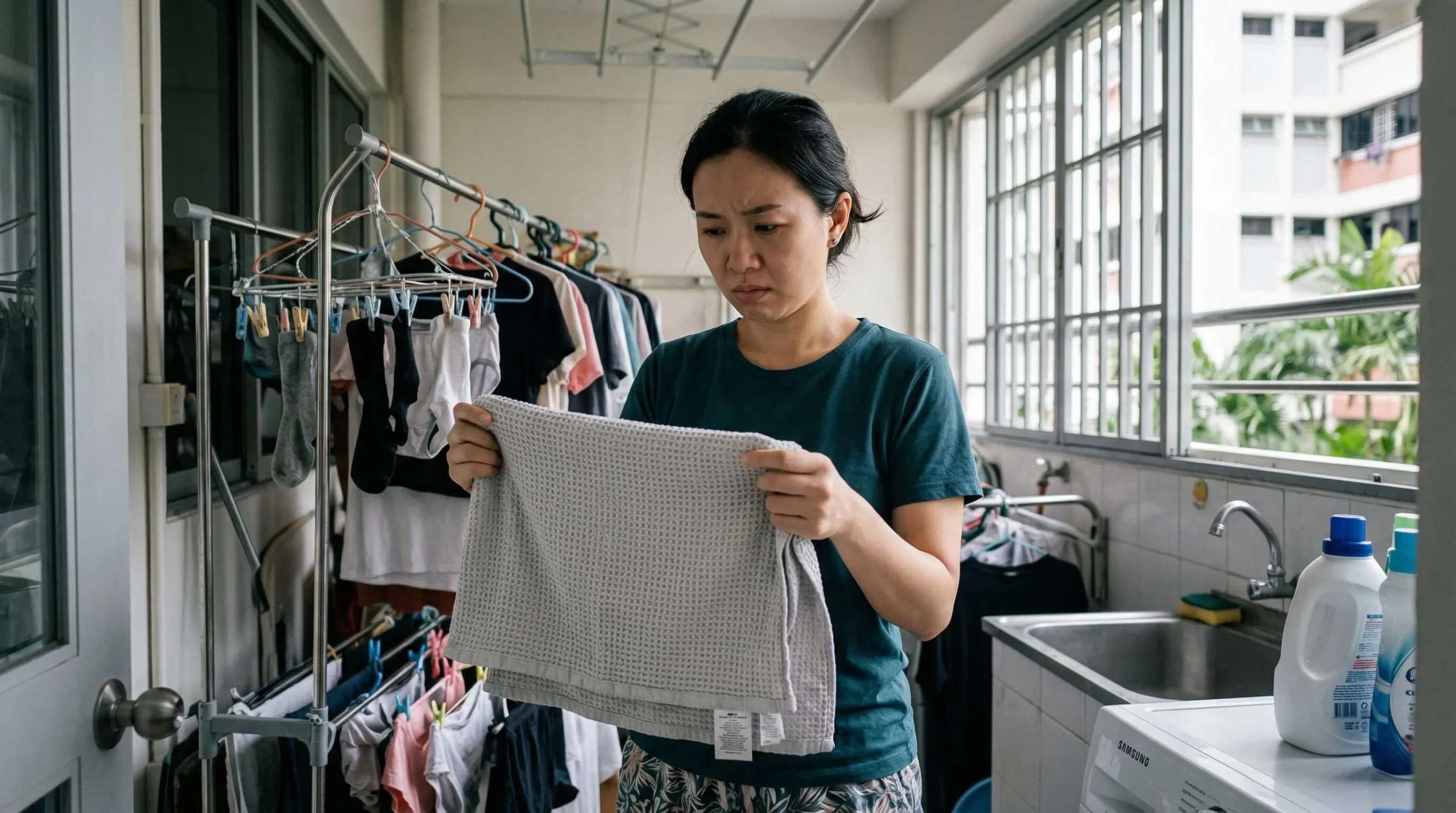

You wash your clothes properly, hang them neatly in the service yard or bathroom, wait all day… and when you finally fold them, that familiar musty smell hits you. It’s damp, slightly sour, and no matter how much detergent or fabric softener you use, it keeps coming back. Clothes smell musty after drying indoors Singapore is one of the most common complaints in HDB flats and smaller condos. The problem isn’t your washing technique — it’s the combination of high humidity, poor air circulation and moisture that gets trapped in fabric. This guide explains exactly why it happens and what actually works to fix it for good.
TL;DR – Key Takeaways
- Musty smell after indoor drying is caused by trapped moisture and slow drying in humid air.
- Even “clean” clothes can smell because mildew starts growing within hours if they don’t dry fully.
- Running the exhaust fan longer, using a dehumidifier and spacing clothes properly solves it for most people.
- Towels and thick items are worst affected because they hold more water.
- Small daily habits stop the smell from returning.
That sour, damp smell isn’t about bad detergent. It’s Singapore’s humidity quietly working against you. If your clothes stay even slightly damp for a few extra hours, bacteria multiply fast — and the smell sticks.
Why Clothes Keep Smelling Musty Even After Proper Washing
You’ve used the right detergent, rinsed twice, and hung everything neatly, yet the next day the clothes smell like they’ve been left in a damp cupboard. The reason is simple: in Singapore’s climate, clothes rarely dry completely indoors. Even when they feel dry to the touch, tiny amounts of moisture remain deep in the fabric fibres. That leftover dampness lets odour-causing bacteria grow quickly, especially on towels, bedsheets and thick cotton items.
💡 Did You Know?
In Singapore’s average 84% humidity, a single wet towel can release enough moisture into the air to raise the room’s humidity by 10–15%. That extra moisture then settles back into your other clothes, creating the perfect environment for musty odor to develop overnight.
Why do clothes smell even after drying?
Because they don’t actually dry fully. High humidity slows evaporation so much that bacteria starts multiplying before the fabric is completely dry.
The Role of Indoor Humidity and Poor Air Flow
Small HDB service yards and bathrooms trap steam from showers and cooking. Without strong air movement, the moisture hangs in the air and gets absorbed back into your hanging clothes. Many residents notice the smell is worse during the rainy season or when the windows stay closed because of haze or noise.
If you also notice a similar damp smell in the bathroom after showers, our musty bathroom smell guide explains how the same moisture problem spreads between rooms.
Is indoor drying bad in Singapore?
It’s not “bad” — it’s just challenging. In our climate, indoor drying almost always needs extra help from fans or dehumidifiers to prevent odour.
Hidden Mold and Washing Machine Issues
Sometimes the smell starts in the machine itself. Residue from detergent, fabric softener and skin oils builds up inside the drum and rubber seal. When you wash again, that bacteria transfers straight onto clean clothes. In humid weather this problem gets worse because the machine never fully dries between loads.
If you’ve noticed black spots or musty smells around windows too, our condensation on windows guide shows how the same humidity is affecting multiple areas of your home.
Mini Quiz: Why Do Your Clothes Still Smell? (Tap to reveal)
- Smell is strongest on towels and thick items:
Click for answer
They hold more water and dry slower — needs better spacing and fan time.
- Smell appears only after rainy days:
Click for answer
High outdoor humidity slows drying even more.
- Smell is inside the washing machine too:
Click for answer
Machine needs cleaning — bacteria transfers to clothes.
Practical Solutions That Actually Work
Residents who finally beat the musty smell do three things consistently: run the exhaust fan or a small fan for at least 30–45 minutes after hanging clothes, space items at least 5 cm apart for air to circulate, and use a dehumidifier or moisture absorber in the drying area on humid days. Some also switch to a shorter wash cycle with extra spin to remove more water upfront.
If the smell makes you run the aircon longer to dry the air, our electricity bill spike guide shows how this habit quietly pushes up your monthly costs.
Quick Answer: Clothes smell musty after indoor drying in Singapore because high humidity slows evaporation. If fabric stays damp longer than 6–8 hours, odor-causing bacteria grow quickly. Faster airflow and lower humidity solve the issue.
✅ Do These Every Time
- Run the exhaust fan 30–45 minutes after hanging clothes
- Space items properly and avoid overcrowding the rack
- Do an extra spin cycle to remove more water
- Clean the washing machine drum once a month
❌ Avoid These Habits
- Drying clothes in a closed bathroom without ventilation
- Leaving wet clothes in the machine for hours
- Using too much fabric softener (it traps moisture)
Real Resident Experiences
“My towels always smelled sour until I started running the fan for a full hour after hanging them. Now they smell fresh even in rainy season.” – Mei Ling, 3-room HDB
“Added a cheap dehumidifier near the drying rack. The musty smell disappeared within a week and my clothes dry faster too.” – Ahmad, condo in Woodlands
Expert Insight – Home Cleaning Specialist (12 years in Singapore)
“The musty laundry smell is rarely about the detergent. It’s almost always about how long the clothes stay damp. Give them moving air and lower humidity and the problem usually solves itself.”
A Personal Note
I’ve lived in three different HDB flats and every single one had the indoor laundry smell problem during the rainy months. I used to blame the detergent until I realised the clothes simply weren’t drying fully. Once I started using the fan properly and added a small dehumidifier on wet days, the musty smell finally disappeared. Now folding laundry doesn’t make me wrinkle my nose anymore.
Official Resources & Further Reading
Your clothes also smell musty after drying?
Tell us in the comments what finally worked for you — longer fan time, dehumidifier, extra spin cycle? Your tip might be exactly what someone else needs to stop sniffing their towels.
Clothes smelling musty after drying indoors in Singapore is almost always a moisture problem, not a cleaning problem. Once you give the air a way to move and reduce the humidity around the drying area, the smell usually disappears. Small consistent habits make the biggest difference. Your clothes can smell fresh again — you just need to work with the climate, not against it.
While you’re tackling the laundry smell, don’t forget the other small things around the home that affect comfort and costs. Our fridge sweating guide (same humidity issue in the kitchen), tap water taste guide, polyclinic vs GP guide, ant infestation control guide, circuit breaker trip reset guide and bathroom humidity mold drying guide all help keep the whole flat drier and fresher.

About the Author: Ege Sg
Home & Lifestyle Editor @ SGVital
Ege has spent years navigating HDB and condo living in Singapore, testing hundreds of local home hacks. From beating service yard humidity to maximizing small living spaces, he writes practical, tested solutions tailored specifically for the Singaporean climate. No fluff, just things that actually work.