
Waking Up Coughing in Singapore? The Hidden HDB Hazards Keeping You Sick
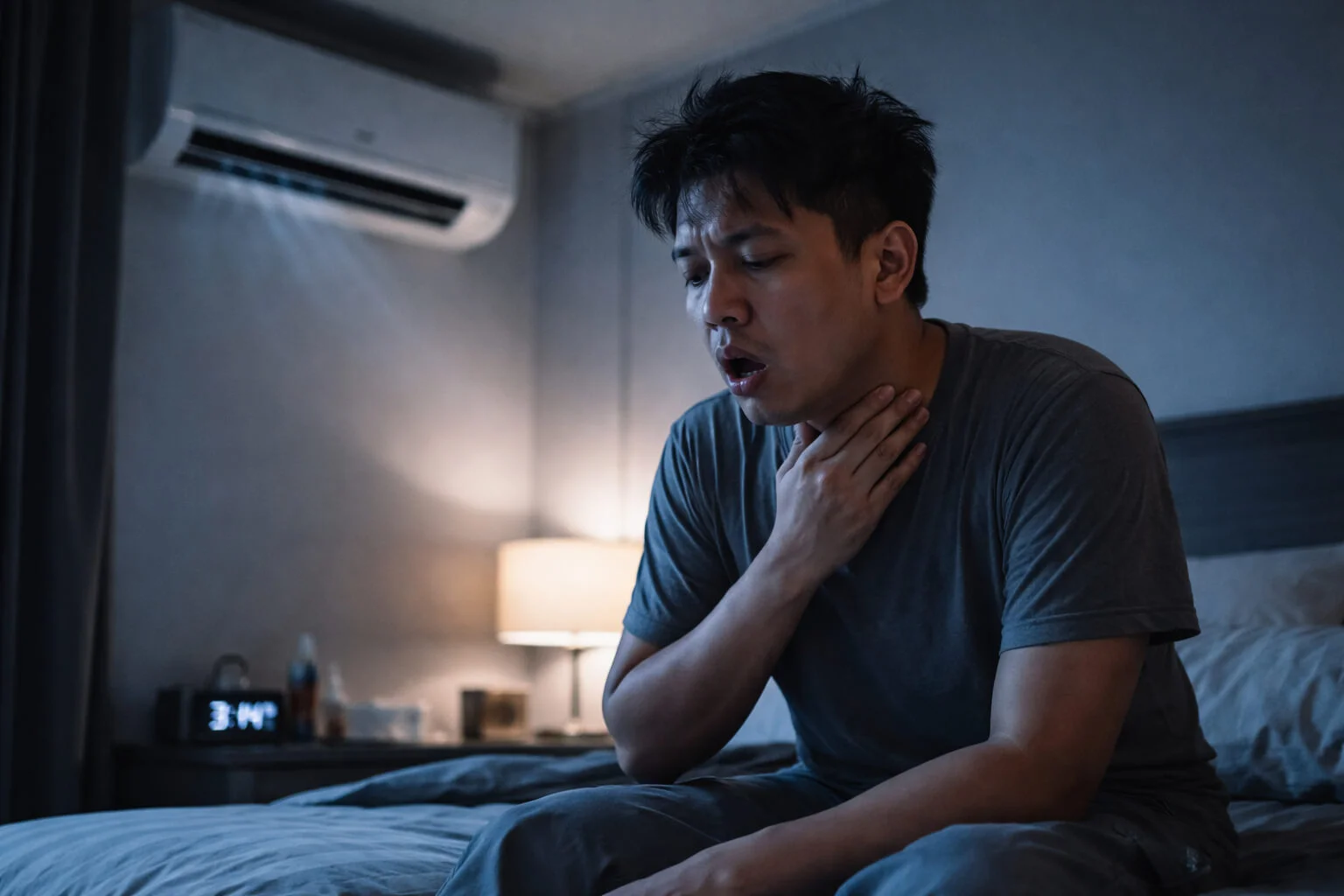

That cough has been hanging around for weeks. You clear your throat constantly, it wakes you at 3 a.m., and everyone at the office is asking if you’re okay. In Singapore, a cough that won’t go away is incredibly common. The dry air from aircon, hidden mold in HDB flats, and our crazy humidity team up to irritate your airways long after any cold should be gone. Most of the time it’s not serious, but knowing the difference between “just Singapore weather” and something that needs attention can save you months of discomfort.
TL;DR – Key Takeaways
- Chronic cough Singapore is usually triggered by dry aircon air, mold spores or post-viral irritation.
- Most cases improve when you fix indoor humidity and clean aircon filters.
- If it lasts more than 3 weeks, comes with fever, chest pain or shortness of breath, see a doctor.
- Simple changes like running a dehumidifier and wiping window condensation help a lot.
- You’re not alone – thousands of residents deal with this every humid season.
That lingering cough isn’t just the “Singapore weather”—your own bedroom might be secretly keeping you sick every single night.
Why So Many People in Singapore Have a Cough That Just Won’t Quit
You step out of the lift after a long day and the moment you enter your flat that familiar tickle starts again. Our climate is perfect for it. Hot humid air outside meets cold dry aircon inside and your throat pays the price. Add invisible mold growing behind cupboards after every rainstorm and you get a perfect storm for persistent cough Singapore. I’ve heard the same story from friends in Tampines, Jurong and Punggol – the cough arrives in November and sometimes stays until Chinese New Year if you don’t tackle the root causes.
Why does my cough not go away in Singapore?
A cough won’t go away in Singapore primarily due to indoor environmental triggers like dry aircon air, hidden HDB mold, and fluctuating humidity. While a normal cold clears up in 7-10 days, these constant daily irritants prevent your airways from healing, leading to a chronic post-viral cough that requires fixing your home’s air quality to resolve.
The combination of aircon drying out your airways and high humidity feeding mold makes recovery slow. Normal colds last 7-10 days. Here they can drag on for weeks because the triggers never really leave the house.
Aircon: Your Best Friend and Worst Enemy
Everyone loves the cool blast when they walk into the flat after a sweaty MRT ride. But that same aircon is often the biggest reason for throat irritation aircon cough. It pulls moisture out of the air so fast that your nasal passages and throat dry up. Overnight the mucus becomes thick, you cough to clear it, and the cycle repeats. Many people notice the cough gets worse at night when the unit runs on auto and the room gets extra dry.
Can aircon cause chronic cough?
Yes, especially if the filters are dirty or the temperature is set very low. The cold dry air irritates the airways and makes existing allergies or post-viral sensitivity much worse.
If you also wake up feeling exhausted even after sleeping, our guide on waking up tired in Singapore shows how the same aircon habits are quietly draining your energy too.
Mold in HDB Flats – The Silent Cough Trigger
After every heavy rain you see those black spots appearing in the bathroom corners or behind the wardrobe. That’s mold, and the tiny spores become airborne and land in your lungs. In older HDB blocks or flats with poor ventilation it’s almost inevitable. The cough from mold exposure symptoms Singapore is usually dry, tickly and worse when you lie down at night.
Does mold in HDB cause coughing?
Absolutely. The spores cause low-grade airway inflammation that feels like a never-ending cold. Cleaning visible mold helps, but fixing the humidity stops it coming back.
If you also get headaches when the weather turns sticky, take a look at our Singapore heat headache and humidity guide – the same moisture problems often hit multiple ways.
When It’s More Than Just a Normal Cold
Most coughs in Singapore are harmless but annoying. But there are clear signs it’s time to stop waiting it out. Fever that returns, coughing up coloured phlegm, wheezing, or feeling short of breath when walking up the stairs are all signals to get checked. A persistent cough Singapore that lasts longer than three weeks deserves attention, especially if you have asthma or allergies in the family.
When should I see a doctor for persistent cough?
If it’s been more than three weeks, disturbs your sleep every night, or you feel unusually tired, book an appointment. Better safe than wondering for another month.
Mini Quiz: What’s Causing Your Cough? (Tap to reveal)
- Dry tickly cough that’s worse at night in aircon:
Click for answer
Very likely dry air irritation. Try a humidifier or raise the aircon temperature a bit.
- Cough with musty smell in the flat and black spots in bathroom:
Click for answer
Mold exposure. Deep clean and control humidity.
- Cough started after a bad cold and still going after 4 weeks:
Click for answer
Post-viral cough. Common here and usually settles with time plus simple remedies.
Practical Things Residents Actually Do to Feel Better
People who finally shake the cough usually do three things. First they clean or replace the aircon filters. Second they run a small dehumidifier in the bedroom at night. Third they stop drying clothes indoors and open windows when it’s not pouring. Simple changes, big difference.
If you sit at a desk all day and notice the cough gets worse after long hours hunched over, our Singapore posture and back pain guide explains how poor posture can make breathing feel tighter too.
✅ Do These Tonight
- Raise aircon to 25-26°C and add ceiling fan on low
- Wipe window condensation every morning
- Run exhaust fan 20 minutes after shower
- Drink warm water before bed
❌ Stop Doing These
- Drying clothes inside the flat
- Running aircon at 22°C all night
- Ignoring black spots in corners
Real Stories from Singapore Residents
“My cough lasted six weeks until I realised the aircon filter was black. Changed it and the cough was gone in four days.” – Wei Ming, 34, office worker in CBD
“Every time it rains my daughter starts coughing at night. We bought a cheap dehumidifier for her room and it changed everything.” – Priya, mother of two in Tampines
Expert Insight – GP Who Sees Hundreds of Chronic Cough Cases Every Year
“In our climate the cough is rarely one single thing. It’s usually aircon dryness plus a bit of mold plus leftover virus. Fix the environment first and most patients improve without needing stronger medicine.”
A Personal Note
I’ve had that stubborn cough twice in the last eight years living in different HDB flats. Both times I blamed the weather until I finally cleaned the aircon and bought a small dehumidifier. The relief was almost instant. Now whenever someone in the family starts clearing their throat for days I know exactly where to look first – the filters, the corners, the humidity level. It’s not glamorous but it works.
Medical insights and environmental advice aligned with HealthHub guidelines for respiratory health and National Environment Agency (NEA) indoor air quality standards.
Official Resources & Further Reading
- HealthHub – Cough and Respiratory Health
- NEA – Indoor Air Quality Guidelines
- HDB – Home Maintenance and Mould Prevention
Still coughing after weeks?
Share what finally helped you in the comments – was it the dehumidifier, filter change or something else? Your tip might be exactly what someone else needs tonight.
Most of the time that stubborn cough is your home telling you the air isn’t as clean or balanced as it should be. Small fixes to aircon, humidity and mold usually make a big difference. You don’t have to live with it. And while you’re sorting the air at home, don’t forget the other everyday things that affect how you feel. Check our Singapore aircon health guide for more on dry air effects, Singapore allergy and sinus guide if it feels more like allergies, OTC medicine guide Singapore for safe symptom relief, and Singapore stomach bug guide or hawker food bloating guide if your cough sometimes comes with other symptoms after meals. Breathe easier, Singapore – better days (and quieter nights) are closer than you think.

Ege Sg
Singapore Health & Daily Life Editor
Ege focuses on how environmental factors like HDB living conditions, aircon habits, and local climate affect everyday health in Singapore. By combining on-the-ground observations with official HealthHub and NEA guidelines, Ege provides practical, actionable advice to help residents breathe easier and live healthier lives.