Singapore OTC Medicine Guide: Avoid Common Mistakes (2026)


You are sick. Your head throbs. You are staring at a wall of brightly colored boxes, trying to figure out which one will make the pain stop. This is the moment when bad decisions are made. Here is how to navigate the Singapore pharmacy like a pro.
TL;DR: The 10-Second Summary
- Fever Alert: Take Panadol (Paracetamol), NOT Nurofen (Ibuprofen), unless you are sure it is not Dengue.
- Save Money: Ask for generic brands. The active ingredient is the same, but the price is up to 70% cheaper.
- Need an MC? Skip the pharmacy. Use Telehealth apps (Doctor Anywhere, ManaDr) for medicine delivery + digital MC.
- Double Check: Never take TCM (Chinese herbs) and Western cold medicine at the same time. Leave a 2-hour gap.
The Singapore Pharmacy Moment: You’re Sick, You’re Tired, You Just Want the Right Thing
We have all been there. It is 8:30 PM. You are standing in the aisle of a Guardian, Watsons, or Unity store. You have a runny nose, a fever, and zero patience. In front of you are 40 different types of cough and cold remedies. Some say “Max,” some say “Relief,” some say “Non-Drowsy.”
Because you just want to go home and sleep, you grab two boxes that look promising and head to the cashier.
This is the exact scenario where common medication mistakes Singapore residents make begin. When we are sick, our reading comprehension plummets. We buy based on marketing words instead of medical needs. Understanding how to buy medicine in Singapore isn’t about memorizing chemical names; it is about knowing how the system works and who to ask for help.
Related (Singapore):
Why Singaporeans feel “always tired” (work, heat & sleep debt)
OTC vs Prescription (Plain English, No Jargon)
The shelves are strictly divided by law. Knowing the categories saves you time.
What “OTC” usually means in daily life
OTC medicines Singapore guide basics start with the open shelves. Over-The-Counter (OTC) or “General Sales List” (GSL) items are safe enough for the public to select themselves for minor, self-limiting ailments. This includes basic painkillers, throat lozenges, and simple antacids. You pick them up and pay at the normal cashier.
Why some items sit behind the counter
Then there is the “Pharmacy-Only” (P) category. You don’t need a doctor’s prescription for these, but you *must* buy them from the pharmacist. Why? Because these medicines (like stronger antihistamines or certain eyedrops) have a higher risk of side effects or misuse. The pharmacist needs to check your age, symptoms, and other medications first.
What “prescription” changes
Prescription-Only Medicine (POM) requires a valid doctor’s note. You cannot walk in and demand antibiotics. This is the ultimate safety net for drugs that require strict medical supervision.
The Pharmacist Is Not Just a Cashier (How to Use Them Properly)
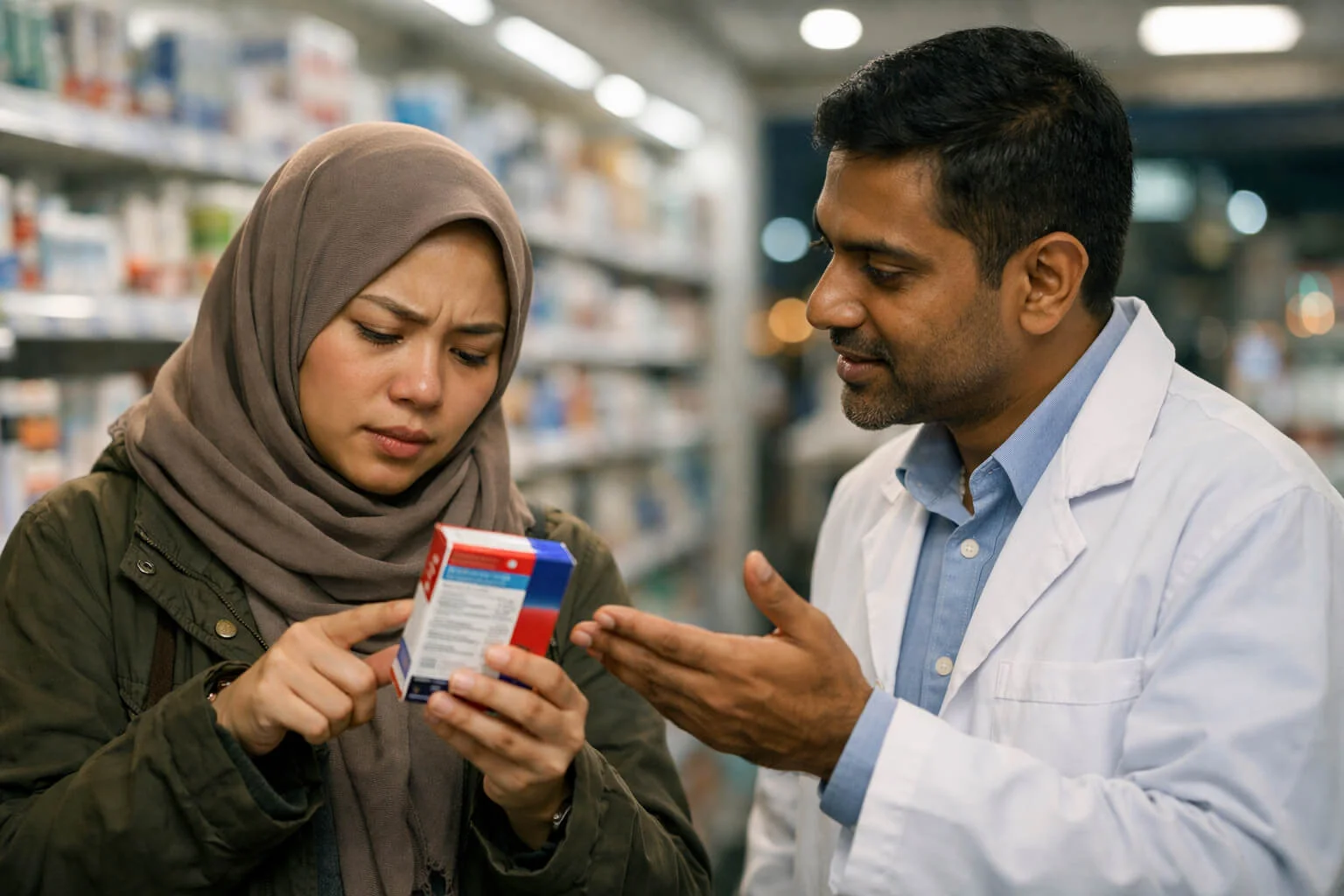
In Singapore, the person in the white coat behind the glass counter is a highly trained healthcare professional. Pharmacist advice Singapore residents can access is free—you should use it.
The 30-second question script
When you approach the counter, don’t just ask “Where is the cough syrup?” Ask: “I have [Symptom X] for [Y days]. I am currently taking [Medicine Z]. What is safe for me?”
What info helps them help you
Medicine interactions what to ask pharmacist: Always tell them if you have drug allergies, if you are pregnant, or if you are on chronic medications (like blood thinners or diabetes pills). Even herbal supplements matter.
When they’ll tell you: “Please see a doctor”
Pharmacists are trained to spot “red flags.” If your fever has lasted five days, or you have severe chest pain, they will not sell you medicine. They will politely direct you to a GP or polyclinic. Do not get angry; they are doing their job by prioritizing your safety over a sale.
Polyclinic vs GP — cost, waiting time, booking, and who it suits
.
How to Read a Medicine Label Without Overthinking
How to read medicine labels Singapore style comes down to one golden rule: look past the big brand name.
The “Brand Tax”: How to Save Money in the Pharmacy
In Singapore, you pay a premium for marketing. The active ingredient in a $10 box of branded painkillers is often identical to a $2 box of generic painkillers sitting on the bottom shelf. This is the difference between Brand vs Generic medicine.
Here is a quick reference guide to help your wallet next time you are at Unity or Watsons:
| Instead of Buying (Brand) | Look for the Ingredient (Generic) | What it treats |
|---|---|---|
| Panadol | Paracetamol | Fever, Headache |
| Nurofen | Ibuprofen | Body Ache, Inflammation |
| Zyrtec / Claritin | Cetirizine / Loratadine | Allergies, Runny Nose |
| Gaviscon | Sodium Alginate / Antacid | Heartburn, Gastric |
Pro-tip: If you cannot find the generic version on the shelf, ask the pharmacist. They almost always keep the cheaper, generic strips behind the counter.
The MC Factor: Telehealth Apps vs Pharmacy
OTC medicine will fix your headache, but it won’t get you a Medical Certificate (MC) for your HR department. This is where many Singaporeans waste time: they buy OTC medicine, realize they need an MC the next day, and still have to pay for a clinic visit.
The Rise of Telehealth in Singapore
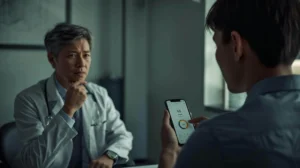
If you need both medicine and an MC for a minor flu, skip the physical pharmacy. Download Ministry of Health (MOH) approved telehealth apps like Doctor Anywhere, ManaDr, or WhiteCoat. A video consultation takes 10 minutes, costs around $20, gives you a digital MC instantly, and the exact medicines are delivered to your doorstep by a courier within hours.
Active ingredient vs brand name (the trap)
The brand name is in giant font. The “Active Ingredient” is in smaller text underneath. The active ingredient is the actual drug doing the work. Generic vs brand medicine Singapore conversations often start here: the generic version has the exact same active ingredient, just in a different box, usually for a lower price.
“For day” vs “for night” products
Many cold formulations are split into Day/Night. The only difference is usually the type of antihistamine included. “Day” formulas use non-drowsy ingredients. “Night” formulas use ingredients that deliberately make you sleepy so you can rest. Mixing them up leads to very unproductive workdays.
The #1 Common Mistake: Duplicate Ingredients
This is the most dangerous trap in the OTC vs prescription Singapore landscape.
Cold/flu combos stacked on top of each other
You buy a “Cold & Flu” multi-symptom liquid. Then, because you have a headache, you also take two standard painkillers. How to avoid taking duplicate cold medicine ingredients? Read the back. That “Cold & Flu” liquid likely already contains the painkiller. By taking both, you are double-dosing the active ingredient. Over a few days, this can seriously stress your liver.
A simple checking habit
Before you swallow two different pills, turn the boxes around. If the active ingredient name matches, stop.
OTC Categories People Buy Most (Orientation)
Disclaimer: This is for orientation, not medical advice. Always read the label.
The Dengue Danger: Ibuprofen vs Paracetamol
In Singapore, a sudden high fever and body ache isn’t always the flu—it could be Dengue. This creates the most dangerous OTC trap in local pharmacies.
The NSAID Risk
If you suspect you might have Dengue, do not buy Ibuprofen (e.g., Nurofen) or Aspirin. These are Non-Steroidal Anti-Inflammatory Drugs (NSAIDs) that thin the blood. Since Dengue causes your blood platelet count to drop, taking these can trigger severe internal bleeding.
The Safe Default
For fever of unknown origin in Singapore, always default to Paracetamol (e.g., Panadol). It is safe for Dengue. If the fever persists past three days with a rash or severe eye pain, skip the pharmacy entirely and head to a polyclinic for a blood test.
TCM and Western Medicine: The Silent Clash
It is deeply ingrained in Singaporean culture to soothe a “heaty” cough with Nin Jiom Pei Pa Koa, Liang Teh (cooling tea), or prescribed TCM herbs. But combining these with Western OTC medicine is a common mistake.
The “2-Hour” Rule
Herbal medicines contain active compounds that can either block Western medicine from working or amplify its side effects. For example, some TCM herbs can thin the blood, just like Aspirin.
The Golden Rule: Always leave a buffer of at least two hours between taking TCM and Western medicine to avoid taxing your liver. If you are buying OTC medicine, tell the pharmacist which TCM products you are currently using.
Pain/fever relief section
There are two main families here. One is generally gentler on the stomach. The other reduces inflammation but must be taken with food. If you are unsure which fits your condition (e.g., dengue risks vs muscle sprains), ask the pharmacist.
Allergy section
Can I buy allergy medicine over the counter Singapore? Yes. The shelves divide clearly into “Non-Drowsy” (for daily maintenance) and “Drowsy” (often older generation, works fast but knocks you out). Read the warning label before driving.
Cough/cold and stomach section
Cough medicines generally either suppress the cough or loosen the phlegm. Taking the wrong one makes you miserable. For stomach issues, the focus is usually on rehydration (replacing lost fluids) or neutralizing acid. Never ignore persistent stomach pain.
Special Situations (Where People Should Slow Down)
Certain groups cannot just grab a box off the shelf.
Children and Seniors
Children are not mini-adults. Giving a child half of an adult pill is dangerous. Always buy age-specific formulations with proper dosage cups. For seniors on multiple pills, the risk of drug interactions is high. Bring a list of their current medications to the pharmacy counter.
Pregnancy and Chronic Conditions
If you are pregnant, breastfeeding, or managing diabetes/high blood pressure, your OTC choices shrink. Many standard decongestants can raise blood pressure. Always verify with a healthcare professional first.
Prescriptions in Singapore (Practical Process Guide)
The prescription medicines Singapore process is highly digitized but still requires human interaction.
What to bring / what questions to ask
You need your physical NRIC and the prescription slip (or the digital e-prescription QR code). When collecting, ask: “Do I take this before or after food?” and “Should I finish the whole course?” (Hint: For antibiotics, the answer is always yes).
Refills & continuity
How prescription refills work in Singapore: For chronic conditions, doctors often prescribe a 3- to 6-month supply, but the pharmacy dispenses it in parts. You can use apps like HealthHub to track your balance and arrange for the next pickup or home delivery.
Our climate adds another layer of complexity to medicine safety. Heat destroys efficacy.
| Storage Location | Why It’s Used | The Reality in Singapore |
|---|---|---|
| Bathroom Cabinet | Convenient, near water. | Worst choice. High humidity and shower steam degrade pills quickly. |
| Kitchen Counter | Easy to remember. | Risky. Heat from cooking can alter medication stability. |
| Bedroom Drawer / Dry Box | Cool, away from light. | Best choice. Ideal for Singapore’s 80% humidity. |
| Fridge | Cold preservation. | Only if specified. Syrups/eyedrops maybe; pills will absorb moisture. |
The Humidity Factor: Storage Mistakes at Home
How to store medicines in humid weather Singapore: If your pills are changing color, sticking together, or smelling weird, throw them away. Humidity accelerates chemical breakdown. Keep all medicines in their original foil blister packs until the moment you take them. A dry box (the kind used for cameras) is actually a great place for emergency medical kits.
Online Buying: What to Be Careful About
Buying from legitimate telehealth platforms (like those integrated with polyclinics) is safe. Buying “cheap supplements” or “discounted medicine” from unregulated e-commerce listings is a gamble with your liver. If it is an official pharmacy website registered with the Health Sciences Authority (HSA), it is safe. If it ships from an unknown warehouse abroad with no expiry date visible, avoid it.
The JB Factor: Bringing Medicine from Malaysia
Many Singaporeans cross the causeway to Johor Bahru (JB) to buy supplements and OTC medicines at a lower ringgit exchange rate. While buying basic vitamins is fine, be careful with restricted medicines.
Singapore Customs and HSA Rules: You can legally bring in up to a 3-month supply of most OTC medicines for personal use. However, codeine-based cough syrups, sleeping pills, and strong painkillers may require a doctor’s letter at the Woodlands or Tuas checkpoint. If unsure, declare it. Unregistered health products can be confiscated.
Got a CHAS Card? Skip the Pharmacy
If you are a Singapore Citizen with a Blue, Orange, or Merdeka/Pioneer Generation CHAS card, do not buy long-term medication over the counter. Visit a CHAS-accredited GP clinic instead. With government subsidies, getting prescription medicine directly from a GP for conditions like high cholesterol or chronic cough can actually be cheaper than buying it at retail pharmacy prices.
Quick “No-Drama” Checklist (Save This)
✅ Do This
- Talk to the pharmacist behind the counter—their advice is free.
- Look for the “Active Ingredient” name, not just the brand.
- Tell the pharmacist if you are on ANY other medication.
- Keep medicines in a cool, dry bedroom drawer.
- Measure children’s liquid medicine with the provided cup, not a kitchen spoon.
- Ask for the generic version if you want to save money.
- Finish the entire course of antibiotics as prescribed.
- Check the expiry date before buying or consuming.
- Use the HealthHub app to track prescription balances.
- See a doctor if your symptoms do not improve after 3-5 days.
❌ Avoid This
- Do not take a “Cold & Flu” combo and a separate painkiller at the same time.
- Do not store medication in the bathroom cabinet.
- Do not share your prescription medication with family members.
- Do not buy medication from unverified social media sellers.
- Do not drive if you have taken a “Drowsy” or “Night” formula.
- Do not leave medication in a parked car under the Singapore sun.
- Do not pop pills out of their blister packs into a daily planner too far in advance (humidity melts them).
- Do not pressure a pharmacist to sell you antibiotics.
- Do not assume “natural” or “herbal” means it cannot interact with other drugs.
- Do not ignore worsening symptoms—OTC medicine is for minor relief, not a cure.
Official Context & Safety Disclaimer
This guide is for general informational purposes only and does not constitute medical advice, diagnosis, or treatment. Always read the product label carefully. In Singapore, the Health Sciences Authority (HSA) regulates health products. If your symptoms are severe or persistent, please consult a registered doctor immediately.
🕰️ One Small Moment
“I was buying cold medicine at Guardian. My head was spinning, so I grabbed two different boxes. The pharmacist saw me at the counter. ‘Sir, both of these have paracetamol. If you take both, you will overdose.’ She quietly took one box away and explained the dosage for the other. It took her thirty seconds. That thirty seconds probably saved my liver.”
This guide is for everyday pharmacy decisions, not medical diagnosis. Always check the active ingredients on the label, avoid stacking cold/flu products, and ask the pharmacist if you’re on other meds, pregnant, or managing chronic conditions. If symptoms are severe, worsening, or not improving after 3–5 days, visit a GP or polyclinic.