
How to Choose a Private GP in Singapore (2026)

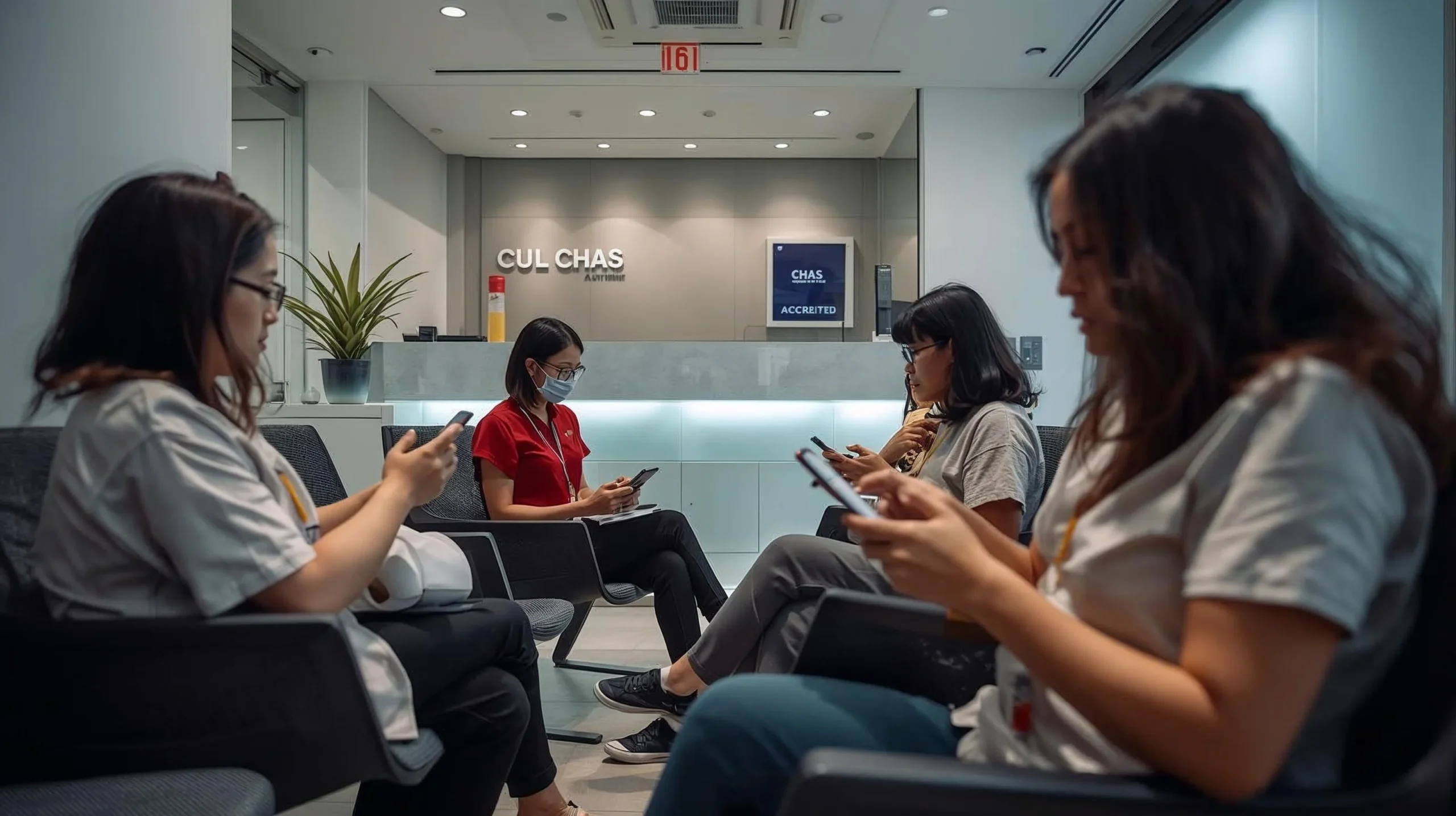

When the throat tickle starts and the fever spikes, you have two choices: time or money. We unpack the decision-making process of the Singaporean patient in 2026.
It starts with the shivers. Then the scratchy throat. Then the realization: “Jialat, I need to see doctor.”
In Singapore, this moment triggers a rapid mental calculation that every resident knows by heart. Do I go to the Polyclinic, pay $15, but potentially wait three hours among crying babies? Or do I walk to the private GP clinic Singapore heartlands offer, pay $60, and be back in bed in 45 minutes?
Finding the “best” clinic isn’t about looking for a 5-star hotel rating. It’s about finding the right balance for your specific misery. For a simple cough, you want speed. For a mysterious stomach pain, you want a family doctor Singapore trusts to listen, not just dispense antibiotics and an MC.
We spent time in waiting rooms (masked up, of course) and trawled through patient forums to understand what Singaporeans actually value when they are sick. It turns out, the “best” clinic is rarely the fanciest one. It’s the one that respects your time and your wallet.
What Singaporeans Actually Want From a GP Clinic
If you ask an uncle in Bedok what makes a good doctor, he won’t talk about medical degrees. He will say: “The medicine work fast, and the doctor never scold me.”
But for the younger working crowd, the criteria for a walk-in GP Singapore has shifted. We are impatient. We are data-driven. And we hate hidden costs.
This shift isn’t just about clinics—it reflects how health conversations in Singapore are changing, with patients arriving more informed, more anxious, and expecting clearer explanations.
The “Best” clinic today is defined by three pillars:
- Transparency: Is the consultation fee posted on the door?
- Efficiency: Can I queue online before I leave my house?
- Empathy: Does the doctor look at me, or at the computer screen?
If you want to understand the bigger trend behind today’s queues, read this: Why Clinics Feel Busier in Singapore — Even When People Say They’re ‘Fine’.
Quick Picks by Situation (Fast Decision Guide)
- Need an MC fast: Choose a nearby panel GP or a clinic with live queue tracking.
- Child with high fever: Prioritise clinics known for paediatric-friendly triage and after-hours access.
- Recurring issue (eczema, sinus, gastric): Pick a clinic where you can see the same doctor consistently.
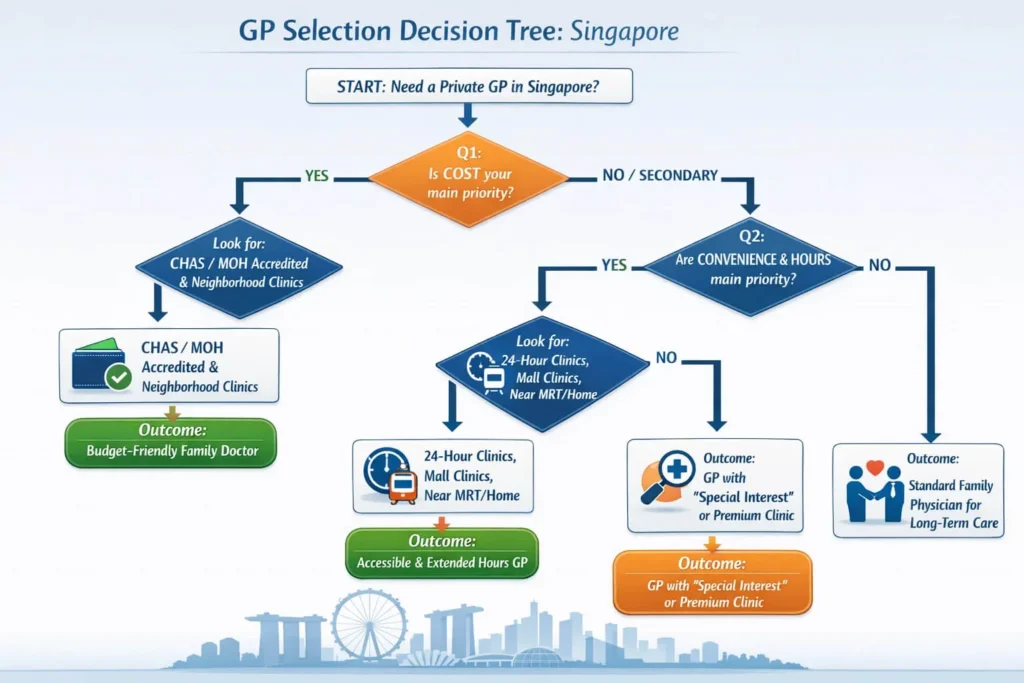
- Cost-sensitive: CHAS-accredited clinics + ask about generic medication options.
Wait Time: Why It Matters More Than You Think
In the battle of GP vs polyclinic which is faster Singapore, the private GP almost always wins. But “fast” is relative.
The average wait time at a popular private GP on a Monday morning can still hit 90 minutes. This is where the “Queue System” becomes the deciding factor. Clinics that use apps (like MaNaDr or specific clinic apps) to show live queue numbers are winning the loyalty game.
“I don’t mind waiting,” says Sarah, a mother of two in Punggol. “I mind waiting in the clinic. If I can wait at home and walk down when it’s my turn, that clinic gets my business forever.”
The “Lunch Hour” Trap:
Seasoned patients know to avoid the 12:00 PM – 2:00 PM window. Even private GP clinic Singapore doctors need to eat. If you walk in at 12:30 PM, you might be met with the dreaded “Registration Closed” sign.
Price: Consultation Fees, Medicines, and “Hidden” Add-ons
This is the pain point. The GP consultation fee Singapore residents pay has crept up. In 2026, a standard short consultation at a private heartland clinic averages between $35 to $55—and that’s *before* medicine and GST.
The Breakdown of the Bill:
- Consultation: The fee for the doctor’s time. Longer chats cost more.
- Medication: This is where the bill balloons. A bottle of branded cough syrup can cost $12. A strip of antibiotics, $25.
- Practice Cost / GST: The administrative markup.
Smart patients are learning to ask: “Doctor, can I have a prescription to buy the meds at a pharmacy?” Most doctors will agree, though some may charge a small “prescription fee.” This often saves you 30% on generic antihistamines or painkillers available at Guardian or Watsons.
Service & Trust: The Small Things Patients Remember
You can forget the price, but you never forget how the doctor made you feel.
In the forums, the clinics with the highest praise aren’t the ones with plush sofas. They are the ones where the doctor explains why you are sick. “He drew a diagram of my throat infection,” one review read. “She explained why I *don’t* need antibiotics,” read another.
The “McDoctor” approach—3 minutes, stethoscope on chest, print MC—is falling out of favor. Patients are more health-literate now. They want a partner, not a dispenser.
I once went to a clinic that gave me a warm cup of water while I waited with a fever. That cup of water bought my loyalty for five years.
| Factor | Polyclinic (Subsidized) | Private GP (Heartland) | Private GP (Medical Centre) |
|---|---|---|---|
| Avg. Wait Time | 1 – 3 Hours (Walk-in) | 20 – 60 Mins | 15 – 30 Mins |
| Consult Fee | ~$15 (Citizen) | ~$35 – $55 | ~$60 – $100+ |
| Medication Cost | Highly Subsidized | Standard Retail + Markup | Premium Pricing |
| Doctor Continuity | Random Doctor | Same Doctor (Usually) | Specialist Focus |
CHAS, Polyclinics, and When a Private GP Makes Sense
The CHAS card GP clinic how it works question is common. The Community Health Assist Scheme (CHAS) is the bridge that makes private care affordable.
If you have a Blue or Orange CHAS card, or a Pioneer/Merdeka Generation card, you get a significant subsidy at private clinics. For a common cold, this can knock $18.50 to $28.50 off your bill. Suddenly, the private GP isn’t $60; it’s $35. That brings it close enough to Polyclinic prices to make the speed worth it.
When to Choose Private GP:
– You need an MC for work urgently.
– You have a specific recurring issue (e.g., eczema) and need the same doctor who knows your history.
– You are claiming via company insurance (Panel Clinics).
When to Choose Polyclinic:
– You need long-term chronic disease management (Diabetes, Hypertension) where medication costs add up.
– You need referrals to a public hospital specialist.
A Practical Checklist Before You Walk In
Don’t just walk in blind. Use this how to choose a GP clinic in Singapore checklist:
- Check the Hours: Many neighbourhood clinics close for lunch (1 pm – 2 pm) or dinner (5 pm – 7 pm). GP clinics open late Singapore are lifesavers, but they charge a surcharge after 9 PM.
- Check the Panel: If you are employed, check your company’s insurance app. Going to a “Panel Clinic” might be free (cashless).
- Look for the Sticker: Is there a CHAS / Medisave accredited sticker on the door?
- Call Ahead: A 30-second phone call (“How long is the queue now?”) can save you an hour of sitting next to someone coughing.
Common Scenarios: Fever, Cough, Stomach Issues
The “I Just Need an MC” Flu:
Go to the nearest Panel GP or Tele-consult. Do not clog up the Polyclinic or A&E for a mild fever. Tele-medicine apps are increasingly accepted for common flu MCs.
The “My Child has a High Fever” Panic:
Go to a trusted neighbourhood GP. If the fever is very high or the child is lethargic, most GPs will prioritize you. If it’s after hours, look for 24-hour clinics like Raffles Medical at Changi Airport or specific neighbourhood 24-hour chains.
The “Weird Rash”:
This requires visual inspection. Skip the Tele-consult. Find a senior GP in the estate—the older doctors have seen everything.
Editorial note: This article is a practical guide based on common patient decision patterns in Singapore. Fees, wait times, and subsidies can vary by clinic and situation.
Official Context
You can find a list of all CHAS-accredited clinics near you using the CHAS Clinic Locator. For transparent fee benchmarks, the Ministry of Health (MOH) publishes fee guidelines, though private clinics have the right to set their own rates.
👟 From the Ground
“I was at a clinic in Yishun last night. An elderly auntie came in, clearly confused about her CHAS subsidy. The receptionist didn’t just point to the sign. She came out from behind the counter, took the auntie’s card, checked the balance on the iPad, and explained in Hokkien exactly how much she would save. The auntie’s relief was visible. That is the service that makes a clinic ‘the best.’ Not the decor, but the decency.”