Stop the ‘Jelak’ Feeling: Why Your Hawker Dinner Causes Bloating

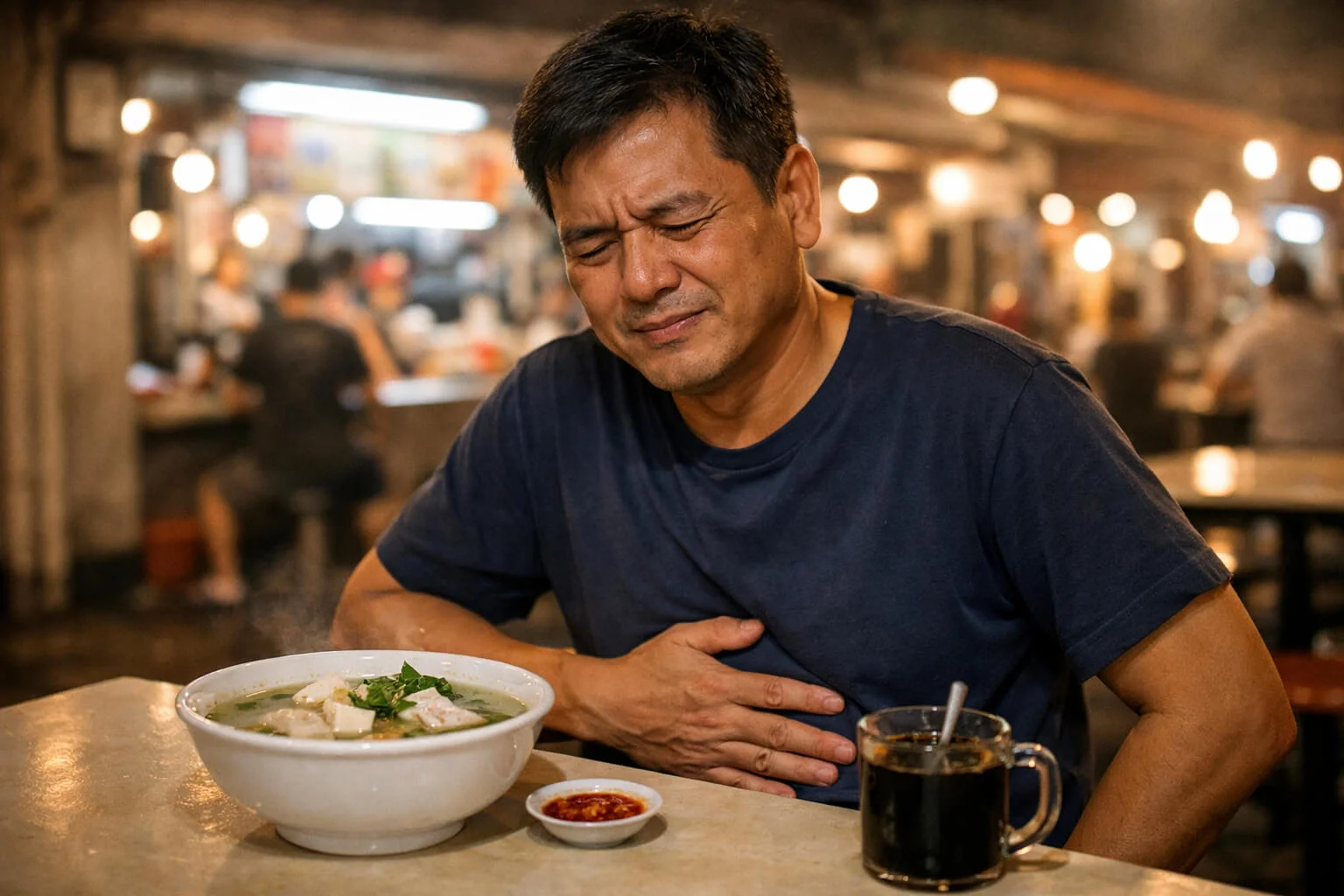

Dinner was just a simple bowl of fish soup and a Kopi-O. Yet, an hour later, your stomach feels like it’s been inflated like a balloon, and there’s a bitter burn climbing up your throat. What happened?
We’ve all been there—feeling shiok after a solid plate of Sambal Stingray, only to have that jelak (overwhelmingly rich) feeling ruin our sleep later. How come like that?
📌 TL;DR: Why you feel like a balloon
- The Culprits: Late-night hawker meals, CBD lunch rushing, and too much “Kopi-O” on an empty stomach.
- Physics Matters: Lying down immediately after dinner is the #1 cause of reflux.
- The Fix: Follow the 3-hour rule (no food before bed) and swap iced drinks for warm water during heavy meals.
- Pro-Tip: Chew your food 20 times to avoid swallowing excess air (the main cause of bloating).
It is a Tuesday night in Singapore. You’ve just finished a late dinner at a hawker centre because work ran late. You’re tired, you’re full—maybe a bit too full—and the moment you lie down to scroll through your phone, that familiar discomfort hits. It’s that heavy, “stuffed” sensation that makes you regret the last three bites.
In this city, we often treat bloating Singapore guide topics as just a part of life. We blame the sambal, we blame the stress, or we just buy another bottle of antacids and carry on. But the reality is that our unique daily rhythm—the rush, the heat, and the late-night food culture—is a perfect storm for our digestive systems. This isn’t about a medical diagnosis; it’s about the Singapore gut health daily triggers that we encounter every single day without realizing it.
This Singapore gut health guide breaks down the everyday triggers behind bloating, reflux, and that “always full” feeling—without extreme diets or panic.
🇸🇬 The “Hawker Stomach” Quick Test
How high is your risk of “Post-Meal Regret” today?
The Singapore Dinner Pattern: You Ate “Normal”… Why Do You Feel Stuffed?
Walk into any Maxwell or Old Airport Road Food Centre at 7:30 PM. The air is thick with the smell of fried garlic and grilled meat. We sit, we sweat, we drink our iced Teh, and we eat.
The problem isn’t necessarily “hawker food” being bad. It’s the context. We often arrive at dinner after a 10-hour day, already dehydrated from the office aircon, and then we eat a meal that is high in sodium and heat. This indigestion Singapore daily life pattern is so common that we forget how unnatural it is for the body to process a heavy, spicy meal right before we intend to sleep.
Bloating vs Reflux vs “Always Full” (No Diagnosis, Just Clues)
Your body is usually sending very different signals, but in the heat of the moment, they all just feel like “stomach trouble.”
Bloating (The internal pressure)
This is that “inflated” feeling. Gas and bloating after eating out is often caused by the speed at which we eat, or certain ingredients like lentils, cruciferous vegetables, or even the carbonation in your soft drink.
Reflux and Heartburn
This is the heartburn after hawker food classic. It’s a literal burning sensation. It happens when the valve between your stomach and esophagus relaxes when it shouldn’t, allowing stomach acid to creep up. You might notice a bitter taste or a cough that won’t go away.
Early Fullness (The “few bites” wall)
You sit down hungry, but after three bites of chicken rice, you always feel full after small meals. It feels like there is a rock in your stomach. This can be a sign that your stomach is emptying slower than usual, often due to high-fat content or high stress levels.
The Daily Triggers People Miss (Singapore Life Edition)
The “Office Aircon” Trap: We spend 9 hours in a freezing CBD office, barely drinking water because “not thirsty.” Then we hit the humid hawker centre and chug a giant iced soda. This sudden temperature shock and dehydration is a confirm plus chop way to slow down your digestion.
Eating too fast: The CBD lunch rush is the enemy of gut health. When you “inhale” your noodles in 10 minutes to get back to a meeting, you swallow air. That air becomes bloating. It’s that simple.
Coffee timing: We love our Kopi. But coffee and reflux why it happens is a biological reality. Caffeine can relax the stomach valve. Bloated after coffee Singapore residents often don’t realize that having a strong coffee on an empty stomach—or immediately after a fatty meal—is asking for trouble.
The “One More Sauce” Habit: We love our condiments. Extra chili, extra vinegar, extra dark soy. These are all spicy food reflux triggers. Vinegar and chili are highly acidic; they don’t cause the problem for everyone, but they definitely aggravate an already sensitive stomach.
Late Dinner + Lying Down: Gravity is the only thing keeping your stomach contents down. If you eat a late dinner reflux-heavy meal and lie down 30 minutes later, you are fighting physics.
The Hawker Factor: Why Your Favorite Char Kway Teow “Stays” With You
It’s not “Hawker Bad, Salad Good.” It’s about the density. A dry Mee Pok is very different from a clear fish soup. Oily, fried meals stay in your stomach longer because fat is hard to break down. This is why I always feel full after a few bites of something heavy—your stomach is signalling that it’s already overwhelmed by the richness.
The 7-Day “Gentle Reset” (No Extreme Diet)
Try this simple 7-day reset for bloating and discomfort. No juice cleanses, just habit changes:
- Days 1–2: The Slow Down. Force yourself to chew every bite 20 times. Put your phone away. Just eat. This reduces the air you swallow.
- Days 3–4: The Log. Note down when the bloating happens. Is it after the afternoon Teh C? Is it only after spicy lunch? Identify top triggers without guessing.
- Days 5–7: The Gap. Ensure a 3-hour gap between dinner and bed. If you must eat late, keep it small and liquid-based (like a light soup).
💡 Shiok but Bloated? Try the “Siu Dai” Lifestyle
In Singapore, we love our food rich and our drinks sweet. But did you know that high sugar intake in your Teh or Kopi can worsen gut fermentation? Next time, order “Siu Dai” (less sugar) or “Kosong” (no sugar). Your gut bacteria will thank you, and you’ll avoid that heavy post-lunch coma at the office.
The “Uncle/Auntie” Secret: Warm Water
Notice how the older generation always carries a thermal flask? They are onto something. Drinking warm water instead of iced barley or limau ais during a heavy meal helps fats stay liquid, making them easier to digest. If you’re feeling “jelak” (overwhelmed by richness), skip the ice for one meal and see the difference.
Pro-tip: You can also track your calorie and nutrient intake using the Healthy 365 app by the Health Promotion Board (HPB) to see if hidden sodium in your favorite Lor Mee is the culprit behind your bloating.
Practical Routines That Help
Pre-meal: Sip some warm water. Don’t start a meal when you are in a high-stress “fight or flight” mode. Stress stomach bloating is real; if you’re stressed, your blood is in your muscles, not your gut.
Post-meal: Do not lie down. Take a 10-minute slow walk. Even walking around the office helps motility. How to reduce bloating without extreme diets often comes down to simply moving your body to help the gas pass.
When Not to “Self-Manage” (Red Flags)
While most bloating is about habits, some symptoms are serious. If you have persistent severe symptoms, unintended weight loss, blood in your stool, or difficulty swallowing, seek medical advice immediately. Use the HealthHub directory to find a professional.
A personal note: I spent months wondering why I feel bloated after eating in Singapore. I thought I had a food allergy. It turned out I was just drinking a giant iced latte every afternoon on an empty stomach while stressed about deadlines. I changed the timing, kept the coffee, and the bloating vanished. Sometimes it’s the timing, not the food.
Quick Checklist (Save This)
✅ Do This
- Sit upright for at least 2 hours after your last meal.
- Chew your food until it’s a paste before swallowing.
- Swap your normal Kopi for “Kopi-Siu Dai” to reduce the sugar fermentation in your gut.
- If you’re feeling extra bloated, skip the iced barley and ask for a warm water or warm ginger tea.
- Take a 10-minute walk after lunch to boost digestion.
- Drink your coffee 30 minutes after a meal, not on an empty stomach.
- Choose “soupy” versions of hawker meals if you’re feeling extra bloated.
- Keep a simple 3-day food and symptom diary.
- Try to manage your stress before sitting down to eat.
- Sip water throughout the day rather than chugging a litre during meals.
- Wear loose-fitting clothing if you know you have a long dinner ahead.
- Finish your dinner at least 3 hours before you plan to sleep.
❌ Avoid This
- Do not “inhale” your food in under 10 minutes.
- Do not lie flat on the sofa immediately after eating a heavy meal.
- Do not drink large amounts of carbonated “bubble tea” or soft drinks with meals.
- Do not skip breakfast and then “over-compensate” with a massive, oily lunch.
- Do not ignore the reflux worse at night warning—change your routine.
- Do not rely on antacids as a long-term solution for daily habits that trigger acid reflux.
- Do not eat a “heavy” spicy meal if you are already feeling stressed and tight.
- Do not assume all “healthy” salads won’t bloat you (raw veg can be tough to digest).
- Do not drink ice-cold water during a very hot, spicy meal (shocks the system).
- Do not ignore red flags like sudden weight loss or severe pain.
📢 The SG Vital Challenge: 7 Days to a “Happy Gut”
Think you can survive a week without a late-night supper or a 1.5L bubble tea? Here’s our 7-day gut reset:
- ✅ Days 1-3: No food 3 hours before bed (Supper-free nights!).
- ✅ Days 4-5: Order all drinks “Siu Dai” (Less sugar).
- ✅ Days 6-7: Take a 10-minute walk after every hawker lunch.
Which one is the hardest for you? Don’t be shy, lah! Drop a comment below and share your toughest trigger.
Related Reads
Join the SG Vital “Happy Gut” Challenge! 🥣
Can you survive 7 days without a late-night supper or iced drinks with oily meals?
No Supper
After 9 PM
10m Walk
Post-Lunch
Siu Dai
Less Sugar
Which one is the hardest for you to follow?
Drop a comment below and tell us your “Supper Spot” that always makes you feel jelak! We’re sharing the best gut-friendly hawker tips in the comments.
Editorial Note
Singapore’s heat, aircon cycles, stress, and late hawker dinners can quietly stack up into bloating and reflux. Use this as an everyday habit guide, not a medical diagnosis. If symptoms persist or worsen, get checked by a GP.