
Singapore Air-Con Dryness: Dry Eyes & Sore Throat

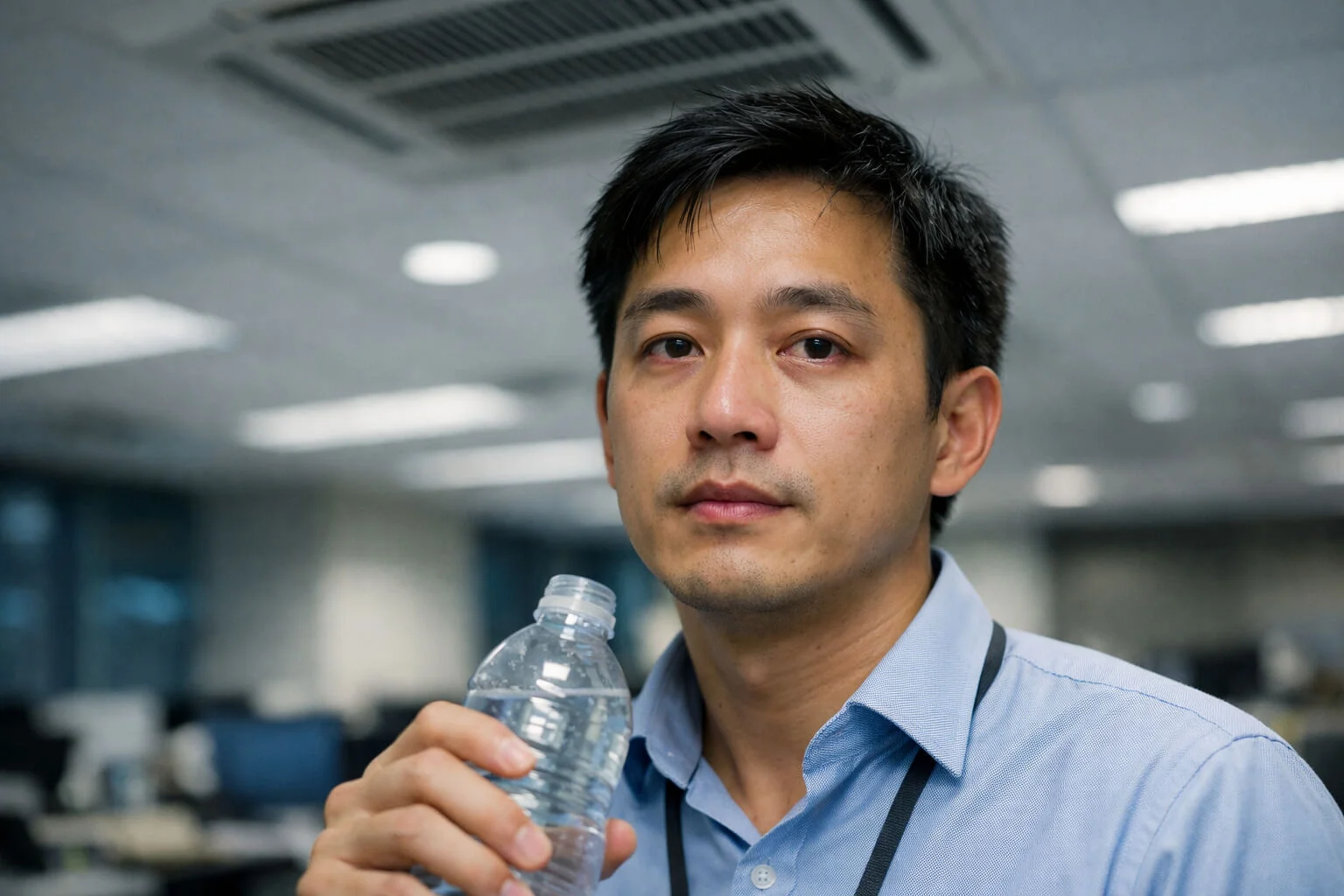

You step out of the 32°C humidity and into the 20°C office. It feels like relief—until 4 PM hits. Your eyes feel like they’ve been sanded, your throat is scratchy, and your voice is losing its edge. Here is how to survive the Singapore “Air-Con Loop.”
🚀 TL;DR: Stop Feeling Like “Sotong” in the Cold!
Office air-con too strong? Waking up with a scratchy throat? Here’s the 30-second fix:
- 📍 Avoid the “Direct Hit”: Move your desk or tilt the vents away from your face.
- 💧 25°C Rule: Keep sleep air-con at 25°C + a slow fan (Confirm better sleep!).
- 👀 Blink Hard: Follow the 20-20-20 rule to keep your eyes from drying out.
It is a national ritual. We spend our lives moving between the “Great Outdoors” (hot and wet) and the “Great Indoors” (cold and dry). Whether it is the office aircon dryness Singapore workers face daily or the blast of MRT cold air dry eyes on the way home, our bodies are constantly negotiating with artificial climates.
Dry eyes from aircon Singapore is one of the most common “silent” office problems—especially when vents blow directly at your face for hours.
While we love the cooling effect, we often ignore the side effects. Aircon dehydration symptoms aren’t always about being thirsty; they show up as a voice hoarse after aircon use or a persistent dry throat office Singapore professionals often mistake for an oncoming cold. It’s time to manage the dryness, not just the temperature.
The Singapore Loop: Cold Office, Cold MRT, Cold Malls
Outside, Singapore’s humidity is often above 80%. Inside, air-con units strip that moisture away, often dropping humidity to below 40%. This massive “humidity whiplash” is why aircon makes my throat sore in Singapore more than in other cities. Your body is optimized for the tropics, but your lifestyle is lived in a refrigerator.
What Air-Con Actually Does to Your Body (Simple Logic)
Air conditioners don’t just cool air; they dehumidify it. As the machine sucks in warm air to cool it, moisture condenses on the cooling coils and is drained away. This means the air being blown at you is thirsty—it wants to grab moisture from wherever it can find it. Usually, that means your eyes, your throat, and your skin.
👁️ Dry Eyes — The Quiet Signs People Ignore
If you feel a gritty, burning sensation or find your vision blurring toward the end of a long day, you are likely experiencing dry eyes from aircon Singapore.
The “I blink less at my desk” effect: When we stare at screens, our blink rate drops by nearly 60%. Combined with a ceiling vent blowing directly onto your face, the protective tear film on your eyes evaporates before it can be replenished. This is especially brutal for those with contact lenses dry eyes aircon issues, as the lens itself starts to dry out and irritate the cornea.
🤔 Are You Suffering from “Air-Con Whiplash”?
Check if these sound familiar:
Result: If you checked even ONE, you need to adjust your vent settings today!
Office Desk Habits That Help (Without Fancy Gear)
Blink Breaks: Every 20 minutes, look away from your screen and blink forcefully 10 times. It sounds silly, but it’s the only way to manually “pump” the tear film across your eyes.
🌿 The “Secret” Desk Humidifier
If you cannot use a plug-in humidifier at work, get a Snake Plant or Money Plant for your desk. These plants release moisture through a process called transpiration. It’s like having a natural, low-maintenance “humidity boost” right next to your keyboard. Plus, your boss will think you’re very Zen!
Vent Avoidance: If you feel a constant breeze on your forehead or eyes, your desk is in the “strike zone.” You don’t need a new desk—just a small desk plant or a monitor shield can be enough to deflect the direct aircon health habits Singapore advocates suggest.
The “Kopi-O” Logic
Think of your throat like a hot cup of Kopi-O. When you leave it under a fan, it cools down, but the liquid also disappears faster. In a dry office, your throat’s moisture is literally being “wicked away” by the air-con. Keep your “cup” full by sipping warm water, not iced!
🗣️ Sore Throat & Voice — Why It Feels Scratchy
The Singapore aircon sore throat is usually caused by “micro-dehydration.” The thin layer of mucus that protects your throat dries up, leaving the tissue exposed and irritated. If you are a mouth-breather or talk frequently in meetings, this happens even faster. Why I wake up with dry throat after sleeping with aircon? Because at night, your saliva production drops, and the dry air has 7-8 hours to desiccate your throat.
Quick note: If the “scratchy throat” shows up mostly after late dinners (especially spicy or oily hawker meals), reflux can mimic air-con irritation. See our Singapore hawker bloating & reflux guide for the everyday pattern check.
The “No-Drama” Daily Routine for Throat Comfort
Don’t just chug ice water; it can actually cause more constriction.
1. Warm Fluid Timing: Switch your 3 PM iced tea for a warm (not hot) beverage. The steam helps rehydrate the nasal and throat passages.
2. Humidity Support: If you’re at home, place a small bowl of water near the aircon vent or use a basic humidifier to keep the sinus dryness aircon at bay.
3. Voice Rest: If you feel your voice going hoarse, stop whispering. Whispering actually strains the vocal cords more than soft speaking.
MRT & Mall Survival
The MRT is a dry eyes from aircon Singapore hotspot because the vents are powerful and close to your head.
* **Strategic Standing:** Avoid standing directly under the circular vents.
* **The “Reset” Drink:** When you get home, drink a large glass of water immediately. You’ve likely lost more moisture during your commute than you realize.
🚈 MRT Survival Hack
Ever noticed those circular vents on the ceiling of the MRT? Those are high-velocity air outlets. Standing directly under them during a long commute from Jurong East to City Hall is a confirm-plus-chop way to get dry eyes.
Pro-Tip: Stand between the vents or near the train doors where the air flow is less focused. Your eyes will thank you by the time you reach the office.
Sleeping With Air-Con: Waking Up Less Dry
Try the 25°C rule. Setting the aircon to 25°C and using a slow fan is often better for aircon vs fan humidity Singapore health than a 19°C blast. It keeps the room cool without stripping every drop of moisture from the air. If you still wake up parched, your aircon might need a filter wash; dust in the unit can add to the irritation.
When It’s Not “Just Air-Con”
If your sore throat is accompanied by high fever, white patches, or severe difficulty swallowing, it’s not the aircon. Consult a doctor if your symptoms persist for more than a few days despite these habit changes. These daily routine to reduce aircon dryness tips are for environmental comfort, not medical treatment.If symptoms include fever, vomiting, diarrhoea, or sudden body aches, it’s likely not the air-con loop—use this quick comparison: Singapore stomach bug vs food poisoning vs flu guide.
OTC note: If you’re considering over-the-counter options for symptom comfort, use our OTC medicine guide (Singapore) to understand what’s commonly used and when you should avoid self-medicating.
A personal note: I used to wake up every morning in my BTO feeling like I’d swallowed a bag of sand. I blamed the haze, the dust, and my neighbors. Then I realized I was sleeping with the aircon pointing directly at my face at 21°C. I shifted the louvers to point upwards and bumped it to 25°C. The “morning sore throat” disappeared in two days. Sometimes, the solution is just a remote control button away.
Quick Checklist (Save This)
✅ Do This
- Follow the 20-20-20 rule for eyes: Every 20 mins, look 20 feet away for 20 seconds.
- Consciously blink more often when focused on your laptop.
- Sip warm water or herbal tea throughout the day to keep the throat moist.
- Position your desk/bed so the aircon doesn’t blow directly on you.
- Use a saline nasal spray if your nose feels crusty or dry.
- Keep a jacket in the office to avoid “cold shock” to your system.
- Clean your home aircon filters once a month to reduce irritants.
- Drink a full glass of water after your MRT commute.
- Switch to glasses occasionally if contact lenses are too irritating.
- Keep the bedroom temperature at 25°C or higher at night.
❌ Avoid This
- Do not sit directly under aircon vents in malls or offices.
- Do not chug ice-cold drinks if your throat is already scratchy.
- Do not rub your dry eyes; you can scratch the cornea.
- Do not sleep with the aircon louvers pointed at your face.
- Do not ignore a persistent hoarse voice (rest it!).
- Do not use strong scents or diffusers if your sinuses are already dry.
- Do not rely on menthol sweets; they can sometimes dry the throat further.
- Do not mouth-breathe if you can help it—your nose is a natural humidifier.
- Do not wait until you are “parched” to start drinking water.
- Do not ignore “red flags” like fever or severe pain.
💬 Over to You, Singapore!
How do you survive the “Great Indoors”? Is your office a freezer or are you the one always complaining it’s too hot?
Leave a comment below and share your “Air-Con Survival Hack” with our community!
Official Context & Resources
For more on maintaining indoor air quality and general health, visit the NEA or search the HealthHub directory for symptoms management. If your eye dryness is severe, consult the Singapore National Eye Centre (SNEC) resources on dry eye syndrome.
Editorial Note
Singapore’s indoor air can swing from outdoor humidity to very dry air-con zones within minutes. This guide focuses on practical daily habits (desk, commute, sleep) to reduce dryness discomfort—not medical treatment. If symptoms persist or worsen, consult a healthcare professional.