
Why Your Clean HDB Cabinets Smell Sour (And How to Fix It Permanently)
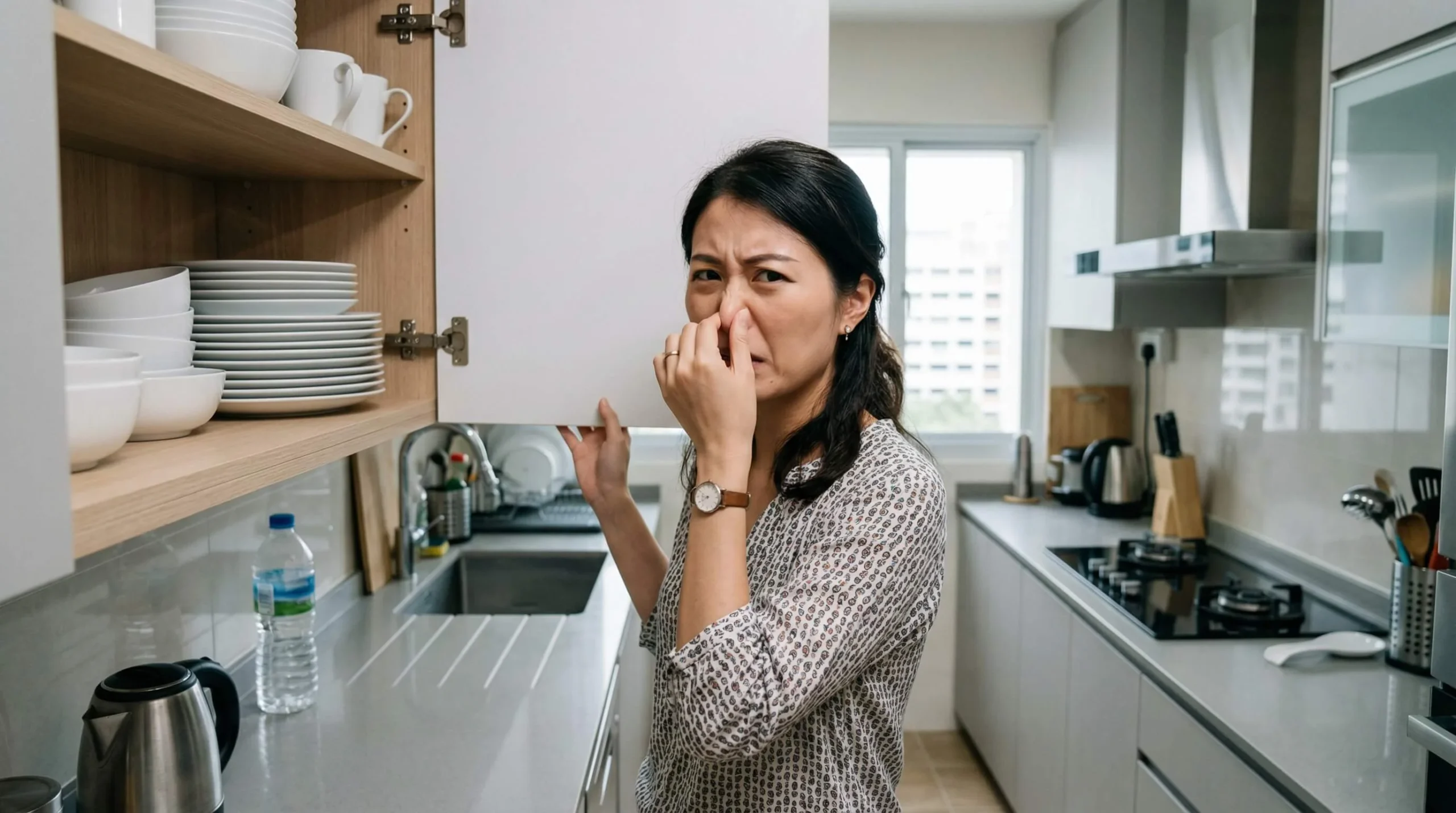

That sour, heavy scent wafting from your cupboards is rarely spilled food. It is a predictable environmental breakdown. When you trap 85% ambient humidity inside a dark, unventilated box made of porous engineered wood, you create a perfect incubation chamber. The material acts as a sponge, absorbing airborne cooking grease and moisture, which then feeds microscopic fungal colonies. Eliminating this stench requires stripping out the moisture with heavy-duty desiccants, altering your dish-drying habits, and physically washing the hidden bacterial film off your shelving.
You open the overhead cupboard to grab a clean coffee mug. Instead of neutral air, you are hit in the face with a distinct, suffocating wave of stale sourness. You check for old spices or rotting onions. There is nothing but clean ceramic plates and glassware.
The dishes are pristine. The box holding them is not.
This intensely frustrating scenario is a universal urban tax on living near the equator. The baseline kitchen cabinet odor Singapore residents battle every monsoon season is not a reflection of poor housekeeping. It is a harsh lesson in material science and tropical thermodynamics. We spend thousands of dollars building beautiful, seamless carpentry to hide our kitchen clutter, completely ignoring the fact that we are building sealed, dark micro-climates that actively trap wet air.
Understanding why cupboards develop odor over time requires looking at your kitchen storage not as furniture, but as a heavily compromised biological environment.
The Engineered Wood Sponge
Most modern HDB and condo carpentry is not solid oak. It is particleboard, medium-density fiberboard (MDF), or plywood wrapped in a thin layer of laminate.
These engineered woods are essentially highly compressed sawdust held together by industrial glues. They are incredibly porous. When the Singapore humidity kitchen environments constantly generate hits the microscopic unsealed edges of these boards—usually at the back joints or along the drilled holes for shelf pegs—the wood begins to drink the water vapor.
The material swells microscopically. As it absorbs moisture, it also absorbs the ambient smells of the room. Every time you fry fish, boil heavy curries, or generate intense cooking smoke, those aerosolized grease particles float into the cupboards and latch onto the damp, swelling wood fibers. The wood cabinets absorbing moisture become a permanent, off-gassing record of everything you have cooked over the last three years.
This trapped stagnation mirrors the exact structural frustration residents feel when dealing with a stuffy room singapore ventilation fails to clear. If the air cannot move, the environment simply soaks it up.
The Biological Bloom in the Dark
Where there is moisture and darkness, biology thrives.
The musty cabinet smell Singapore flats produce is rarely just damp wood. It is microbial. When you put a stack of plates away that is only 99% dry, that tiny film of residual water evaporates directly into the sealed cupboard. With zero sunlight to provide UV sterilization and zero airflow to carry the vapor away, the interior relative humidity spikes.
This triggers dormant mold spores.
Hidden mold kitchen storage environments harbor does not always look like massive, fuzzy black patches. Often, it is completely invisible to the naked eye. It exists as a microscopic biofilm coating the underside of your shelves. The musty smell causes are literal volatile organic compounds (VOCs) excreted by these fungal colonies as they feed on the trapped moisture and airborne cooking grease.
It is the exact same biological mechanism that forces you to rewash your clothes when dealing with a musty laundry smell singapore indoor drying racks generate. Bacteria and fungi process wet organic matter and release foul-smelling gases.
The Condensation Trap
Your air-conditioning habits play a massive role in this decay.
When you cool your home, the physical temperature of the kitchen cabinets drops. When you turn the AC off, the heavy, warm tropical moisture rushes back into the flat. As this warm, wet air hits the cold laminate surface of your cupboards, it condenses. Microscopic water droplets form inside your storage spaces.
People desperately try to figure out how to stop sweating indoors aircon singapore setups cause on their skin, completely missing that their furniture is sweating too. This constant thermal shifting creates a violently unstable environment for engineered wood. The physical toll of this atmospheric pressure is identical to the exhaustion that explains why tired at home hdb singapore residents feel completely drained on a Sunday afternoon. The environment is simply too heavy.
Expert Insight / Material Science Analysis
“The phenomenon of laminate cabinet smell is heavily tied to the degradation of urea-formaldehyde resins used in the manufacturing of MDF. Under sustained high humidity and temperatures exceeding 28 degrees Celsius, these industrial adhesives break down and release low-level formaldehyde gas, which mixes with the microbial VOCs. This creates a uniquely sharp, acrid odor that consumers often mistake for dead pests or rotten food. Mechanical ventilation of closed storage spaces is not an aesthetic luxury in the tropics; it is a chemical necessity.”
Breaking the Cycle of Stagnation
You cannot mask this issue with artificial fragrances. Putting a lemon-scented air freshener inside a rotting box just creates a box that smells like lemon-scented rot.
Managing kitchen cabinet odor Singapore style requires ruthless moisture extraction. The first step is behavioral. Never, under any circumstances, place dishes, pots, or plastic containers into a closed cabinet if they are even slightly damp to the touch. The residual moisture from a single improperly dried frying pan can contaminate the entire storage column for weeks.
Next, you have to actively dry the space. Silica gel packets are insufficient for the sheer volume of air inside a large kitchen cabinet. You need heavy-duty, disposable chemical dehumidifier tubs (often containing calcium chloride). Place one large tub in every single enclosed cabinet and drawer. You will be horrified to see them fill entirely with liquid water within three to four weeks.
This aggressive moisture extraction is crucial. The ambient decay dragging down your kitchen is the same heavy atmospheric burden explaining why tired at home singapore weekends feel so incredibly lethargic. The moisture ruins your materials while simultaneously draining your physical energy, leading straight to the deep, unexplainable fatigue found when analyzing why you feel tired at home singapore professionals complain about daily.
The Chemical Reset
Once you have stopped adding moisture, you have to strip the existing bacterial film off the wood.
How to clean cabinets Singapore humidity has compromised requires a mild acid. Mix equal parts distilled white vinegar and warm water. Empty the cabinets entirely. Wipe down every single interior surface, paying special attention to the underside of the shelves and the metal hinges. The acetic acid in the vinegar neutralizes the alkaline odors, kills the surface-level mold spores, and cuts through the invisible layer of aerosolized cooking grease that has glued itself to the laminate.
Leave the cabinet doors wide open for at least six hours with the kitchen windows open and a fan running to ensure the interior dries bone-dry before you put a single plate back.
✅ Do This
- Place large calcium chloride moisture absorber tubs in every sealed cabinet and replace them the moment the crystals turn fully to liquid.
- Wipe the interior of all kitchen cupboards with a 50/50 mix of white vinegar and water every three months to destroy invisible fungal biofilms.
- Leave cabinet doors slightly ajar overnight once a week to allow trapped, stagnant air to flush out into the main room.
- Ensure every piece of cookware, especially plastic containers with deep rims, is 100% bone-dry before storing.
❌ Avoid This
- Do not use scented shelf liners or commercial air fresheners inside cupboards; they merely mask the mold and mix with the stench.
- Do not store wet sponges or damp dishcloths inside the sink cabinet.
- Do not line your shelves with newspaper; paper is highly hygroscopic and will absorb massive amounts of moisture and rot in the dark.
- Do not ignore a musty smell assuming it is normal; it is a clear indicator of active fungal growth near your eating utensils.
The battle against degrading storage spaces is entirely winnable once you acknowledge the physics of your kitchen. Your cupboards are not inert boxes. They are active environments reacting to heat, moisture, and cooking fumes. To completely eradicate kitchen cabinet odor Singapore households must treat their storage spaces like living areas that demand regular ventilation and strict climate control.

Ege Sg
Senior Editor, Urban Life & Residential Science
Focusing on the intersection of tropical climate challenges and urban housing, Ege has spent years investigating the daily realities of living in Singapore’s HDBs and condos. By consulting with material scientists and local maintenance experts, he translates complex structural issues—like indoor humidity and ventilation failures—into practical, actionable solutions for Singaporean households.
Frequently Asked Questions
Official Context & Home Maintenance Resources
For more official guidelines on maintaining indoor hygiene, preventing mold growth, and ensuring proper residential ventilation, consult the following local resources: