The Lonely Kopi: Why Seniors Are Quietly Quitting Their Favourite Haunts


It isn’t just the 20-cent price hike. The rise of app-only ordering and strict tray return rules is pushing the Pioneer Generation back into isolation.
Uncle Tan used to hold court at the corner table of the coffeeshop in Ang Mo Kio Avenue 10. Every morning at 8 AM. Kopi C, thick toast, and a newspaper.
Last week, we found him sitting on a bench at the void deck instead. Eating bread from a plastic bag.
“Go there very troublesome now,” he says, waving a hand dismissively towards the bustling food court just fifty meters away. “Want to order, must press press press. My finger stiff. Behind got people wait. Stress only.”
He isn’t alone. Across Singapore’s heartlands, a silent migration is happening.
This retreat from public spaces isn’t accidental. It reflects a broader push towards digital efficiency across Singapore — one that is quietly redefining who public spaces are really built for.
We explored this wider shift and its unintended consequences here.
While analysts talk about “cost of living” and “GST hikes” as the primary deterrents, conversations on the ground reveal a different, sharper pain point: Friction.
For a generation that grew up with cash and dialect, the modern, efficient, “Smart Nation” kopitiam has become a hostile environment.
Many seniors say this discomfort didn’t appear overnight. Long before they stopped coming altogether, regulars had already noticed something shifting inside Singapore’s kopitiams — quieter mornings, fewer conversations, and routines that no longer felt familiar.
noticed something shifting inside Singapore’s kopitiams
The Anxiety of the Kiosk
We watched the lunch rush at a newly renovated food loft in Clementi. It is efficient. Sterile. Fast.
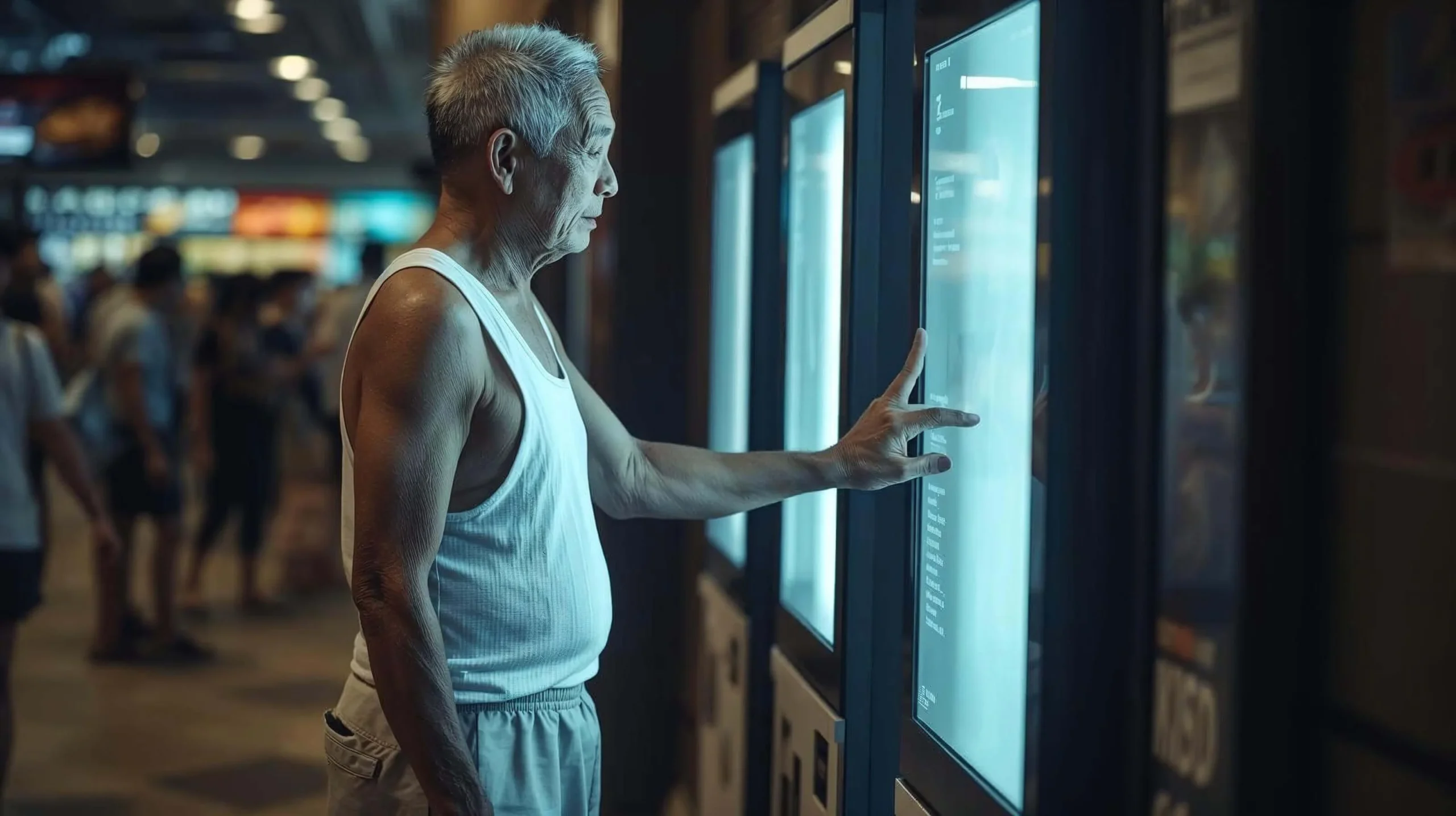
But watch the edges. An elderly lady stands in front of the self-ordering kiosk. She stares at the screen. The font is small. The menu is in English. She taps “Noodles”. A sub-menu pops up: Type of noodle? Spicy? Add-ons? Dine-in or Takeaway? Payment method?
She freezes. The queue behind her shifts. Someone sighs. A younger man steps forward to help, but the damage is done. The shame is visible. She eventually pays, but she doesn’t come back the next day.
It is not that they *can’t* learn. It is that the penalty for being slow is public embarrassment. Cash, once king, is now an inconvenience that requires the hawker to wipe their hands, slow down the line, and sometimes grumble.
Why This Matters in Our Social System
This digital divide poses a risk to Singapore’s “Active Ageing” strategy. The kopitiam has historically served as an informal community care node—a place where seniors socialize, keeping dementia and depression at bay. As these spaces become tech-gated “efficiency zones,” seniors retreat to their flats. Social isolation in the elderly is a known precursor to rapid health decline, potentially adding load to the public healthcare system later on.
This sense of exclusion mirrors a broader problem unfolding across Singapore — from banks to community centres — where efficiency is quietly replacing human reassurance.
The case for preserving a ‘slow lane’ in a Smart Nation
is becoming harder to ignore.
The “Tray Return” Fear
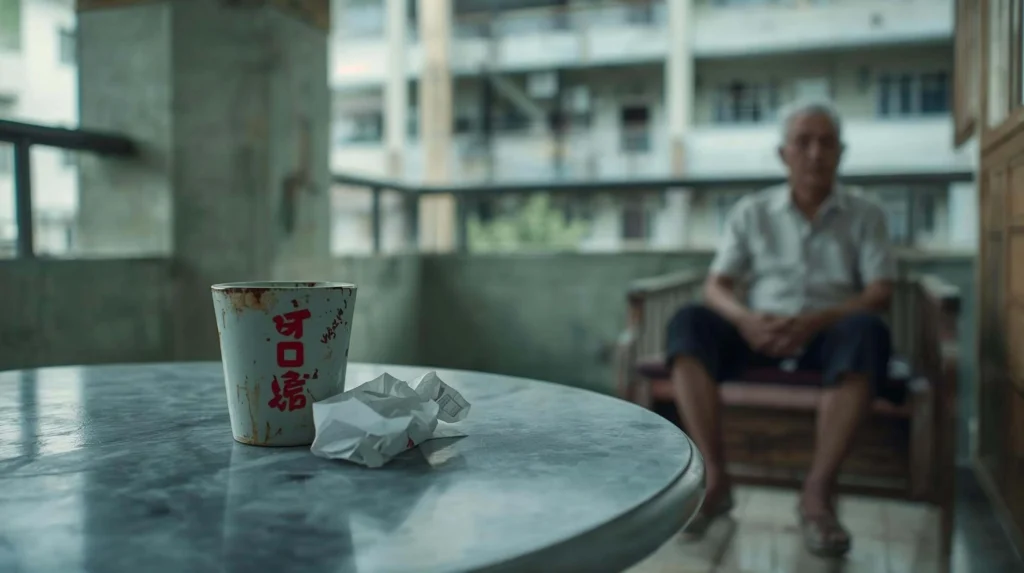
Then there is the tray return policy. Introduced by the National Environment Agency (NEA) to improve hygiene, it has had an unintended psychological side effect on the frail.
“My hand shaking,” says Mr. Loh, 78. “Holding the heavy tray, scared drop. If drop, dirty the floor, people scold. If never return, scared get fine.”
It sounds trivial to the able-bodied. Just clear your table, right? But for an uncle with weak knees or a walking stick, balancing a tray of leftover soup and bones while navigating a crowded floor to the halal/non-halal return station is a physical obstacle course.
The result? They simply stop eating there. They dabao (takeaway) and eat at home alone. The social ritual is dead.
Seniors describe the change less in numbers, and more in how it makes them feel. Still, these are the contrasts they often mention:
| The Experience Gap | For the Digital Native (You) | For the Pioneer Generation |
|---|---|---|
| Ordering | Scan QR code from seat (Convenient) | Can’t read small screen (Anxiety) |
| Payment | Apple Pay / PayLah! (Fast) | Fumbling with coins (Pressure) |
| Post-Meal | Tray return is muscle memory | Physical struggle / Fear of fines |
What This Means for Residents
We need to look out for our neighbours. The “kampong spirit” isn’t just about sharing food; it’s about patience.
The “Helper” Effect:
We are seeing more residents stepping in. If you see an auntie struggling at the kiosk, don’t sigh. Offer to tap the screen for her. That 10 seconds saves her dignity.
The Rise of “Friendly” Spots:
Seniors are voting with their feet. They are flocking to the older, non-renovated coffee shops where the “kopi uncle” still shouts the order and comes to the table to collect cash. These spots are becoming the last bastions of inclusive dining, even if they don’t have air-con.
🧠 Editor’s Bottom Line
“It’s heartbreaking to see. We optimized the coffee shop for speed, turnover, and hygiene. We succeeded. But in the process, we designed out the humanity for the very people who built this country. If efficiency means an 80-year-old feels too scared to buy a $1.40 coffee, maybe we optimized the wrong thing.”
Official Context
The Infocomm Media Development Authority (IMDA) runs the “Seniors Go Digital” programme to help the elderly navigate apps and e-payments. Residents can find digital ambassadors at most Community Centres and public libraries for 1-on-1 guidance.