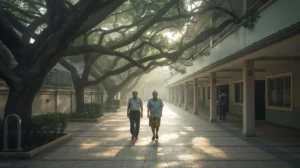
Something Has Shifted in Singapore’s Kopitiams — Regulars Are Feeling It

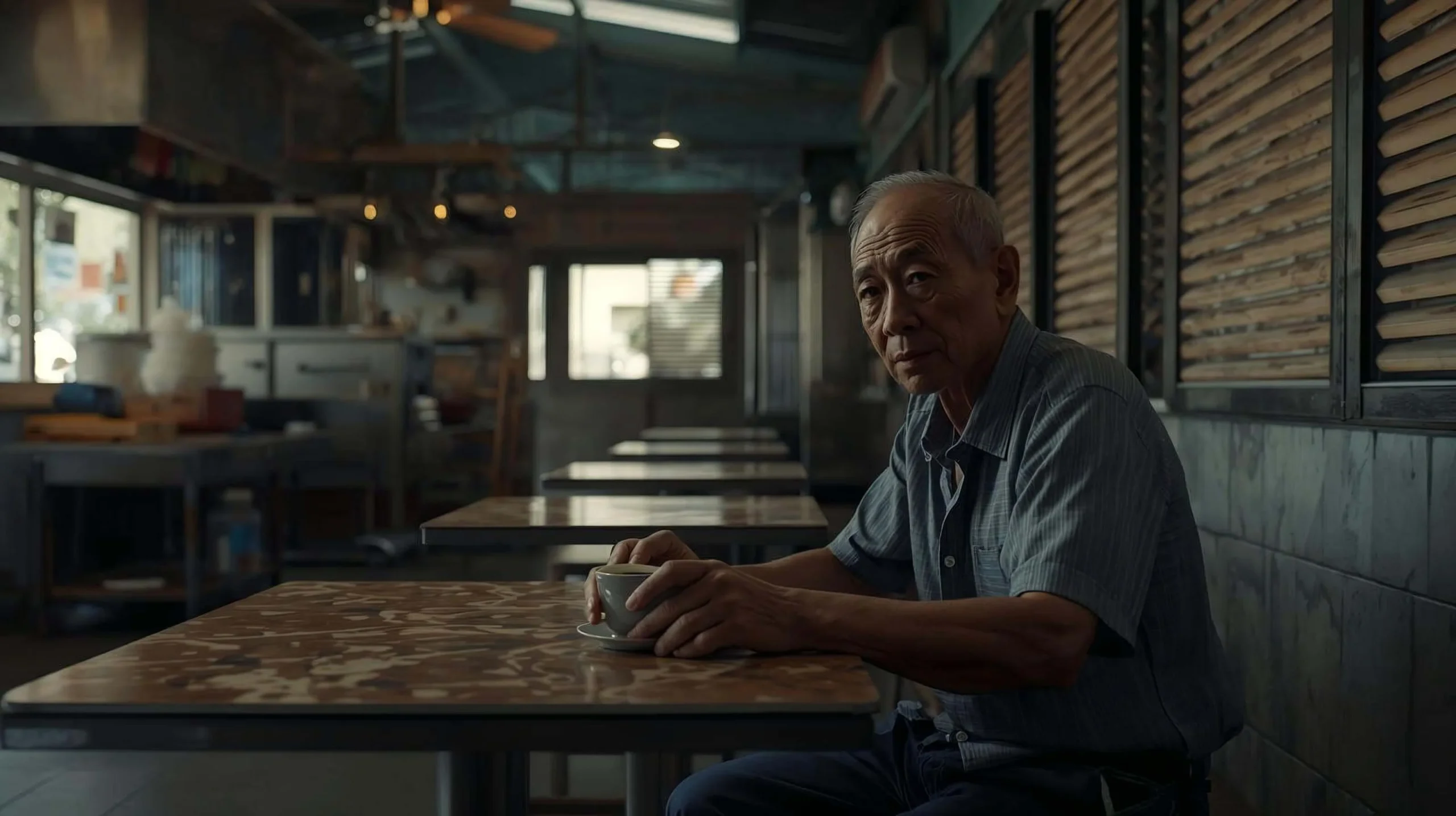

From quieter mornings to smaller portions, regulars say the familiar kopitiam rhythm no longer feels the same.
Mr. Lim doesn’t shout his order anymore.
For twenty years, his morning routine at the Bedok North Block 216 market was acoustic. “Kopi O! Roti bakar!” shouted across the wet floor. Acknowledged with a wave. Served in a chipped saucer.
Today, he stands quietly in a queue. He taps a screen. He scans a QR code. He waits for a number to flash on a digital board. “Feels like a bank,” he grumbles, stirring a cup that cost him $1.50—twenty cents more than last year, for liquid that feels a little thinner.
That quiet shift feels even more visible inside Singapore’s kopitiams.
Something has shifted in Singapore’s kopitiams. And if you sit there long enough, you realize the regulars aren’t just complaining about the price. They are mourning the vibe.
What is happening inside kopitiams is part of a much bigger shift. Across Singapore, everyday public spaces are being redesigned for speed and automation — often at the expense of those who struggle to keep up.
Here’s how this quiet redesign is reshaping daily life far beyond coffee shops.
This quiet discomfort isn’t limited to coffee shops. It is part of a wider shift in how Singapore designs everyday interactions — one that increasingly prioritises speed over human presence.
Why a Smart Nation may need a “slow lane”
is now becoming a question far beyond kopitiams.
The “Budget Meal” Paradox
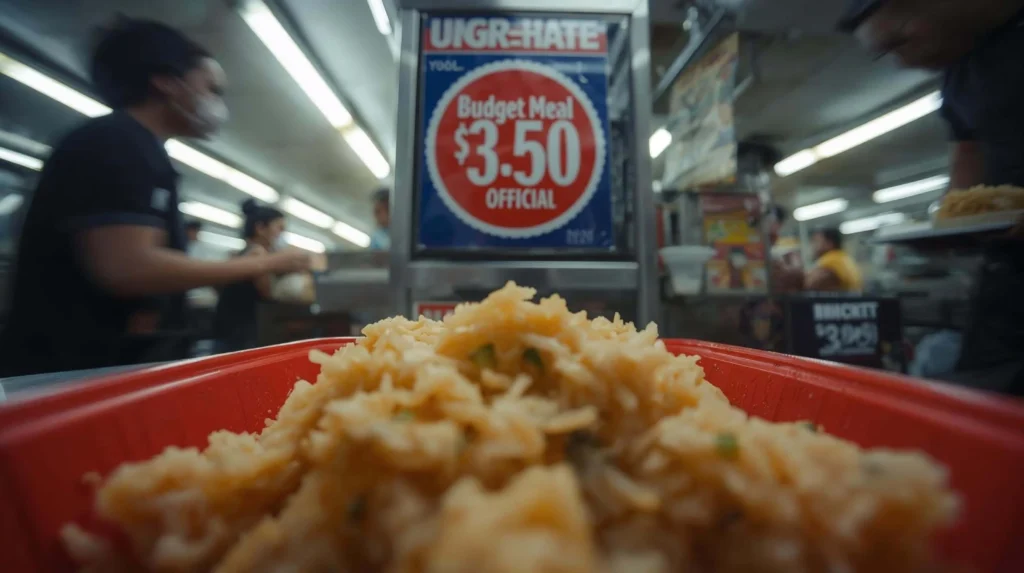
Walk into any HDB estate coffee shop now and you will see the red stickers. The government-mandated “Budget Meal” options. $3.50 for chicken rice. $3.00 for fishball noodles.
On paper, it looks like a safety net. In practice, the regulars tell a different story.
“You order the budget meal, you get the budget portion,” says Mdm Tan, pointing to her plate at a specialized chain in Ang Mo Kio. “Three slices of chicken. Last time $3.50 get you full meal. Now $3.50 is like snack.”
It is the unspoken trade-off. To keep the signboard price low, the quantity has quietly shrunk. The “Cai Fan” (economy rice) stall, once the bastion of affordable fullness, has become a minefield of “seasonal pricing.” You pick the wrong vegetable, and suddenly your $4 lunch becomes $7.
Why This Matters in Our Social System
The kopitiam is Singapore’s “Third Place”—not home, not work. It is where the community bonds. But as operators face rising rent and manpower costs, they are pivoting to “efficiency models.” Automated brewing machines are replacing the sock-brewing uncle. Centralized kitchens are replacing the individual hawker. The result? A standardized, efficient, but sterile environment that risks alienating the very demographic (seniors) that relies on it most for social interaction.
The Digital Wall
Then there is the silence.
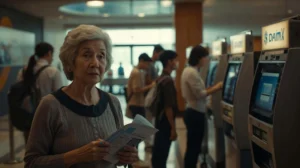
The clatter of saucers is being replaced by the beep of payment terminals. For the younger crowd, scanning a PayLah! QR code is second nature. For the Pioneer Generation, it is a daily stress test.
We watched an elderly uncle at a Clementi coffeeshop try to redeem a CDC voucher. He swiped. He tapped. The app loaded slowly. The queue behind him grew impatient. The cashier, a foreign worker under pressure to keep the line moving, tapped the screen aggressively to help. The transaction went through, but the uncle walked away looking defeated, not relieved.
Efficiency has a cost. And the cost is patience.
Regulars describe the change less in numbers, and more in experience. Still, these are the comparisons they often mention:
| Item | The “Old” Standard (2023) | The “New” Reality (2026) |
|---|---|---|
| Kopi O | $1.10 – $1.20 | $1.40 – $1.60 |
| Chicken Rice | $3.50 (Standard) | $4.50 (or $3.50 “Budget” portion) |
| Ordering | Shouting / Eye Contact | Kiosk / QR Code |
| Tray Return | Auntie clears it | Deposit System / Self-Clear |
What This Means for Residents
If you are feeling the pinch, you aren’t imagining it. The era of the “loose change” meal is ending.
The “Hunting” Mentality:
Residents are becoming hunters. We see people walking past the newly renovated, air-conditioned “food lofts” to find the older, grimy, non-air-con kopitiams where the rent is cheaper and the portions are honest. Loyalty to a stall is being replaced by loyalty to value.
Social Isolation:
It sounds dramatic, but for seniors, the automated kiosk is a barrier to entry. Some are choosing to eat at home simply to avoid the anxiety of navigating the screen menus. The community table is breaking up.
🧠 Editor’s Bottom Line
“I sat in Toa Payoh Lor 8 for two hours writing this. The coffee is still strong, but the noise has changed. It’s less banter, more beeping. We are gaining efficiency, sure. But we need to ask ourselves if saving 30 seconds at the kiosk is worth losing the uncle who knows exactly how ‘siew dai’ you like your coffee without you asking.”
Background Context
To mitigate rising food costs, the government requires all HDB rental coffee shops to provide budget meal options. Residents can check the BudgetMealGoWhere For those looking for official information…
This article is part of SGVital’s ongoing series on how digital efficiency is reshaping everyday life in Singapore.