
Singapore Aircon Guide: Fix Leaks, Smells & Not-Cold Air

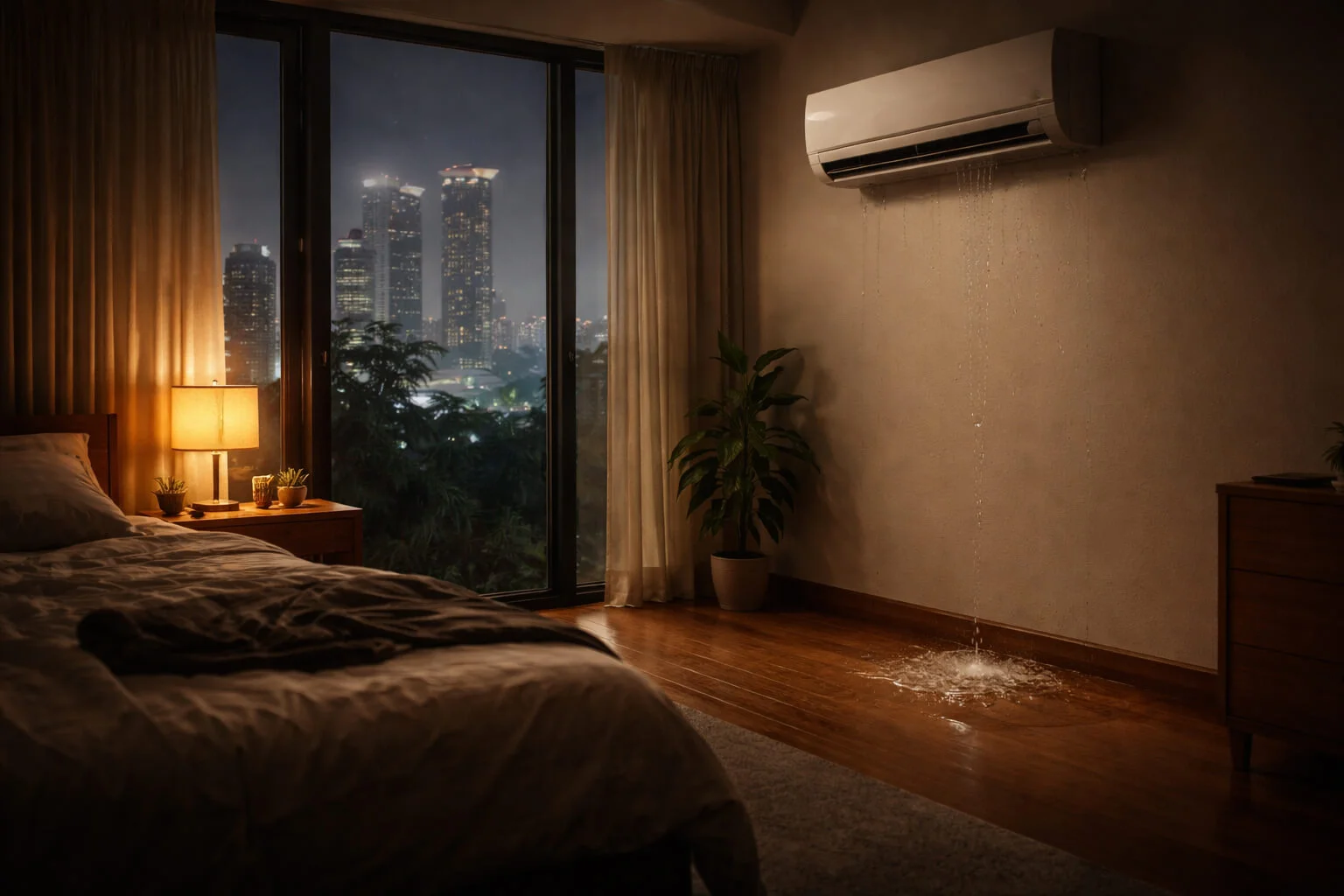

It is the most important appliance in the country. When the fridge breaks, you order takeout. When the aircon breaks, you lose your mind. Here is how to diagnose the drips, the smells, and the lukewarm air before calling the technician.
The Singapore Moment: You Wake Up Sweating — Again
It’s 3:30 AM. You are tossing and turning. The bedroom feels stuffy. You reach for the remote, drop the temperature to 20°C, and wait. Nothing happens. Or worse, you hear the ominous, rhythmic sound of drip-drip-drip hitting your wooden floor.
This is the moment of panic. In a tropical climate, an aircon malfunction isn’t a minor inconvenience; it is a sleep-depriving emergency.
Why this problem is so common here
The aircon servicing Singapore guide is thick because our machines do double duty. They don’t just cool the air; they fight an endless war against extreme humidity. When an aircon runs for 10 hours straight every single night, moisture builds up. Algae grows. Dust cakes. It is a biological inevitability. But knowing why it happens makes it much easier to fix.
If you live in an HDB, you already know how quickly small home issues can spiral into daily stress. If you’re dealing with conflict beyond aircon problems, see our Singapore HDB neighbour disputes guide for calm, non-escalating steps.
TL;DR: Quick Aircon Troubleshooting
- Leaking Water: Usually a choked drain pipe caused by “jelly” algae. Fix: Clear the pipe with a wet/dry vac.
- Musty Smell: Mould on coils. Fix: Run “Fan Mode” for 30 mins before turning it off.
- Not Cold: 90% of the time, it’s dirty filters or wrong remote mode (use ❄️ Snowflake).
- When to call a pro: If you see ice forming, hear buzzing, or the unit blinks and shuts down.
First: What’s the Symptom?
Before you frantically google for a repairman, listen to what the machine is telling you. Aircons in Singapore usually fail in one of four ways:
- Leaking water: Usually a drainage issue, but sometimes an ice issue.
- Bad smell: A bacterial or mould issue inside the dark, wet unit.
- Not cold / weak airflow: An airflow blockage or a system issue.
- Strange noise / sudden shutoff: Often an electrical or motor sensor issue (requires a pro).
Aircon Leaking — The Most Googled Problem
When you search for Singapore aircon leaking, the panic is real. Water ruins paint, damages parquet floors, and shorts electronics.
The simple causes people miss
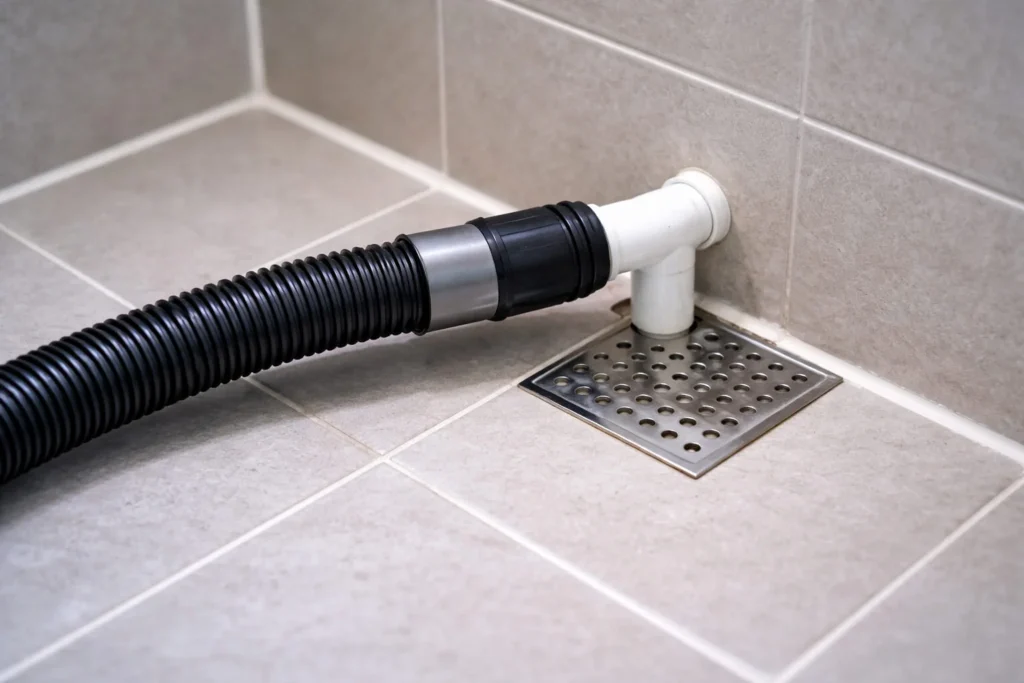
Why is there aircon water dripping indoor unit style? The most common reason is the “Jelly Monster.” As the aircon pulls moisture from the humid Singapore air, condensation drips into a tray and drains outside via a pipe. Over time, dust mixes with this water and creates a thick, slimy algae (the jelly) that chokes the drain pipe. The water has nowhere to go but out into your room.
“Many homeowners in BTO flats don’t realize the master bedroom aircon and living room aircon share the same common drainage pipe in the master bathroom. If both start leaking at the same time, the choke is at the bathroom outlet, not inside the units.”
Another cause for aircon leaking after heavy rain Singapore is poor installation where rainwater flows back into the drain pipe, though this is less common than a simple choke.
Safe checks you can do in 5 minutes
If you see water, try this safe DIY method before calling for help:
1. Turn off the main power switch.
2. Clean the filters: If filters are choked, the coils freeze, and melting ice causes leaks.
3. The Vacuum Trick: Locate the aircon drain pipe outlet (usually in your toilet). Use a wet/dry vacuum cleaner to suck the end of the pipe for 10 seconds. You might suck out the blockage.
When leaking becomes “stop using and call service”
If you see ice forming on the copper pipes or the unit itself, stop immediately. Why is my aircon leaking water inside Singapore? Sometimes it’s a gas leak causing the unit to freeze up. Running it frozen will burn out the compressor motor. Switch it off and wait for a technician.
Aircon Smell — Musty, Sour, “Wet Laundry” Odour
You turn it on, and instead of fresh air, you get blasted with the smell of old socks.
Why smells happen in humid homes
The aircon smell Singapore residents experience is a byproduct of our climate. The inside of an aircon is dark, cold, and wet. It is the perfect breeding ground for mould and mildew. If you turn off the aircon and immediately close your windows, that moisture is trapped inside the machine.
Filters vs coils vs drainage
If the smell is dusty, it’s the filters. If the smell is a sour aircon mould smell, it is coming from the cooling coils or the drain pan behind the filters. This happens when the pan doesn’t tilt properly and stagnant water sits there for weeks.
What helps quickly vs what is temporary
How to stop aircon from smelling musty Singapore: Buying those “aircon spray cans” from the supermarket is a temporary mask. They don’t kill the deep mould.
The real fix? Run your aircon on “Fan Mode” for 30 minutes before switching it off completely. This dries out the internal coils so mould can’t grow.
Not Cold — The “It’s On But It’s Useless” Situation
The machine is blowing, the light is green, but you are still sweating. Aircon not cold Singapore is a frustrating mystery.
Settings mistakes (mode/temp/fan)
Check the remote. Did someone accidentally press the “Dry” (water drop icon) or “Fan” (fan blade icon) mode? Aircons only pump refrigerant gas when it is set to “Cool” (snowflake icon). Also, check the fan speed; if it’s set to ‘Auto’, it might be running at a whisper speed.
Airflow blockers
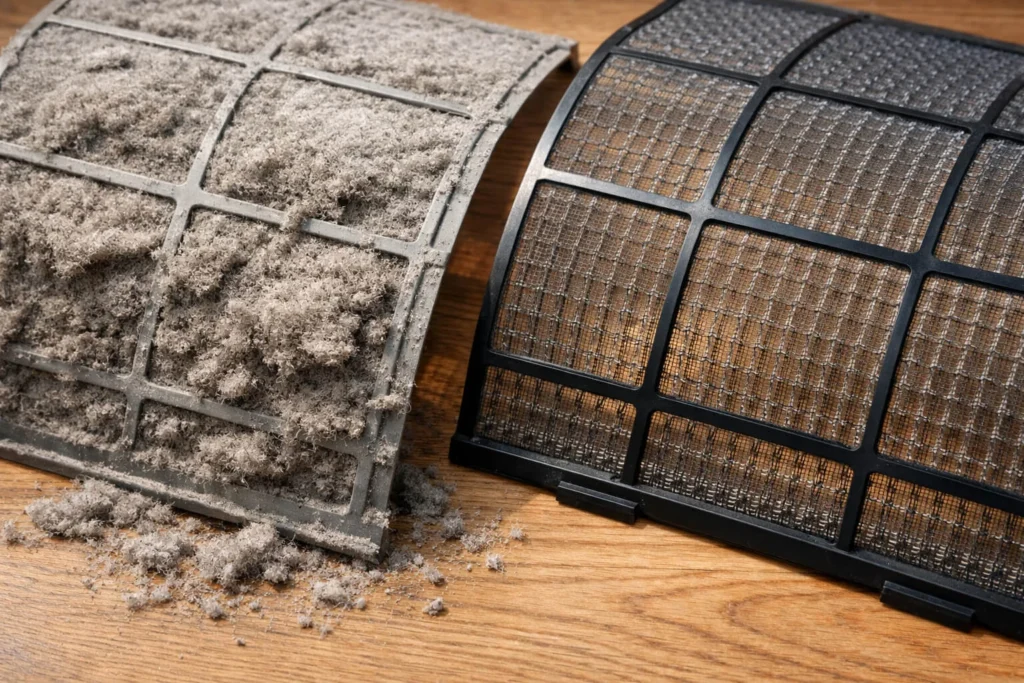
Aircon filter cleaning is non-negotiable. If your filter looks like a grey fur coat, the cold air cannot push through into the room. Aircon not cold but fan is running Singapore is almost always a sign of a choked filter or a choked blower wheel inside the unit.
When it’s likely beyond DIY
If the filters are clean, the settings are right, but the air blowing out is room temperature, you likely have a refrigerant gas leak. You cannot fix this. A technician needs to find the leak, weld it, and top up the gas.
The Servicing Question Everyone Argues About
Do you service it every month? Every year? Never until it breaks?
How often people actually service in SG
How often should I service my aircon in Singapore? The general consensus among honest technicians: If you use the aircon every night, a standard service every 3 to 4 months is ideal. If you only use it on weekends, every 6 months is fine.
Signs you shouldn’t delay
If the unit is leaking, smelling, or sounding louder than usual (rattling or buzzing), do not wait for the scheduled date. Call the service.
Red flags for bad servicing practices
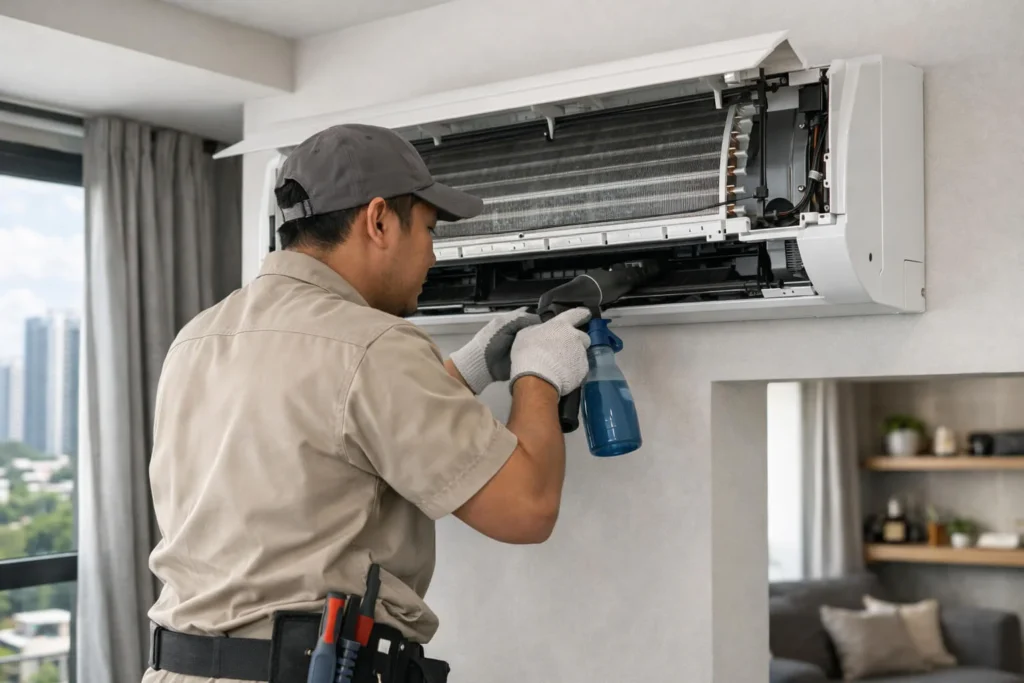
If a technician comes, washes the plastic filters in your bathroom sink, charges you $40, and leaves in 10 minutes—you were cheated. A real service involves opening the cover, vacuuming the drainage pipe, and cleaning the coils and blower wheel.
2026 Estimated Aircon Servicing Costs in Singapore
To avoid being overcharged, here is the current market rate for standard HDB and Condo aircon servicing. Note that Daikin and Mitsubishi units might have slight variations depending on parts availability.
| Service Type | Average Cost (SGD) | When Do You Need It? |
|---|---|---|
| General Servicing | $30 – $45 (per unit) | Every 3-4 months. Clears basic dust and checks gas levels. |
| Chemical Wash | $80 – $120 | Only when coils are severely blocked or bad smells persist. |
| Chemical Overhaul | $130 – $180 | When the unit needs to be fully dismantled to clear deep blockages. |
| Gas Top-up | $50 – $80 | Only if a leak is found and patched. (Freon does not expire). |
HDB vs Condo Realities (Quick Differences)
Layout, sun exposure, room size
HDB aircon issues often stem from long piping runs. The compressor is outside the master bedroom, but the piping has to travel all the way to the living room. Long pipes trap more dirt. Condo aircon leaking problem situations often arise because compressors are stacked tightly on small, unventilated ledges, causing them to overheat.
Why bedroom units suffer more
Bedroom units are used for 8-10 hours continuously while you sleep, breathing in skin flakes, hair, and dust. They choke much faster than the living room unit, which is used less frequently in larger spaces.
A Simple Maintenance Routine (Non-technical)
Keep your aircon alive with this basic routine:
Weekly small habit
Don’t just turn it off. Press the “Timer” to keep it running on Fan Mode for 20 minutes to dry the coils. And vacuum your bedroom floor—less dust on the floor means less dust sucked into the aircon.
Monthly check
Pop the front cover. Pull out the two mesh filters. Wash them under the shower with plain water (no harsh chemicals). Let them dry completely before putting them back.
If you need to call a technician, preparation saves time and money. Here is what you need to tell them over the phone.
| What to Tell the Tech | Why It Helps |
|---|---|
| Brand & Age of Unit | Older units might need discontinued parts. |
| Is it blinking? (Count the blinks) | Blinking lights are error codes for the technician. |
| When does it leak? | Immediately vs after 30 mins indicates different choke points. |
| Is the outdoor unit spinning? | Tells them if it’s an indoor or outdoor electrical issue. |
Quick Checklist (Save This)
✅ Do This
- Wash your air filters once a month with plain water.
- Run the aircon on Fan Mode to dry it out before turning it off.
- Set temperature to a reasonable 24°C – 25°C to save the compressor.
- Clear the area underneath a leaking aircon immediately.
- Schedule professional servicing every 3 to 4 months for daily use.
- Listen for weird rattling sounds (usually a loose fan bearing).
- Check if your remote control batteries are weak (can cause signal drop).
- Use a wet/dry vac on the drain pipe in the bathroom if a leak starts.
- Keep doors closed so the compressor doesn’t overwork.
- Check if the remote is accidentally set to “Dry” or “Fan” mode.
❌ Avoid This
- Do not spray bleach, Dettol, or harsh chemicals into the aircon fins.
- Do not keep running a leaking aircon; you risk an electrical short.
- Do not block the aircon outlet with curtains or wardrobes.
- Do not set the temperature to 16°C hoping it cools the room faster (it doesn’t).
- Do not ignore ice forming on the unit (switch it off immediately).
- Do not dismantle the plastic casing if you aren’t experienced.
- Do not use the aircon with missing or torn mesh filters.
- Do not ignore bad smells; it means you are breathing in mould spores.
- Do not let standard technicians push you into a “chemical overhaul” instantly.
- Do not sleep with wet hair directly under the cold air blast.
Official Context
Aircon maintenance isn’t just about comfort; it’s about energy. The National Environment Agency (NEA) estimates that regular aircon maintenance can improve energy efficiency by up to 15%. For electrical safety, ensure all repair work is carried out by licensed professionals.
🕰️ One Small Moment
“I paid a guy $150 to fix my ‘broken’ aircon. It was blowing warm air for two days. He walked in, took my remote control, looked at the screen, pressed the ‘Mode’ button once to change it from the Fan icon to the Snowflake icon. Cold air blasted out instantly. He smiled, didn’t charge me, and left. I have never felt more stupid, and more grateful, in my life.”
Related reads: Singapore MRT peak hour guide
Editorial Note: This guide is for safe, non-invasive troubleshooting (filters, settings, basic checks). If you see ice on the unit/pipes, smell burning, hear electrical buzzing, or the aircon shuts off repeatedly, stop using it and contact a licensed technician.
Safety: Do not spray harsh chemicals into fins or dismantle casing/electrical parts unless you are trained. When in doubt, switch off the main power and get professional help.
Final Thoughts: Don’t Let the Heat Win
Living in Singapore means accepting that your aircon is the hardest-working appliance in your home. By washing your filters monthly and recognizing the early signs of a choke (the dreaded jelly), you can save hundreds of dollars in repair bills and get back to your uninterrupted sleep.
Is your aircon beyond DIY help?
If you’re still facing issues, check out our guide on Finding Reliable Handymen in Singapore.
Have a horror story about an aircon leak ruining your parquet floor? Share it with us in the comments below!