Health Conversations in Singapore Are Changing — Doctors and Patients Are Noticing It

It isn’t just about the flu anymore. From the polyclinic to the private suite, the language of health has shifted from “fixing sickness” to “optimizing life”—and it is confusing everyone involved.
Dr. Tan puts down his pen. He leans back in his chair at his clinic in Tiong Bahru. It is 11:30 AM on a Tuesday, usually the time for quick MCs and flu medications.
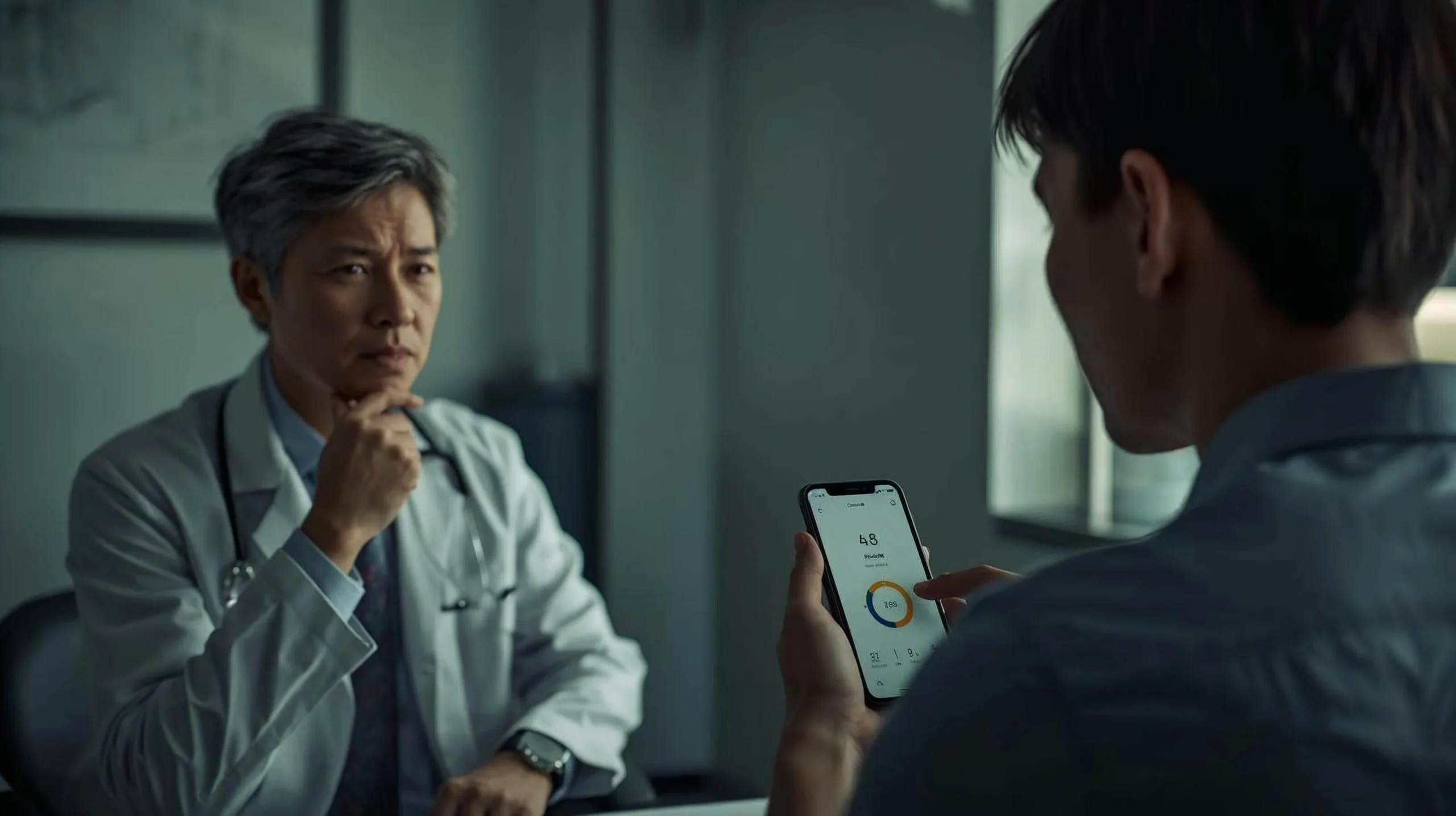
But the patient in front of him, a man in his late 20s dressed in office wear, isn’t coughing. He isn’t feverish. He is holding his phone out, displaying a complex, color-coded graph from a sleep tracking app.
“Doctor,” the patient says, his voice serious. “My HRV (Heart Rate Variability) dipped to 30ms last night. And my deep sleep was only 12%. Do you think I have adrenal fatigue? Or is it a cortisol spike?”
Dr. Tan blinks. Ten years ago, a patient would come in and say, “Doctor, head pain, give Panadol.” Today, they come in with a hypothesis, a dataset, and a vocabulary they learned from a neuroscientist’s podcast.
This scene is becoming the new normal. Across the island, health conversations Singapore residents are having with their doctors are undergoing a fundamental transformation. The dynamic has shifted from a transactional repair service—”I break, you fix”—to a collaborative, often anxious, negotiation about optimization.
We are witnessing the death of the passive patient and the rise of the “Health Project Manager.” And while this awareness is good on paper, on the ground, it is creating a strange new atmosphere in our clinics.
The Rise of the “Data Patient”
We are the most quantified nation in Southeast Asia. You cannot walk onto an MRT train without seeing a wrist glowing with the green light of a heart rate sensor. We track our steps for the Healthy 365 vouchers. We track our sleep for the score. We track our calories.
This data has entered the consult room, and it has changed the script.
I spoke to a GP in Jurong who wished to remain anonymous. “It used to be simple,” she told me. “Now, I spend the first ten minutes just interpreting their data. They are worried about a spike in heart rate that happened while they were running for the bus. They think it’s a heart attack. I have to explain that it’s just biology.”
This is the paradox of Singapore health trends in 2026. We have never had more information about our bodies, yet we have never felt more uncertain about them.
This growing fixation on micro health signals doesn’t calm us down; often, it winds us up.
It creates a new category of patient: The “Worried Well.” These are healthy individuals who are suffering from the anxiety of potential illness. They aren’t sick, but their watch told them they might be, and that possibility consumes the conversation.
The Mental Health “Trojan Horse”
However, amidst the noise of data, there is a quieter, more positive shift.
The stigma is cracking. We are finally starting to tell the truth about how we feel.
In the past, doctors in Singapore observations suggest that patients would mask mental distress with physical symptoms. You wouldn’t say “I’m depressed.” You would say “I have gastric.” You wouldn’t say “I’m burnt out.” You would say “I have a headache.”
That is changing. Younger Singaporeans, in particular, are walking into clinics and stripping away the metaphor.
“I had a young lady come in,” Dr. Tan shares. “She sat down and said, ‘Doctor, physically I am fine. But I cannot go to the office today. I feel like I am going to collapse inside.’ She didn’t ask for a fake flu MC. She asked for a mental health break.”
This honesty is revolutionary. It forces the medical system to treat the person, not just the biological machine. The conversation has expanded from “Where does it hurt?” to “Why does it hurt?”
It’s funny, actually. We used to lie to doctors to get out of work. Now, telling the brutal, emotional truth is the only way to get the help we actually need.
| The Metric | The Old Conversation (Traditional) | The New Conversation (Modern) |
|---|---|---|
| Objective | Get medicine / Get MC | Get validation / Strategy |
| Symptom | “Fever, Cough, Flu” | “Low energy, Brain fog, Poor recovery” |
| Doctor’s Role | Authority figure (“Do this”) | Consultant (“What do you think?”) |
| Ending | “Take antibiotic.” | “Review lifestyle + Supplements.” |
The “Preventive” Policy Effect
We cannot discuss this change without mentioning the government’s massive push. The Healthier SG initiative has fundamentally rewritten the contract between resident and doctor.
By encouraging residents to enroll with a single family doctor, the system is trying to force a long-term relationship. It is trying to turn the “pit stop” clinic into a “maintenance” hub.
You can see the difference in the waiting rooms. Older residents are there for their free screenings. They are talking about “health plans” rather than just ailments. The Healthier SG posters are everywhere, nudging the conversation towards prevention.
But this transition is messy. Doctors are finding themselves acting as life coaches. They are nagging uncles to cut down on Kopi (with condensed milk) and nagging aunties to go for their brisk walks. It is a more intrusive form of medicine, but perhaps a necessary one.
The Supplement Aisle Anthropology
To really understand everyday health awareness trends Singapore is experiencing, you don’t need to go to a hospital. You need to go to a Watsons or Guardian.
Stand in the supplement aisle. It used to be a dusty corner for Vitamin C and Fish Oil. Now? It looks like a high-end candy store for bio-hackers.
You see shelf after shelf of Magnesium Glycinate (for sleep), Ashwagandha (for stress), Creatine (for brain health), and Probiotics (for gut health). And the people buying them aren’t just the elderly.
I watched a group of polytechnic students debating the merits of Zinc versus Magnesium. “Bro, you need Zinc for testosterone,” one said. “But Magnesium good for deep sleep,” the other countered.
They are treating their biology like a video game character that can be buffed and upgraded with the right potions. It is proactive, yes. But it is also expensive. Health has become a consumption habit.
The “Dr. Google” Friction
Of course, this new awareness creates friction.
Doctors are increasingly having to debunk “internet facts.” A patient reads a headline about “seed oils causing inflammation” and decides to cut out all oil, then wonders why they are fatigued. Another reads about “glucose spikes” and refuses to eat fruit.
The conversation in the clinic often turns into a negotiation between medical science and social media trends. The doctor has to gently guide the patient back to reality without dismissing their enthusiasm.
“I tell them,” Dr. Tan says, “Google gives you information. I give you wisdom. Information says a headache is a tumor. Wisdom says you just didn’t drink enough water today.”
The Generational Divide
While the youth are hacking their biology, the seniors are just trying to navigate the system.
For the elderly, health conversations Singapore style are becoming overwhelming. They are asked to use apps. They are asked to scan QR codes for appointments. They are asked to remember passwords.
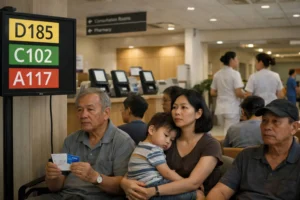
I saw an old man at a polyclinic kiosk looking utterly lost. He just wanted to see a doctor for his knee. The machine wanted his Singpass. The conversation he wanted to have was about pain; the conversation he was forced to have was about technology.
This is where the “human touch” becomes critical. The nurses and digital ambassadors who bridge this gap are the unsung heroes of our healthcare system. They translate the digital demands into human reassurance.
The Cost of “Optimal”
Underlying all these conversations is the hum of economic anxiety. How health conversations are changing in Singapore is also about money.
We know healthcare costs are rising. We know about the insurance premiums. So, the obsession with health is also a financial strategy. We are terrified of getting sick not just because of the pain, but because of the bill.
We optimize our health to protect our wealth. That “worried well” anxiety? It’s partly the fear that if we slip up, if we miss a screening, if we don’t take the supplement, we will end up being a burden to our families.
Official Context
The shift towards preventive care is a national priority. The Ministry of Health (MOH) has designed the healthcare system to support this, offering subsidies for screenings and vaccinations. For mental health support, resources like mindline.sg offer self-help tools and directories for professional help.
👟 From the Ground
“I was leaving the clinic when I heard a young father talking to his son. The boy had a scraped knee. ‘Does it hurt?’ the father asked. ‘Yes,’ the boy cried. The father didn’t check an app. He didn’t check a graph. He just hugged the boy and said, ‘Pain means you are healing.’ It was such a simple, analog moment. In a world of complex health data, sometimes the most important diagnostic tool is still just a hug.”