The Algorithm in the Lift: AI Is Quietly Running Singapore


It didn’t arrive with a bang or a robot uprising. It arrived as a helpful button in your email and a camera that knows when you smoke under the shelter.
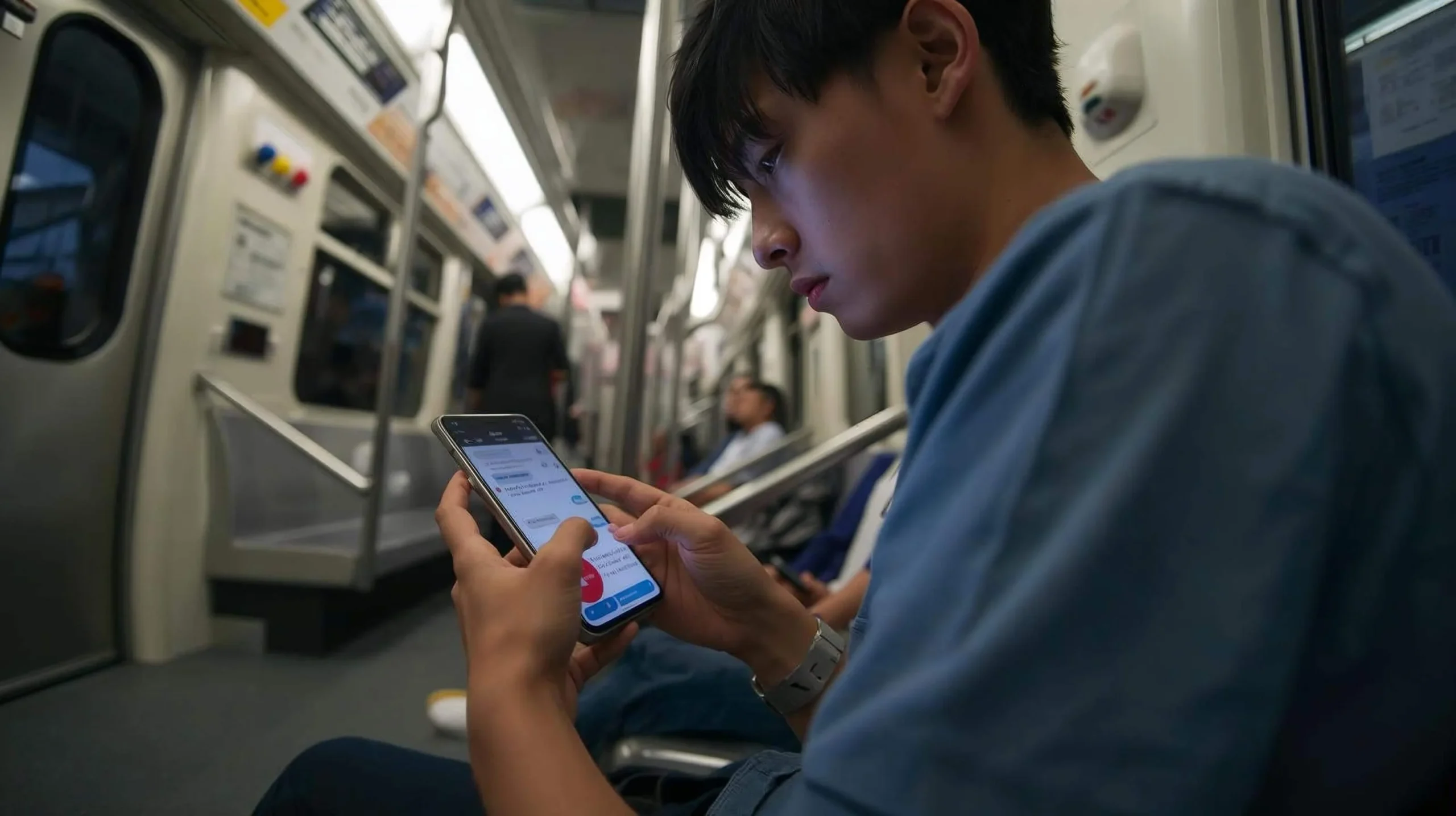
Ben, a copywriter working in Bugis, opens his laptop at 9 AM.
He stares at a blank document. He types a prompt. Three seconds later, the first draft of his marketing campaign is done. He tweaks a few words, deletes a weird phrase, and sends it to his boss.
“Use AI do work, boss happy, I happy. Win-win right?” he laughs, sipping his kopi.
He doesn’t tell his boss. His boss doesn’t ask. This is the state of Artificial Intelligence in Singapore today. It is the open secret. It is the “don’t ask, don’t tell” technology that has seeped into our offices, our schools, and our estates.
While the experts debate ethics on CNA, the average Singaporean is just trying to figure out how to use ChatGPT to write a polite email to the Town Council about a leaking ceiling.
Much of this intelligence operates quietly in the background, designed to be invisible when everything works as intended.
But the true scale of our dependence only becomes clear when that invisibility suddenly breaks.
Recent system outages and digital disruptions have shown how deeply everyday life now relies on seamless, unseen technology.
The Invisible Eye in the Estate
But it’s not just on screens. It’s on the street.
Walk around your HDB estate. Look up. The cameras are getting smarter. The National Environment Agency (NEA) is deploying surveillance cameras with video analytics to catch high-rise litterbugs and smokers in prohibited areas. They don’t just record; they identify actions.
In the past, a security guard had to watch a monitor. Now, the software watches. It flags the incident. The fine arrives in the mail.
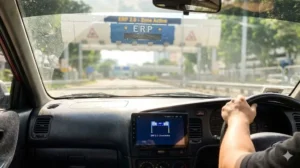
It is efficient. Brutally so. But unlike the ERP 2.0 unit which sits clunky and visible on your dashboard, this tech is invisible. It’s just code. And because we can’t see it, we don’t really talk about it.
Why This Matters to the System
Singapore has set a target to triple its AI practitioner pool to 15,000. Under the National AI Strategy 2.0, the goal is to integrate AI into everything—from predicting chronic diseases in healthcare to optimizing bus routes. The government views AI not as a threat, but as a “force multiplier” for a shrinking workforce. If we don’t have enough humans to check for dengue breeding spots, we teach a drone to do it.

The Customer Service Wall
Try calling a bank today. Or an airline.
You aren’t talking to a person. You are talking to a bot that has learned to be remarkably polite. It understands “Singlish” nuances better than some expats. It can handle “Can waive late fee or not?” without crashing.
It creeps up on you. You realize you’ve been chatting with a machine for ten minutes only when it replies instantly at 3 AM.
| Task | The Old Way (Human) | The AI Way (2026) |
|---|---|---|
| Writing Emails | Struggling with grammar | “Rewrite this to sound professional” |
| Estate Security | Guard patrol / CCTV review | Vision AI detecting smoke/litter |
| Scam Calls | “Hello? Who is this?” | AI voice cloning your friend |
| Schoolwork | Tuition teacher | Personalized AI tutor |
What This Means for Residents
The Skill Gap is Widening:
Those who know how to “prompt” an AI are racing ahead. They work faster. They solve problems quicker. Those who ignore it are finding themselves working twice as hard for the same result. It is a new form of digital divide—not about access to hardware, but access to usage.
Trust is Eroding:
We received a WhatsApp voice message from a “friend” asking for money last week. It sounded exactly like him. It wasn’t. AI voice cloning is the new weapon for scammers, and our “kampung trust” is the casualty. We are learning to doubt our own ears.
Official Context
The government is aware of the risks. AI Singapore runs programmes like “AI for Everyone” to demystify the tech. Meanwhile, the Personal Data Protection Commission (PDPC) has released frameworks on Generative AI to ensure companies use it responsibly.
👟 From the Ground
“I asked a secondary school student on the MRT if his teacher knows he uses AI for essays. He looked at me like I was crazy. ‘Uncle, the teacher uses AI to mark the essays also.’ And that’s it, isn’t it? We are all just quietly agreeing to let the machines do the heavy lifting, hoping nobody notices.”