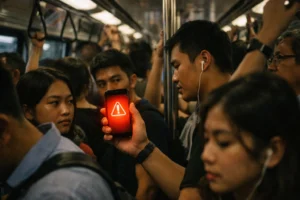
When Singapore’s Smart City Stops Working, Panic Sets In


We have become so used to the magic of “it just works” that a ten-minute banking outage feels like a national crisis. Inside our dangerous dependency on seamlessness.
You land at Changi Airport.
You walk to the automated lane. You look at a camera. The gate swings open. You walk out. You tap your watch to buy a coffee. You tap your phone to book a Grab. You are home in 40 minutes without speaking to a single human being or touching a single physical dollar.
It is seamless. It is magical. And it is completely invisible.
Most of the time, living in Singapore feels like living in a user interface that has been A/B tested to perfection. The “Smart Nation” isn’t a robot dog patrolling Bishan Park; it’s the fact that you don’t have to think about utilities, taxes, or transport. They just hum in the background.
But then, the screen freezes.
Remember the DBS outage? Or the day the MRT signaling system failed? The collective anxiety wasn’t just about inconvenience. It was about helplessness. When the invisible hand stops holding us, we suddenly realize we have forgotten how to walk.
The Luxury of Ignorance
We are spoiled. There is no other way to put it.
In other cities, “admin” is a fight. In Singapore, it’s a notification. The engineers at GovTech have spent a decade building a backend—the “Singapore Government Tech Stack”—designed specifically so you don’t have to understand it. You just Singpass your way through life.
<
But this luxury creates a blind spot. We assume the system is air. We breathe it in without asking where it comes from — or how much of it is quietly powered by unseen algorithms and automated decision-making happening in the background of daily life.
In reality, artificial intelligence is already embedded far deeper into Singapore’s everyday systems than most residents realise.
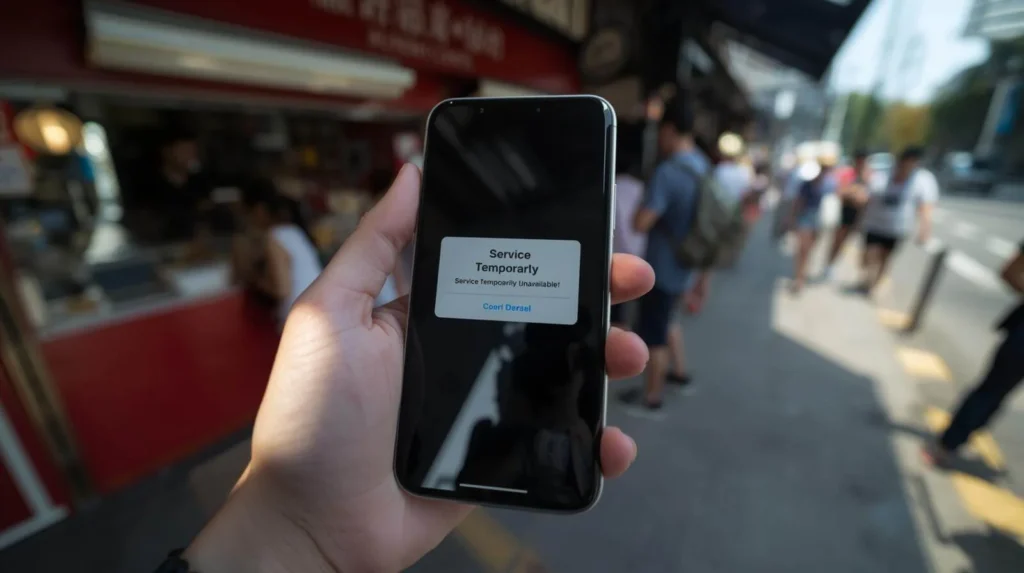
Take the parking app. You key in the carpark code, swipe, and walk away. You don’t see the complex mesh of GPS data, payment gateways, and enforcement analytics happening in that split second. You only notice it when the app says “Service Temporary Unavailable” and you have to hunt for a physical coupon you haven’t owned since 2019.
It’s funny. We praise the tech when it saves us five minutes, but we curse the government like crazy when it wastes five seconds.
| The Interaction | When It Works (Invisible) | When It Breaks (Visible) |
|---|---|---|
| Immigration | 10-second iris scan | 2-hour queue (Manual counters) |
| Payments | PayNow / Apple Pay | “Cash Only” sign (Mass confusion) |
| Navigation | “Bus arriving in 2 mins” | Standing at bus stop blindly |
| Identity | Singpass Face ID | “Did anyone bring physical IC?” |
The Fragility of “Smart”
This invisibility is by design, but it breeds fragility.
When the system works 99.9% of the time, the 0.1% failure feels catastrophic. We have lost our “analog resilience.”
I saw a teenager at a hawker centre recently. The QR code payment failed. He stood there, frozen. He didn’t have cash. He didn’t know what to do. The aunty waited. He eventually just walked away, leaving the food. He couldn’t transact in the physical world.
“One hour cannot PayLah, everyone panic like end of world,” the hawker aunty laughed, shaking her head. “Last time keep cash in pocket, never die.”
She’s right. The Smart Nation has made us efficient, but it has also made us brittle. We have offloaded our memory to the cloud and our wallet to the phone. If the battery dies, we cease to function as citizens.
Why This Matters to the System
Singapore’s push for a Smart Nation isn’t just for show. With a shrinking workforce and an aging population, automation is the only way to sustain our standard of living. We need sensors to monitor water levels because we don’t have enough manpower to check drains. We need digital banking because physical branches are expensive to staff. The invisibility is the goal—it means the limited human resources are being deployed elsewhere.
What This Means for Residents
The New Survival Skill:
Digital literacy is no longer about knowing apps — it’s about knowing what to do when they fail.
The most resilient residents aren’t the most tech-savvy ones, but those who still remember
how to function offline.
We are entering the “Maintenance Phase” of the Smart Nation.
The “Update” Fatigue:
The shiny launch is over. Now comes the maintenance. Apps need updating. Gateways need patching. Residents are realizing that living in a digital city requires constant personal IT maintenance. If you don’t update your Singpass app, you can’t enter the polyclinic. You are the sysadmin of your own life.
The Backup Plan:
Smart residents are starting to re-introduce analog backups. A $50 note tucked in the phone case. A screenshot of the boarding pass just in case the app crashes. We are learning that while we love the invisible city, we can’t trust it blindly.
Official Context
The Smart Nation and Digital Government Group (SNDGG) constantly monitors digital service uptime. You can check the status of major government services at the Status.gov.sg portal to see if a disruption is system-wide or just your device.
🕰️ One Small Moment
“I was at the library when the borrowing kiosk crashed. A blue Windows error screen popped up. For a second, the magic broke. It wasn’t a futuristic AI portal; it was just a dusty computer running software from 2015. Then it rebooted, the beep sounded, and the illusion was back. We stepped forward, tapped our cards, and pretended we didn’t see the wires.”