The Silent Assistant: How AI Became Singapore’s Open Secret



We expected the future to be loud and robotic. Instead, it arrived as a quiet utility that helps us translate menus, plan holidays, and dodge difficult emails without anyone noticing.
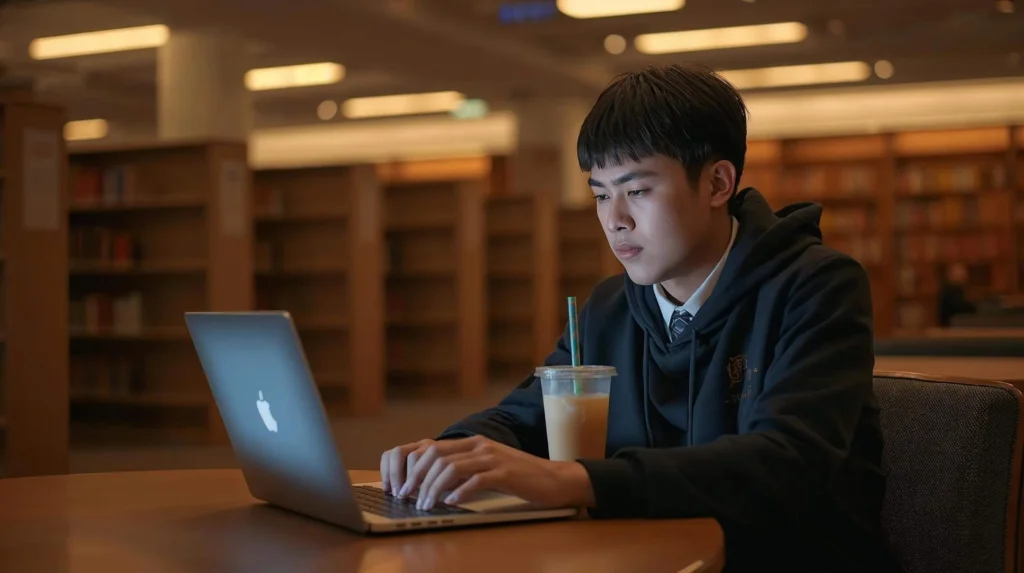
Watch the table of students at the Starbucks in Plaza Singapura.
There is no coding on the screens. No complex matrix of data. Just a student highlighting a massive block of text from a PDF. Right-click. “Summarize.”
He reads the three bullet points that appear, nods, and pastes them into his notes. He doesn’t gasp. He doesn’t marvel at the Large Language Model processing billions of parameters. He just takes a sip of his Frappuccino and moves on. It took five seconds.
This is the real face of Artificial Intelligence in Singapore. It isn’t a Terminator stepping out of a time portal. It is a quiet, boring, incredibly useful layer of “magic” that has settled over the island.
While the tech giants scream about the future of humanity, Singaporeans have done what we always do: We found a practical use for it, integrated it into our routine, and stopped talking about it.
The “Shadow” Workforce in the CBD
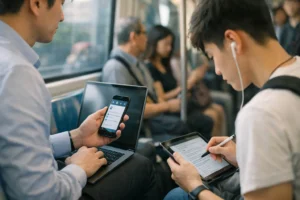
If you walk through the offices of Raffles Place, you are looking at a workforce that is effectively “augmented,” even if their HR department doesn’t know it.
We spoke to a middle manager at a logistics firm. Let’s call him David.
“Last time, write proposal take me three days,” David says, lowering his voice slightly, as if sharing a lobang. “Now? I dump the raw points into the chat. I say ‘Make me look smart.’ Boom. First draft done while I drink coffee.”
This is the open secret of the CBD. Nobody admits to it in the town hall meeting. But look at the screens during the lunch hour. The “ChatGPT” tab is always there, sandwiched between Excel and Outlook.
People are pragmatic. If a tool helps them go home at 6 PM instead of 8 PM, they will use it. They just won’t brag about it.
“Use already, don’t say loud loud,” as the local wisdom goes.
The Auntie Tech Revolution
But the biggest surprise isn’t the office worker. It’s the heartlands.
We assume AI is for the young. We are wrong. Go to a wet market or a travel fair. Watch the seniors.
I saw an auntie at a Korean mart in Tanjong Pagar holding her phone up to a packet of spicy noodles. She wasn’t taking a photo. She was using Google Lens. The AI was translating the Hangul ingredients into English in real-time, overlaid on her screen.
She didn’t call it “Augmented Reality Translation.” She didn’t know what “Computer Vision” was. She just called it “checking if got beef or not.”
It’s fascinating. As soon as a technology becomes truly useful, we stop calling it “AI” and just start calling it “an app.”
| The Task | The “Tech” Hype | The Singapore Reality |
|---|---|---|
| Translation | “Universal Language Model” | “Auntie checking ingredients at Don Don Donki” |
| Photography | “Computational Photography” | “Why my phone make me look so handsome?” (Auto-filter) |
| Customer Service | “Generative Conversational Agent” | “Chatbot settle the refund fast fast” |
| Writing | “Large Language Model” | “Help me write polite scolding email to Town Council” |
The Invisible Infrastructure
Then there is the AI we don’t even choose to use. It just happens to us.
When you stand at a traffic light in some new estates, you might notice the “Green Man” stays on longer if an elderly person taps their concession card. That isn’t magic. That’s AI optimizing traffic flow based on real-time sensor data.
We live inside a machine, but the machine is polite enough to stay out of sight.
We live inside a machine, but the machine is polite enough to stay out of sight.
The Normality of It All:
The most “Singaporean” thing about this AI revolution is how little drama there is. In other countries, there are protests about AI taking jobs. In Singapore, the concern is more practical: “Is the AI accurate? Can I claim the subscription fee from my company?”
We have normalized the extraordinary. We treat a supercomputer in our pocket with the same casual indifference we treat a toaster. As long as it toasts the bread (or writes the email), we are happy.
Official Context
The government is actively encouraging this “AI literacy.” Initiatives like AI Singapore (AISG) are rolling out programmes to ensure that every resident, from students to seniors, understands how to use these tools safely, rather than fearing them.
🕰️ One Small Moment
“I sat in the library for an hour just observing. A grandmother was using voice-to-text to WhatsApp her grandson. A student was using ChatGPT to brainstorm essay ideas. A freelancer was generating a logo. Nobody was talking about ‘The Singularity.’ They were just getting stuff done. And maybe that’s the ultimate victory of technology: when it becomes so good, it becomes boring.”