Technology in Singapore Isn’t Failing — It’s Just Quietly Changing How People Live


We expected flying cars. Instead, we got a city where you can buy cai fan with a watch and verify your identity with a face scan. It is seamless, but it has fundamentally altered the texture of our daily existence.
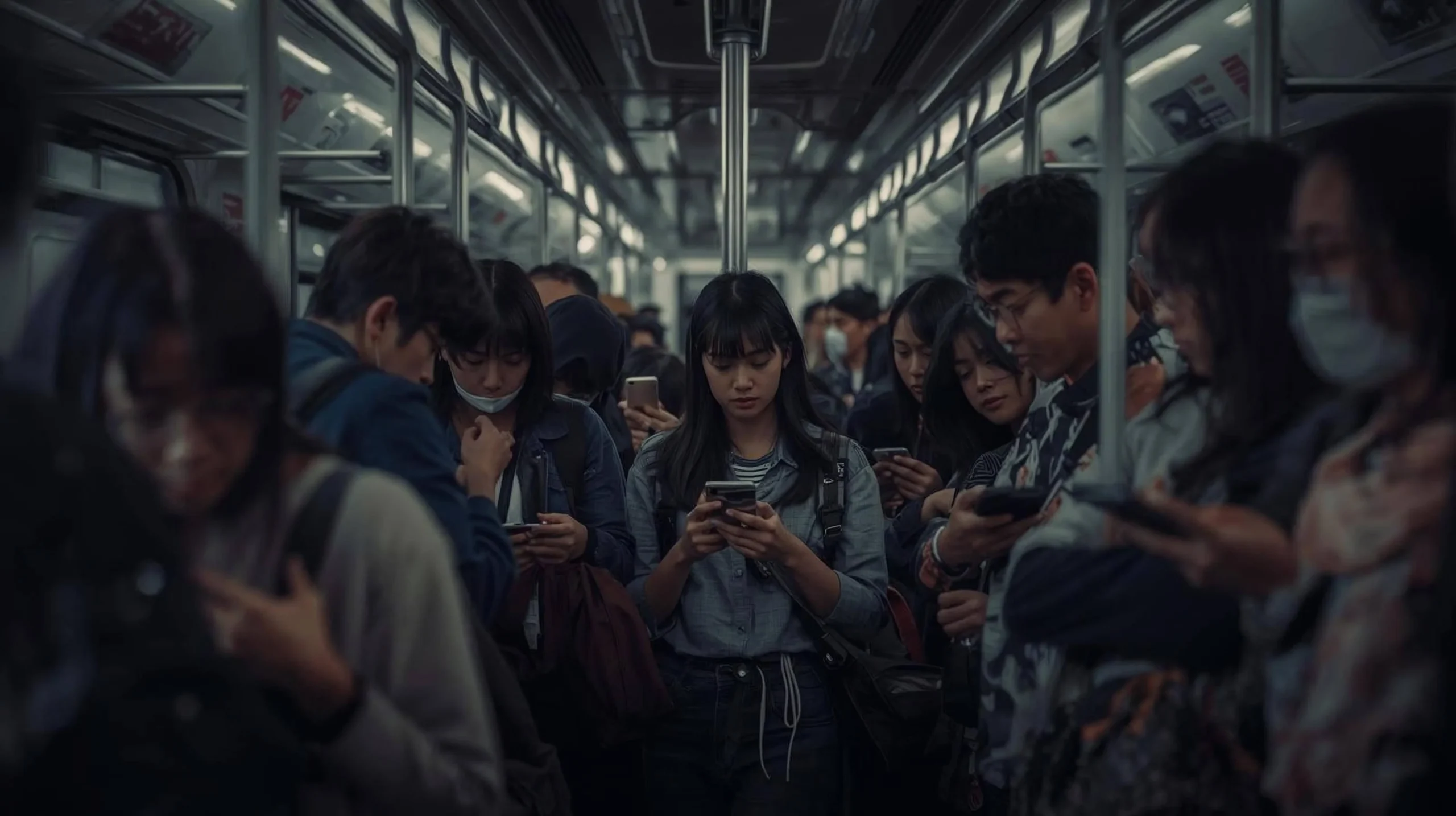
Stand in the middle of a crowded MRT carriage on the North-South Line during peak hour. Close your eyes. Listen.
Twenty years ago, you would have heard a cacophony. People arguing on Nokia phones. Students shouting across the aisle. The rustle of newspapers being folded. The click of magnetic ticket barriers.
Today? You hear the hum of the air-conditioning. You hear the automated announcement (“Next Station, Bishan”). And beneath that, you hear a strange, rhythmic silence.
Open your eyes, and you see why. Every head is bowed. Every face is illuminated by the cool, blue light of a screen. We are all physically present, squeezed shoulder-to-shoulder, yet we are all mentally somewhere else. We are answering emails on Outlook. We are watching dramas on Netflix. We are doom-scrolling.
This is the face of technology in Singapore today. It isn’t a flashy robot serving you coffee (though those exist). It is a quiet, pervasive layer of digital infrastructure that has seeped into the cracks of our routine. It has changed how technology affects daily life Singapore-wide, not by being loud, but by being invisible.
We haven’t just adopted technology; we have dissolved into it.
The End of “Friction” (and Patience)
The biggest shift is the death of friction.
Do you remember the last time you queued for a physical ticket? Do you remember the panic of forgetting your wallet? Those moments are vanishing. Everyday technology Singapore residents use has smoothed out the edges of life.
Everyday technology Singapore residents use has smoothed out the edges of life, often powered by invisible systems that make decisions before we even notice they are at work.
For a deeper look at how artificial intelligence is quietly making everyday decisions — from transport to payments and recommendations — read how AI quietly makes decisions in daily life across the city.
I watched a young man at a hawker centre in Maxwell. He ordered chicken rice. He didn’t reach for cash. He didn’t even reach for a card. He just held his wrist over the terminal. Beep. Done.
It took two seconds. It was efficient. But it also killed the interaction. There was no counting of coins. There was no “Uncle, keep the change.” The transaction was pure logic, devoid of human fumble.
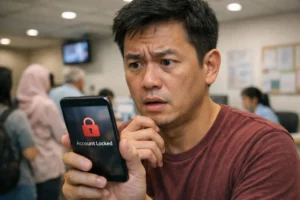
This efficiency has bred a new kind of impatience. Because digital habits Singapore has adopted are so fast, we panic when the real world lags behind. If the gantry takes half a second too long to open, we sigh. If the app buffers for three seconds, we get frustrated. We have been trained by our machines to expect instant gratification, and we are bringing that expectation into our human relationships.
The “Admin” Layer has Vanished
If you want to see the real “Smart Nation,” don’t look at the autonomous buses in Sentosa. Look at a mother registering her child for Primary 1.
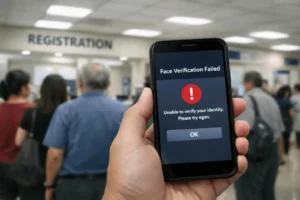
In the past, this was a paperwork nightmare. Forms, photocopies of ICs, birth certificates. Today, it is a few taps on Singpass. The data is pre-filled. The government knows who you are, who your child is, and where you live.
The Smart Nation initiative has successfully removed the “admin layer” of citizenship. We file taxes in minutes. We renew passports from the toilet. We access medical records while waiting for the bus.
This is a profound quiet technology shift Singapore has undergone. We have reclaimed hours of our lives that used to be spent in queues at government buildings. But what have we done with that time? Mostly, we have filled it with more work, or more scrolling.
The Auntie Tech Revolution
There is a stereotype that technology is for the young. In Singapore, that is a lie.
Go to a wet market in Bedok. Watch the aunties. They aren’t scared of the QR code. They are scanning it with the precision of a sniper.
I spoke to Mdm. Lim, 72, who was buying vegetables. “Last time, bring so many coins, heavy,” she told me in Mandarin. “Now, scan only. Easy. My grandson teach me.”
This is technology adoption Singapore style. It wasn’t driven by a love for gadgets. It was driven by necessity (and CDC Vouchers). When the government linked the cost-of-living support to a digital app, the seniors adapted. They learned.
We now have a generation of “Silver Surfers” who are as addicted to their screens as the teenagers. They are on Facebook. They are forwarding “Good Morning” stickers on WhatsApp. The digital divide is narrowing, not because the tech got simpler, but because the motivation got stronger.
It’s actually quite sweet. I saw an uncle teaching his friend how to increase the font size on his phone. It was the modern version of teaching someone how to tie a fishing knot.
| The Activity | The Old Way (Analog) | The New Way (Digital) |
|---|---|---|
| Payment | Digging for coins/notes | Wrist tap / QR Scan |
| Navigation | Street Directory book | “Turn left in 50m” (GPS) |
| Queuing | Standing in line | Taking a queue number via App |
| Identity | Pink IC Card | Singpass Face Verification |
| Socializing | Void deck chat | WhatsApp Group / Video Call |
The Death of Spontaneity
However, there is a cost to this optimized life. We have lost the ability to be spontaneous.
How technology is changing daily life in Singapore is by turning everything into a booking. You want to swim? Book a slot on the ActiveSG app. You want to see a doctor? Book via HealthHub. You want to eat at a popular cafe? Reserve online.
We are living our lives in 30-minute blocks, scheduled weeks in advance. The idea of “just showing up” feels reckless. We check Google Maps to see if a place is “Busy right now.” If the red bar is too high, we don’t go. We let the data decide our movements.
The city has become more efficient, yes. We waste less time waiting. But we also waste less time exploring. We go exactly where the algorithm tells us, do exactly what we planned, and leave exactly on time.
The “Shadow Office” in the Pocket
The technology that was supposed to liberate us has also tethered us.
In the past, when you left the office, you left the work. The landline rang in an empty room. Today, the office is in your pocket. It is on the bus. It is at the dinner table.
Subtle technology changes Singapore workforce dynamics by erasing boundaries. I see people checking Teams messages while walking their dogs. I see laptops open in cafes on Sundays. The “Smart Nation” infrastructure means we are always connected, which means we are always available.
We have traded the physical commute for a mental one that never ends.
The Parenting Paradox
Then there are the children.
The stroller used to be a place where a baby looked at the world. Now, it is often a mobile cinema. A tablet is clipped to the handle, playing cartoons. The child is quiet. The parent is relieved.
But the silence is heavy. We are raising a generation of “iPad Kids” who are being soothed by pixels instead of voices. In restaurants, you see entire families eating in silence, each person locked into their own device. The food is shared, but the experience isn’t.
Agencies like the Infocomm Media Development Authority (IMDA) run campaigns about “Digital Wellness.” They tell us to unplug. But asking a Singaporean to unplug is like asking a fish to walk. The water we swim in is digital.
The “Quiet” Impact
This isn’t a story of failure. Technology in Singapore works brilliantly. The trains run (mostly). The apps load. The payments clear.
But the everyday impact of technology Singapore faces is emotional. It is a slight cooling of the social temperature. It is the loss of the “small talk” with the taxi driver because you selected “Quiet Ride.” It is the loss of the argument over the bill because PayLah split it automatically.
We have optimized the friction out of our lives, and in doing so, we have optimized away some of the humanity too.
Official Context
The government’s Digital for Life movement aims to ensure no one is left behind. Community nodes and “Digital Ambassadors” are deployed across the island to help seniors and less tech-savvy residents navigate apps like Singpass and banking tools, ensuring the technology remains inclusive.
⏳ After Watching This for a While
“I sat on a bench at East Coast Park. The sun was setting. It was beautiful. Almost everyone walking past stopped. Not to look with their eyes, but to hold up their phone. They took the photo, checked the screen, and kept walking. They captured the moment, but I’m not sure they felt it. We have become archivists of our own lives, recording everything but experiencing very little.”