
FairPrice vs Sheng Siong vs Cold Storage: Save More

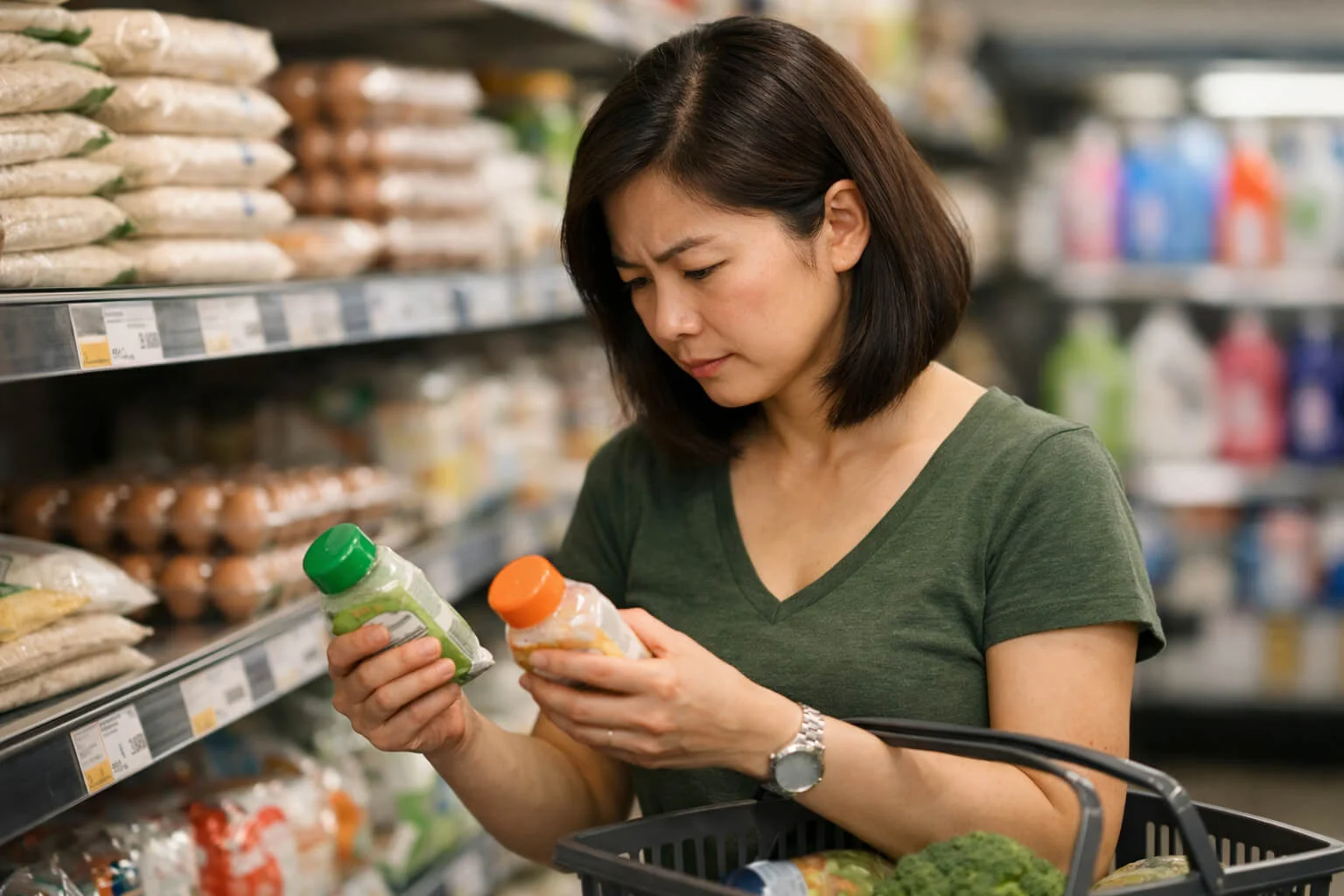

It starts with a simple plan: “I just need eggs and bread.” You walk into the NTUC FairPrice near your HDB, and somehow, 20 minutes later, you are tapping your card for $85. Where did the money go? Here is how to navigate the Singapore grocery maze without losing your mind—or your savings.
TL;DR: The Singapore Grocery Strategy
(Updated Jan 2026 Edition)
FairPrice: Best for your bulk dry goods like Rice, Cooking Oil, and Toilet Paper.
Sheng Siong: Go here for the freshest Seafood and leafy Greens at wet market prices.
Cold Storage: Reserved for premium steaks, international snacks, and specialty cheese.
Golden Rule: Shop after 8 PM to hunt for “Reduced to Clear” items (30-70% off!).
App Check: No scan, no link points, no talk. Use FairPrice or yuu apps religiously.
The Singapore Grocery Moment: You Walk In for Eggs… You Leave With $80
We’ve all been there. You finish work, you’re tired, and you pop into the supermarket for “just three things.” But then you see a “2 for $15” deal on ice cream, a new brand of detergent that’s on offer, and suddenly your basket is heavy. This is the Singapore supermarket savings guide reality—spending creeps up quietly because the stores are designed to make you feel like you’re saving while you’re actually spending more.
In a city where the cost of living is a national conversation, our grocery habits are one of the few things we can actually control. But instead of obsessing over every cent, the trick is to have a system. You don’t need to be a “extreme coupler”; you just need to know which store fits which part of your life.
The Big Idea: Don’t Ask “Which is Cheapest?” Ask “Cheapest for What?”
If you try to find the one “cheapest” store in Singapore, you’ll drive yourself crazy. Prices fluctuate. Instead, think of supermarkets by their “personality.” One is great for your daily staples, another for fresh produce, and another for that specific brand of imported pasta you like.
When you stop trying to do the “perfect” shop and start thinking about grocery budget Singapore in terms of categories, you actually save more. Why? Because you stop overpaying for premium items at value stores and stop overpaying for basics at premium stores.
FairPrice: When It’s the Safe Default
With over 100 outlets, FairPrice is the baseline for most of us. What to buy at FairPrice to save money? Focus on the Housebrand (FairPrice, Pasar, Home Proud). Most of these products are virtually identical to the big brands but can be 10% to 20% cheaper.
The strategy here is “The Staples.” Rice, cooking oil, toilet paper, and frozen vegetables. However, beware of the “Bundle Trap.” Just because it says “2 for $X” doesn’t mean you need two. Always check the shelf label for the **unit price Singapore shopping** standard (e.g., price per 100g) to see if you are actually saving or just buying bulk you won’t use.
Sheng Siong: The Value Hunt (Without the Stress)
What Sheng Siong is best for? Freshness and the “wet market” feel in a supermarket setting. If you need leafy greens, ginger, or fresh fish but don’t want to wake up at 7 AM for the actual wet market, Sheng Siong is usually your best bet.
They often have “today only” fresh deals that are genuinely cheaper than anywhere else. The trap here is the “impulse buy” in the snack aisle. Because the prices feel lower overall, it’s easy to throw in extra bags of chips or drinks. If you stick to the perimeter of the store (the fresh section), Sheng Siong is a massive win for cheapest groceries Singapore goals.
Quick Quiz: What’s Your SG Shopping Style? 🛒
Count your ‘Yes’ answers:
- ⬜ Do you always check the ‘Price Kaki’ app before buying?
- ⬜ Do you carry at least 3 different cashback credit cards?
- ⬜ Do you know exactly which day your 5% rebate kicks in?
- ⬜ Is your pantry 80% Meadows or FairPrice Housebrand?
Results:
0-1 ‘Yes’: The Casual Shopper (Paying the “Convenience Tax”).
2-3 ‘Yes’: The Smart Saver (Solid HDB Heartlander).
4 ‘Yes’: The Ultimate Kiasu King/Queen (Saving $200+ a month!).
Cold Storage: Why People Still Pay More (And When It’s Rational)
When Cold Storage makes sense for families? Usually for specific, high-quality proteins or imported goods you can’t find elsewhere. If you buy your basic dish soap here, you are likely overpaying.
However, it becomes rational when you consider food waste. If you buy a massive bag of onions at a discount store and half of them rot, you’ve lost money. Sometimes, buying a smaller, higher-quality amount at Cold Storage or CS Fresh means you actually use what you buy. The key is to avoid “Premium Basket Creep”—don’t let the expensive cheese lure you into buying your entire month’s groceries there.
The Cheat Sheet: Where to Buy What?
If you’re in a rush, here’s the kiasu breakdown of Singapore’s big three to help you decide where to park your trolley today.
| Feature | FairPrice | Sheng Siong | Cold Storage |
|---|---|---|---|
| Best For | Daily Pantry Staples | Fresh Seafood & Greens | Imported Cheese & Steaks |
| Housebrand Value | High (FairPrice Brand) | Excellent (Heritage Farm) | Moderate (Meadows) |
| Vibe | Reliable & Everywhere | Wet Market Energy | Premium & Quiet |
The Digital Advantage: Apps You Must Use
In 2026, if you aren’t scanning an app, you are basically throwing money into the Singapore River. To truly conquer the grocery budget Singapore challenge, you need these three tools:
- FairPrice Group App: Essential for earning LinkPoints and using “Scan & Go” to skip the 6 PM HDB crowd lines.
- yuu App: This is the golden ticket for Cold Storage and Giant shoppers. The points-to-rebate conversion is one of the fastest in town.
- Price Kaki App: Developed by CASE, this lets you compare the price of a 3-in-1 coffee pack or a bottle of soy sauce across different stores in real-time.
Pro Tip: Check your CDC Vouchers balance! Many heartland FairPrice and Sheng Siong outlets accept them, making your weekly grocery run practically free.
When to Shop for the Best Loot?
Timing is everything. For cheapest groceries Singapore, don’t just go when the fridge is empty. Go when the prices drop:
- The “Expiry Run” (After 8 PM): Most FairPrice and Cold Storage outlets start marking down roasted chickens, sushi, and bread by 30% to 70% as they approach closing time.
- Senior Citizen Days: If you’re shopping for your parents, bring them along on Monday to Wednesday for that extra 2-3% discount. Every dollar counts!
The Promo Decoder: 6 Tricks Stores Use
- The Eye-Level Trap: The most expensive brands are at your eye level. Look at the bottom shelf for the Housebrand savings.
- “2 for” Psychological Anchor: You see “2 for $6” and assume one is $3.50. Check the label; sometimes one is just $3.10, and you don’t actually need the second one.
- Bulk Discount Illusion: Large packs often cause food waste. If you don’t finish it, the “saving” is $0.
- The End-Cap Promo: The items at the end of the aisle aren’t always the cheapest; they are just the ones the brand paid to put there.
- Loyalty Points Psychology: Don’t spend an extra $10 just to get a “stamp” or 50 points. The points are usually worth much less than the $10 you just “wasted.”
- Unit Price Ignorance: Always look for the price per kg or per 100ml. This is the only way to compare a 450g box of cereal with a 700g bag fairly.
Wet Market vs Supermarket (The Quiet Budget Split)
For protein and vegetables, the wet market still wins on price and often on quality. Wet market vs supermarket Singapore is a trade-off of time. If you have 30 minutes on a Sunday morning, doing a “Protein Run” at the wet market and a “Dry Goods Run” at FairPrice can cut your weekly bill significantly. If you are a busy professional, the supermarket is your tax for convenience.
A personal note: I used to shop exclusively at the most “expensive” supermarket because it was next to my gym. After three months, I compared my receipts with a friend who shopped at Sheng Siong. I was spending nearly $200 more a month just on “convenience.” I didn’t change what I ate; I just changed *where* I bought the heavy stuff (detergent, milk, rice). That $200 became my travel fund. It’s worth the 10-minute extra walk.
Quick Checklist (Save This)
✅ Do This
- Check the “Unit Price” (price per 100g/kg) on the shelf label.
- Stick to Housebrands for staples like salt, sugar, and flour.
- Shop on weekdays if possible to avoid the weekend “stress-buy” crowds.
- Make a list (physical or on your phone) and stick to it.
- Use a smaller basket if you only need a few things; a trolley invites overfilling.
- Check the “reduced to clear” section for items you’ll use tonight.
- Eat before you shop—hungry shoppers spend 20% more on average.
- Compare “weekly specials” across apps like FairPrice or Giant before leaving.
- Use the right credit card to get rebates (usually 5% to 8% for groceries).
- Bring your own bag to save that extra 5 or 10 cents (and the planet).
❌ Avoid This
- Do not buy “2 for” deals unless you already use that item regularly.
- Do not shop exclusively at premium stores for basic cleaning supplies.
- Do not ignore the bottom and top shelves—that’s where the value is hidden.
- Do not buy pre-cut fruits or vegetables if you have 5 minutes to chop them yourself.
- Do not buy snacks and soda in bulk “just in case” (you will eat them faster).
- Do not get distracted by “Gift with Purchase” promos if the item isn’t on your list.
- Do not assume all “Direct from Farm” labels mean the cheapest price.
- Do not buy fresh produce in large quantities if you live alone.
- Do not ignore the shelf life; a “deal” on milk that expires tomorrow is no deal.
- Do not shop without a rough meal plan for the week.
What’s your secret grocery ‘Lobang’? 🗣️
Did we miss a hidden gem in your HDB estate? Or do you have a specific Sheng Siong hack we should know? Drop a comment below and help your fellow Singaporeans save a few more dollars!
Editorial Note
Grocery prices shift week to week in Singapore. This guide focuses on repeatable habits (unit pricing, store “strengths,” and promo traps) so you save consistently without chasing every deal.




[…] on a tight budget or just want to make your grocery money go further. You’ll often find that protein and vegetables offer better prices […]