Why Many Singapore SMEs Struggle After the First Two Years

The first year of a small business in Singapore is full of excitement and fear. You launch, get your first customers, and feel like you might actually make it. Then comes year two and three — and suddenly the reality hits. Many Singapore SMEs struggle after the first two years even though they survived the initial launch. The early hype fades, costs keep rising, and the daily grind becomes heavier. This is the stage where many owners quietly question whether it’s worth continuing. This guide looks at the real reasons this happens and what separates the businesses that push through from those that don’t.
TL;DR – Why SMEs Struggle After Year 2
- Initial excitement fades and fixed costs (rent, salaries, CPF) become harder to cover.
- Cash flow problems appear when early sales slow down or customers pay late.
- Scaling is difficult because hiring and expanding bring new complexities.
- Many owners underestimate how long it takes to build steady profit.
- The ones that survive treat year 3 as a new beginning and adapt quickly.
The Shift from Survival to Sustainability
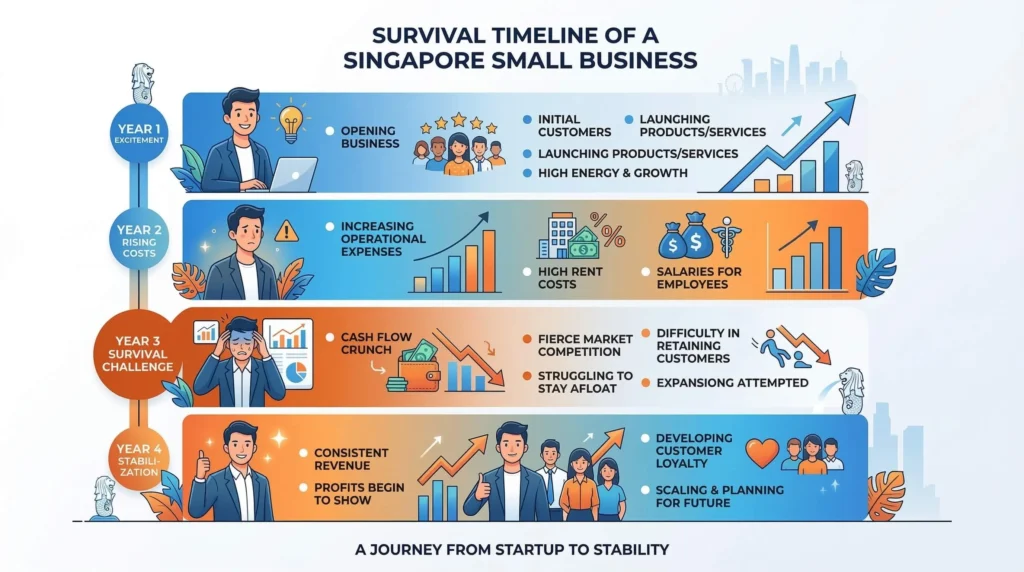
The first year is about proving the idea works. Year two is when reality sets in. Customers become harder to attract, costs keep climbing, and the owner realises the business needs to generate consistent profit, not just cover bills. This transition catches many by surprise.
Our why SMEs fail Singapore guide shows how many businesses reach this exact point and struggle to move forward.
Rising Costs That Hit Hardest After Year Two
Rent reviews, salary increments, CPF contribution increases and utility bills all start biting harder once the honeymoon period ends. Many owners priced their products based on early costs and now find themselves squeezed when suppliers raise prices or manpower becomes more expensive.
💡 Did You Know?
Many Singapore SMEs that close or change hands do so between year 2 and year 4. The first year is often funded by personal savings and excitement, but the second and third years reveal whether the business model can actually sustain itself long-term.
If these cost pressures are also affecting your personal finances, our middle class financially stuck guide explains how the same forces impact both households and small businesses.
Cash Flow Becomes the Biggest Headache
In the beginning, owners often use personal savings to fill gaps. After two years, those reserves run low and customers start paying later. The business may look busy on paper but the bank account stays empty. This cash flow gap is one of the top reasons many SMEs stall or close between year two and four.
Our emergency savings guide shows why keeping a personal buffer separate from the business is crucial during this phase.
Scaling Problems Most Owners Don’t Expect
Growth sounds exciting but brings new challenges: hiring the first employee, managing bigger orders, dealing with more paperwork. Many owners discover they are good at running a small operation but struggle when the business needs to operate at the next level.
If you’re thinking about long-term planning while running your SME, our how much to retire in Singapore guide highlights why building personal wealth alongside the business matters.
Mini Quiz: Is Your SME Entering the Danger Zone? (Tap to reveal)
- Your business is in year 2 and cash flow is tighter than year 1:
Click for answer
Very common — many SMEs hit this wall when initial momentum slows.
- You’re working harder but profit margins are shrinking:
Click for answer
Rising costs are catching up — time to review pricing and expenses.
- You’re considering selling or closing after 26 months:
Click for answer
This is the most common exit window for struggling SMEs in Singapore.
The Emotional and Mental Load
Running an SME is lonely. After the initial excitement fades, the daily pressure of making payroll and keeping customers happy takes a toll. Many owners quietly sell or close because the mental load becomes too heavy, even if the business is not losing money.
Our Singapore salary guide by industry shows why some owners eventually return to salaried jobs after trying entrepreneurship.
✅ What Surviving SMEs Do Differently After Year 2
- Review costs and pricing every quarter
- Build a small cash buffer outside the business
- Focus on repeat customers instead of chasing new ones
- Document processes so the business can run without them 24/7
❌ Common Mistakes After Year 2
- Assuming early sales momentum will continue forever
- Hiring too quickly without stable revenue
- Ignoring rising costs until it’s too late
Real Stories from Singapore SME Owners
“Year one was exciting. Year two was terrifying when rent increased and customers slowed down. We almost closed but cut costs and focused on repeat orders. Now in year 5 and stable.” – Kelvin, F&B owner
“I sold my retail shop after 26 months because scaling was too stressful. The new owner is doing better because they had more capital and experience.” – Priya, former retail owner
Expert Insight – Enterprise Singapore Advisor (12 years supporting SMEs)
“The second and third years are the real test. Businesses that survive this period usually have strong cash discipline and are willing to adapt their model. The ones that struggle often keep doing the same things expecting different results.”
A Personal Note
I’ve watched friends and family members start small businesses with huge excitement. Many hit the wall after year two when the initial momentum fades and costs keep rising. The ones who made it through were the ones who treated year three as a completely new business and were willing to change direction. The struggle is real, but so is the reward for those who persist smartly.
Official Resources & Further Reading
Running or have run an SME?
Tell us in the comments — when did you feel the biggest struggle? Year 2, year 3? What helped you push through? Your story might help the next business owner who feels like they’re hitting a wall.
Many Singapore SMEs struggle after the first two years because the initial excitement meets the harsh reality of rising costs and slower growth. The businesses that make it through are usually the ones that adapt quickly, control cash tightly and treat the third year as a fresh start. If you’re in that phase right now, you’re not alone — and the next 12 months could be the most important of your business journey.

About the Author: Ege Sg
Ege is a senior business correspondent at SG Vital, specializing in the Singaporean heartland economy, SME survival trends, and personal finance. With years of experience analyzing ACRA data and interviewing local business owners, Ege provides actionable, on-the-ground insights for Singapore’s entrepreneurial community.