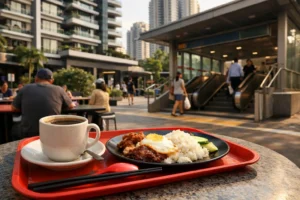
Earning S$10K a Month But Still Broke? The Middle Class Trap in Singapore


You earn a decent combined salary, live in a 4-room HDB, send the kids for enrichment, and still feel like you’re running on a treadmill that never stops. Every month the money comes in, the bills go out, and somehow the savings account barely moves. This is the quiet reality for thousands of middle class Singaporeans in 2026. They are not poor, but they don’t feel financially free either. This guide looks at why so many people who appear “middle class” on paper feel financially stuck — and what the actual numbers say about breaking the cycle.
TL;DR – The Middle Class Squeeze in 2026
- Many households earning S$8,000–15,000 still feel stuck because expenses rise faster than income.
- Housing, childcare, car and healthcare costs eat most of the “middle class” salary.
- Lifestyle inflation and social comparison make saving feel impossible.
- CPF and property are big assets but not liquid cash for daily life.
- Small, consistent changes in spending and side income can create breathing room.
Quick Answer: Many middle-class Singaporeans feel financially stuck in 2026 because fixed costs like housing, childcare and insurance rise faster than salaries. Income looks high on paper, but liquid savings remain low due to lifestyle inflation and structural expenses.
The Middle Class Illusion in 2026
You see the HDB flat, the car, the annual family trip, and think “we’re doing okay.” But when the aircon breaks or the kid needs braces, the savings account looks empty. This is the middle class squeeze: income high enough to look comfortable on paper, but not high enough to build real financial security. Many households earning S$10,000–14,000 combined still feel one unexpected bill away from stress.
If you want to see exactly where your salary sits compared with others, our Singapore salary guide by industry shows the real ranges across different sectors right now.
💡 Did You Know?
Even though median household income has risen, real purchasing power for many middle-income families has stayed flat or declined slightly since 2022. Childcare, insurance and transport costs have grown faster than salaries, creating the feeling of being “stuck” despite earning more on paper.
The Numbers That Reveal the Trap
Median household income has risen, but so have the big fixed costs. Childcare for two kids can easily take S$2,000–3,000 a month. A resale HDB mortgage with current rates still eats a big chunk. Transport, insurance and groceries have all crept up. The result? Many families earn “middle class” money but have very little left at the end of the month.
Our Singapore cost of living 2026 guide breaks down what typical households are really spending each month.
Lifestyle Inflation – The Silent Thief
The bigger salary comes, the bigger the flat upgrade, the better the enrichment classes, the nicer the car. What felt like a reward becomes the new normal. Many middle-income families upgrade their lifestyle every time income rises, so the savings rate stays low even though the salary looks good on paper.
Why can’t I save money in Singapore?
Because expenses rise to match (or exceed) income growth. This is lifestyle inflation at work — very common among dual-income middle-class households.
The Hidden Pressure of Dual Income, No Savings
Both partners work full time, yet the joint account barely grows. Childcare, helper, two cars or heavy transport costs, insurance premiums, and the desire to give kids “the best” eat up almost everything. Many couples in their 40s say they feel richer than their parents but have less actual financial freedom.
If you’re worried about sudden expenses wiping out your progress, our emergency savings guide shows exactly how much buffer most families need right now.
The Retirement Reality Check
Many middle-class Singaporeans look at their CPF and think they’re on track. But when they run the real numbers for 25–30 years of retirement, the gap becomes obvious. Healthcare, inflation and longer life expectancy mean the target keeps moving.
Our how much to retire in Singapore guide gives the realistic numbers most families are aiming for.
Mini Quiz: Are You Financially Stuck? (Tap to reveal)
- Salary increased but savings stayed the same last year:
Click for answer
Classic lifestyle inflation. Expenses quietly rose to match the new income.
- You earn above median but still live paycheck to paycheck:
Click for answer
Very common in Singapore due to high fixed costs like housing and childcare.
- You feel “middle class” but have almost no emergency buffer:
Click for answer
This is the hidden middle-class trap — assets on paper, no real cash cushion.
The Side Hustle and Extra Income Trap
A lot of middle-class families now rely on side hustles just to stay afloat. The extra income feels good at first, but it often gets absorbed by rising costs instead of building savings. Many end up working more hours for the same financial position.
If you’re considering extra income streams, our Singapore side hustle guide lists the most popular and fully legal options right now.
✅ What You Can Do Right Now
- Track every expense for 30 days to see the real leaks
- Automate savings before the money hits your spending account
- Review insurance and subscriptions once a year
- Have an honest money conversation with your partner
❌ Stop Doing These
- Upgrading lifestyle every time salary increases
- Treating CPF as emergency cash
- Comparing your life to Instagram highlights
Real Stories from Singaporeans Who Felt Stuck
“We both earn above S$10k combined but had zero savings after two years. Started tracking every dollar and cut the ‘small’ expenses — now we have S$18k buffer in 14 months.” – Rachel, 38, dual-income couple
“Thought I was doing well until I calculated retirement needs. Realised I was living paycheck to paycheck with a ‘good’ salary. Changed one habit at a time and finally started building wealth.” – Kelvin, 46, IT professional
Expert Insight – Financial Planner (specialising in middle-income families)
“The middle class trap is real because Singapore rewards earning more but punishes not managing it. The families who break free are the ones who treat their money like a business — with budgets, reviews and clear targets.”
A Personal Note
I’m in my mid-40s with two kids and a 4-room HDB. For years I felt exactly like this — “middle class” on paper but constantly worried about money. Once I stopped comparing and started tracking, the fog lifted. The feeling of being stuck is real, but it’s not permanent. Small, boring changes compound faster than you think.
Official Resources & Further Reading
Do you feel financially stuck too?
Tell us in the comments — what’s your biggest monthly leak or what finally helped you build savings? Your story might help the next person who feels exactly the same way.
Feeling “middle class” but financially stuck is incredibly common in Singapore right now. The system rewards earning more but makes saving feel like an uphill battle. The good news is that awareness is the first step. Start tracking, make one small change at a time, and you’ll slowly create the breathing room you’ve been missing. You’re not alone — and you’re not stuck forever.

About the Author: Kun Kerssa
Senior Financial Editor & Singapore Market Analyst
Kun has spent over a decade analyzing Singapore’s macroeconomic trends and personal finance landscape. As a proud heartlander, he specializes in breaking down complex CPF policies, BTO planning, and wealth-building strategies into actionable, everyday steps for middle-income Singaporeans.