
Is Your Emergency Fund Enough in Singapore? The Real 2026 Numbers
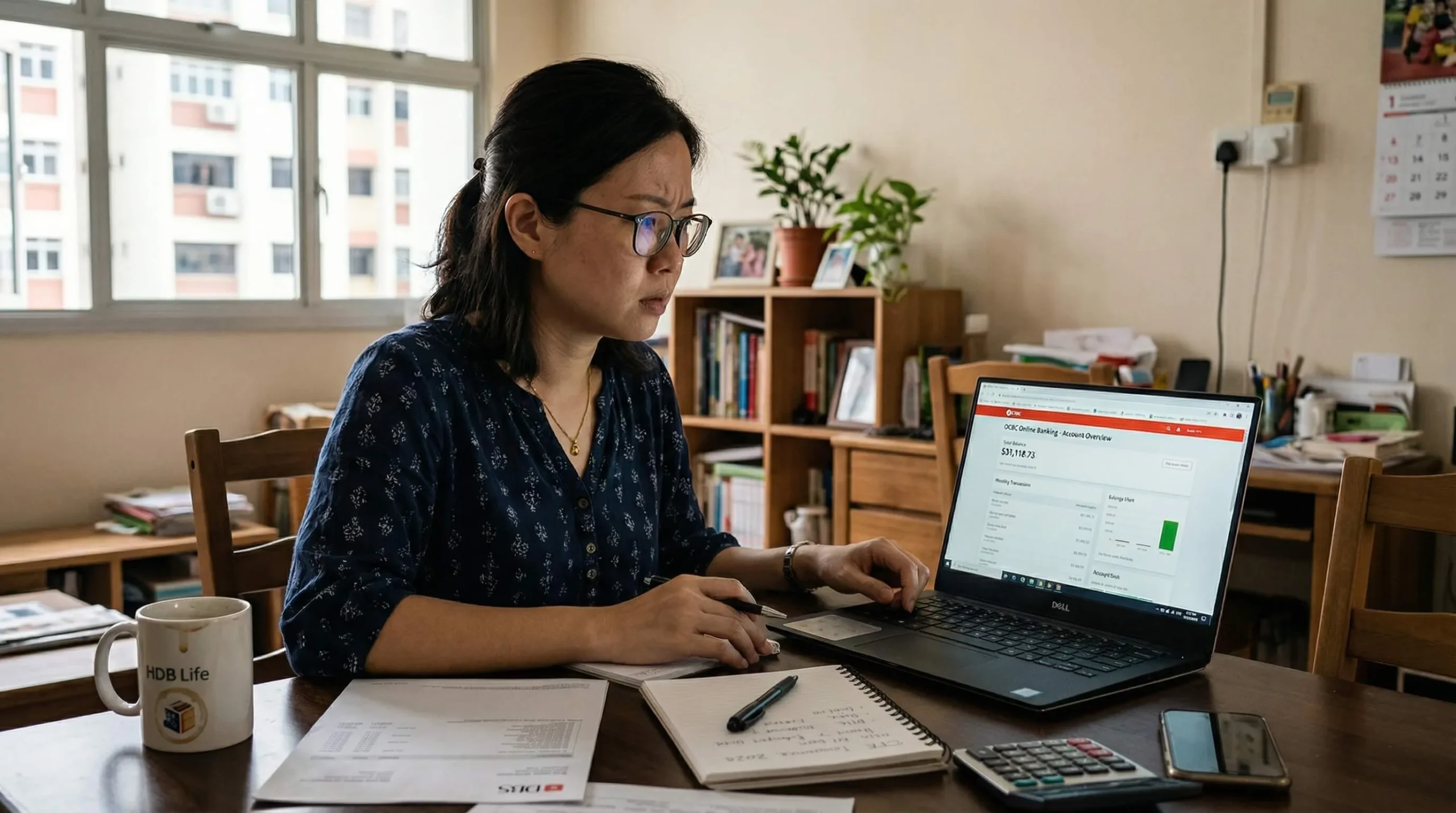

You lose your job, the aircon breaks down, or your kid needs urgent dental work — and suddenly that “just in case” money in the bank becomes the only thing standing between you and panic. How much emergency savings Singapore families actually need is one of the most asked questions in WhatsApp groups and kopitiam tables right now. Not the influencer “6 months expenses” rule that everyone repeats, but the real number that lets you sleep at night in our expensive city. This guide shows you exactly how to calculate it for your own situation in 2026.
TL;DR – Realistic Emergency Fund Targets
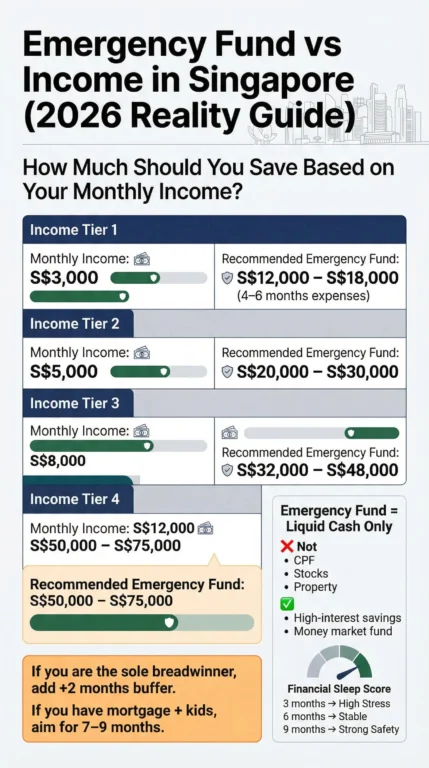
- Single person: 4–6 months of expenses
- Couple (no kids): 5–7 months
- Family of 4: 6–9 months
- Most people feel safe at S$15,000 – S$35,000 depending on lifestyle
- Keep it liquid, easy to access, and separate from investments
⚠️ One unexpected retrenchment. One medical emergency. One major home repair.
In Singapore, that’s all it takes to wipe out years of savings — if you’re not prepared.
This guide helps you calculate the number that protects your sleep, your family, and your future.
Why “6 Months” Is Not a Magic Number Here
The classic 6-month rule sounds nice, but in Singapore it often doesn’t fit. A single person with low rent and no kids might feel safe with 4 months. A family with a mortgage, two school-going kids and one income needs closer to 8–9 months. The right number depends on your job stability, monthly commitments and how quickly you could find new work.
Is 6 months emergency fund enough in Singapore?
For many dual-income households without big debts, yes. For single-income families or those with high fixed costs, 7–9 months feels far safer in 2026.
How to Calculate Your Real Number
Start with your essential monthly expenses only — rent/mortgage, food, utilities, transport, insurance, school fees. Ignore dining out and shopping. Multiply that number by the months you want to cover. Most people in their 30s and 40s aim for 6 months; those in their 50s or with health issues often go for 9–12 months.
If you want to see exactly what those monthly expenses look like for real families, our Singapore cost of living 2026 guide breaks it down by household type.
Where to Keep Your Emergency Money
It must be safe, liquid and earn something. High-interest savings accounts, money market funds and short-term fixed deposits are popular choices. The key is zero risk and instant access — never lock it in stocks or long-term investments.
Mini Quiz: Is Your Emergency Fund Strong Enough? (Tap to reveal)
- You have S$12,000 saved and monthly expenses are S$4,500:
Click for answer
About 3 months — good start, but aim higher if you have kids or mortgage.
- You have S$28,000 and monthly expenses are S$3,800:
Click for answer
Solid 7+ months — you’re in a safe zone.
- Your savings are mixed with investments and CPF:
Click for answer
Not truly liquid. Move 4–6 months into a separate high-interest account.
Where to keep emergency savings Singapore?
The best place is a high-interest savings account or money market fund that gives you easy access and still beats inflation slightly.
If you’re also thinking long-term and want to see how emergency savings fit into the bigger picture, our how much to retire in Singapore guide shows where this buffer sits in your overall plan.
✅ Build Your Fund Faster
- Automate a fixed transfer every payday
- Use any bonus or tax refund to top it up
- Cut one unnecessary subscription this month
- Review it every 6 months and adjust for inflation
❌ Common Mistakes
- Mixing emergency money with investments
- Counting CPF as emergency cash
- Stopping contributions once you hit the target
💡 Did You Know?
In Singapore, the average time to find a new job after retrenchment is currently 3–5 months. For mid-career professionals in their 40s, it can stretch to 6–8 months when the market is cooling. Having the right emergency buffer means you never have to accept the first lowball offer out of desperation.
Real Stories from Singaporeans
“I had only 3 months saved when my company retrenched 40% of us. It was scary but I survived 5 months until I found something new.” – Sarah, 42, marketing manager
“We keep 8 months because my husband is in construction. Last year when projects slowed, that fund let us sleep at night.” – Priya & Raj, family of 4
Expert Insight – Financial Planner (helping 200+ mid-career families)
“I tell every client the same thing: your emergency fund is not about being rich. It’s about buying yourself time and peace of mind when life throws a curveball. In Singapore, that time is worth more than any investment return.”
A Personal Note
I’ve been through two unexpected job changes in my 40s. The first time I had almost nothing saved and it was terrifying. The second time I had 7 months of expenses ready. The difference in stress level was night and day. That fund didn’t just pay the bills — it gave me the confidence to say no to bad offers and wait for the right one.
Official Resources & Further Reading
What does your emergency fund look like?
Tell us in the comments — how many months of expenses do you have saved? Did you ever need to use it? Your story might help someone else who’s just starting to build theirs.
Having the right emergency savings in Singapore isn’t about being rich. It’s about buying yourself time and peace of mind when life doesn’t go according to plan. Start where you are, build it steadily, and you’ll sleep much better at night. Your future self will thank you.

About the Author: Kun Kerssa
Kun is a Singapore-based financial observer and former corporate strategist. With over a decade of experience navigating the local economy, he helps fellow Singaporeans demystify personal finance, CPF policies, and the real cost of living in the Little Red Dot. Facts reviewed against 2026 MAS guidelines.