Singapore Heat Fatigue: Dizziness, Headaches, Fixes


It isn’t just “hot.” It’s heavy. Living on the equator requires a constant negotiation between your body and the atmosphere. Here is how to understand the quiet signs of heat fatigue and keep your energy up without drinking a gallon of water at once.
TL;DR For The “Kan Cheong” (Rushing) Readers
- Heat + Aircon = The Silent Killer: Freezing offices suck out your moisture. You dry out without sweating.
- Forget the “8 Glasses” Rule: Just sip 200ml every hour. Chugging water just makes you run to the toilet.
- Kopi is a Diuretic: If your bloodstream is 90% Kopi-O, you’re officially dehydrated. Drink water after your coffee.
- Dizzy at the MRT? Stop walking. Find AC. Sip slowly. Don’t “tahan” (endure) the pain.
The Singapore Feeling: You Step Outside and Your Energy Drops
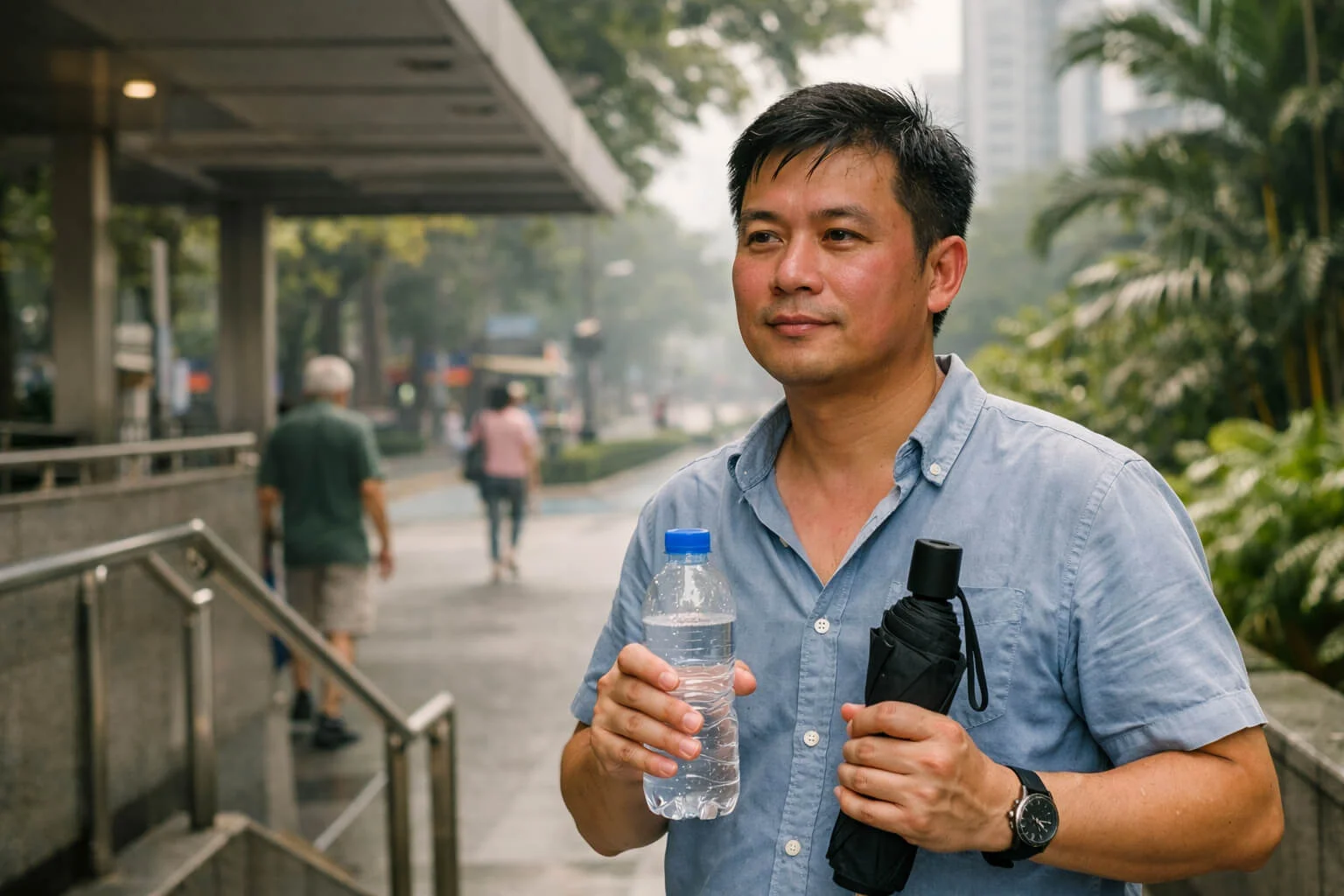
You know the exact moment. You step out of the Orchard MRT station, or maybe you are walking across the open plaza at Jurong East. The automatic doors slide open, and a wall of hot, wet air hits your face. Your sunglasses immediately fog up.
Five minutes into your walk, something shifts. You aren’t just sweating; you feel a distinct heaviness behind your eyes. Your legs feel a bit like lead. Why I feel dizzy and tired in Singapore weather is a question locals ask silently every April and May when the monsoon retreats.
We often treat the heat as a backdrop to our daily lives. But physiologically, dizziness in hot weather Singapore style is a real, measurable tax on your body. You aren’t lazy, and you aren’t out of shape. You are just fighting the atmosphere.
Heat vs Humidity vs Aircon (The Trio That Messes With You)
Temperature is just a number. 32°C in a dry desert is comfortable. 32°C in Singapore feels like 39°C.
Humidity: why sweat doesn’t “work” properly
Sweating is your body’s air-conditioning system. The water evaporates off your skin, taking the heat with it. But when the air is 85% humid, it is already “full” of water. Your sweat cannot evaporate. It just sits on your skin, soaking your shirt. Your body’s cooling mechanism fails. This is the root of feeling drained in humid weather Singapore.
Aircon: why you dry out without noticing
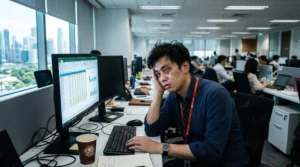
Then you escape into the office. The aircon is set to 19°C. Relief, right? Not entirely. Aircon dehydration Singapore workers face is a stealthy issue. Air-conditioners remove moisture from the air. You sit there for eight hours, breathing in dry air, slowly exhaling your internal moisture, and because you aren’t sweating, you don’t feel thirsty. You dry out completely undetected.
Why this matters: Dehydration, headaches, and “heat fatigue” are common reasons people show up at clinics feeling unwell—often without realizing heat + aircon is the trigger. This explains why clinic conversations in Singapore have been shifting lately: Why Clinics Feel Busier in Singapore (and What Patients Are Saying).
The hot–cold whiplash
Walking from a 32°C street into a 20°C mall and back out again confuses your blood vessels. They expand rapidly in the heat to cool you down, then constrict violently in the cold. This constant shifting is exhausting for your cardiovascular system.
The Everyday Symptoms People Ignore
Dehydration doesn’t always look like dying of thirst in a desert. It usually looks like a bad Tuesday.
Related (Singapore): If you’re constantly tired even on “normal” days (not just after a hot walk), it may be a mix of heat load, sleep debt, and work stress. Here’s a deeper breakdown: Always Tired in Singapore: Work, Heat & Sleep Debt.
Lightheaded, headachy, “foggy” brain
A dehydration headache Singapore residents get usually starts at the front of the head. The brain temporarily shrinks slightly away from the skull due to fluid loss. If you find yourself staring at your laptop at 3 PM, reading the same email four times without understanding it, you are likely dehydrated.
Tired but wired
You feel exhausted, but your heart is beating a little too fast, and you can’t seem to relax. This is heat fatigue Singapore style. Your body is pumping adrenaline to compensate for the drop in blood volume.
Muscle cramps and “I feel off” days
Random calf cramps while walking or just a general sense of unease. You can’t pinpoint an illness; you just feel “off.”
Hydration Basics Without Obsession
How to stay hydrated in Singapore without carrying a 5-litre jug everywhere?
Kopitiam Drinks: Hydration Friends or Foes?
We know you love your hawker drinks. But not all liquids hydrate you equally in the afternoon heat. Here is the local breakdown:
| Drink | Hydration Rating | The Verdict |
|---|---|---|
| Three Legs Cooling Water | ⭐⭐⭐⭐ | Good traditional choice for “heaty” bodies, contains Gypsum Fibrosum to cool you down. |
| Kopi-O Kosong / Kopi-C | ⭐ | Caffeine makes you pee out more water than you consume. Balance with water. |
| 100PLUS / Pocari Sweat | ⭐⭐⭐⭐⭐ | Perfect if you’ve been walking in the sun or doing sports. Watch the sugar though. |
| Bubble Tea (Boba) | ⭐ | Paiseh to say this, but the high sugar content actually dehydrates your cells further. |
Water timing beats water volume
Chugging a massive bottle of water in two minutes just makes you run to the toilet. Your body can only absorb about 200ml to 250ml of water every 15 minutes. How to hydrate without overdoing it is about sipping consistently, not drowning yourself.
The “I drink kopi all day” trap
Kopi-O is mostly water, yes. But caffeine is a mild diuretic—it makes you pee. If your only fluid intake from 8 AM to 4 PM is three cups of coffee and an iced tea, you are in a net-negative hydration state.
Salt and electrolytes: when they matter
Signs you need electrolytes vs just water: If you just walked from your desk to the MRT, plain water is fine. But if you just ran 5km at East Coast Park, or you stood in the sun for an hour waiting for a bus, you lost salt through heavy sweat. Plain water won’t fix it. You need a bit of salt to help the water stay in your body. Electrolyte drinks Singapore stores sell (like 100PLUS or Pocari Sweat) are useful here, but check the sugar content.
A Simple Day-to-Day Hydration Routine (Office + Commute)
Hydration routine for office workers in aircon:
Morning: before you leave home
Drink one full glass of water the moment you wake up. You lose about half a litre of water just through breathing while you sleep. Do not wait until you reach the office.
Midday: how to avoid the 3pm crash
Keep a water bottle on your desk, strictly in your line of sight. Make a rule: Every time you stand up for the toilet or a stretch, take two sips. The goal is clear, pale yellow urine. If it is dark yellow, you are already behind.
Evening: reset without waking up at night
Drink a glass of water when you get home from your commute. But taper off your intake 90 minutes before bed so you don’t disrupt your sleep with bathroom trips.
Eating and Hydration (The underrated part)
We get about 20% of our water from food.
Hawker meals: why salty/spicy changes the game
A bowl of Laksa or Mee Pok is delicious, but heavily loaded with sodium and MSG. This pulls water out of your cells. Headache after being outside heat often gets triggered right after a salty hawker lunch. Balance it by drinking extra water post-lunch.
Fruits/soups: easy hydration helpers
Watermelon, cucumbers, oranges, and the classic Singaporean clear soup (like Yong Tau Foo broth) are hydration powerhouses. Eat your water.
Alcohol + late nights
A cold beer on a Friday night feels refreshing, but alcohol shuts off the hormone that tells your kidneys to hold onto water. You pee out more liquid than you drink. Match every alcoholic drink with a glass of water.
“I Feel Dizzy Right Now” — Calm Steps
What to do if you feel lightheaded in the heat right now? Don’t panic.
Stop, cool down, sip, breathe
1. Stop walking. Sit down immediately, preferably in the shade or an aircon mall.
2. Do not gulp water. Sip it slowly.
3. Put something cool (a damp tissue, a cold bottle) on the back of your neck or wrists to lower your core temperature.
4. Breathe slowly. Panic restricts blood flow further.
What not to do
Do not “push through it.” Heat exhaustion doesn’t care about your deadlines. If you push through, you risk fainting.
When to seek help (Clear red flags)
If the dizziness doesn’t stop after 15 minutes of resting, if you stop sweating entirely despite the heat, or if you feel severe chest palpitations, seek medical help. These are signs the body’s internal thermostat has broken.
Who Gets Hit Harder
Seniors: As we age, our “thirst radar” breaks. Seniors often do not feel thirsty even when they are severely dehydrated. Remind your parents to drink.
The “IPPT” Runners (NSmen): If you are training for your annual 2.4km IPPT run at 6 PM, remember that the ground is still radiating heat from the afternoon sun. Many NSmen push through early signs of heat exhaustion because of the “no pain, no gain” mentality. If you feel chills while running in 33°C weather, your body is in danger. Stop immediately.
Outdoor workers: The risk of heatstroke is highest here. Hydration needs to be a mandatory operational protocol, not a choice.
Kids: They forget to drink because they are playing. They also have smaller fluid reserves than adults.
Prevention in Singapore Life
Auntie Knows Best
“Don’t laugh at the Auntie with the giant UV-proof umbrella and the face visor. She is avoiding heat fatigue, saving on expensive skincare, and arriving at the FairPrice cool as a cucumber. Be the Auntie. Bring the umbrella.”
Clothing + umbrellas + timing errands
Wear loose, breathable fabrics (cotton, linen, dri-fit). The classic “Singaporean auntie umbrella” is actually the smartest tool you can own. It creates personal shade. Do your heavy walking before 10 AM or after 5 PM.
“Aircon office” hacks
If the aircon blows directly onto your face, request a desk move or use a deflector. The direct blast accelerates moisture loss from your eyes and skin.
Quick Checklist (Save This)
✅ Do This
- Drink a glass of water immediately upon waking up.
- Sip water consistently throughout the day, rather than chugging it all at once.
- Use an umbrella to block direct sun during your MRT-to-office walk.
- Monitor your urine color—pale yellow means you are doing it right.
- Drink extra water after a high-sodium hawker lunch.
- Rest immediately in a cool place if you feel lightheaded.
- Keep a water bottle on your desk as a visual reminder.
- Eat high-water-content fruits like watermelon or cucumber.
- Replace electrolytes only after heavy sweating (gym, outdoor sports).
- Check in on elderly family members to ensure they are drinking enough.
❌ Avoid This
- Do not replace water entirely with coffee, tea, or bubble tea.
- Do not wait until you are extremely thirsty to start drinking water.
- Do not ignore a throbbing headache after being out in the sun.
- Do not run outdoors between 12 PM and 3 PM.
- Do not drink alcohol under the hot sun without matching it with water.
- Do not sit directly under a strong aircon vent for hours.
- Do not “push through” dizziness to finish your commute.
- Do not over-consume high-sugar sports drinks while sitting at a desk.
- Do not wear heavy, non-breathable dark fabrics in the afternoon.
- Do not forget to hydrate just because you aren’t sweating in the AC.
Official Context & Safety Disclaimer
This guide is for general informational purposes and everyday lifestyle habits. It is not medical advice. For accurate heat stress advisories and temperature thresholds, refer to the National Environment Agency (NEA). If you experience severe symptoms like fainting, confusion, or a lack of sweat, seek professional medical attention via the HealthHub directory immediately.
🕰️ One Small Moment
“I used to get these brutal 3 PM headaches at the office. I blamed my monitor. I blamed the stress. Then one day, my smartwatch buzzed with a reminder to drink water. I realized my water bottle hadn’t moved since 9 AM. I was drinking Kopi at 8 AM, sitting in the freezing aircon, and literally drying out like a raisin by the afternoon. I started drinking two glasses of water after lunch. The 3 PM headache vanished. It was never the stress. It was the water.”