Quiet Health Worries Are Becoming Singapore’s New Small Talk


It used to be that you only mentioned your health if you were taking an MC. Now, ‘bio-data’ is the new small talk, and a silent undercurrent of hypochondria is sweeping the office pantry.
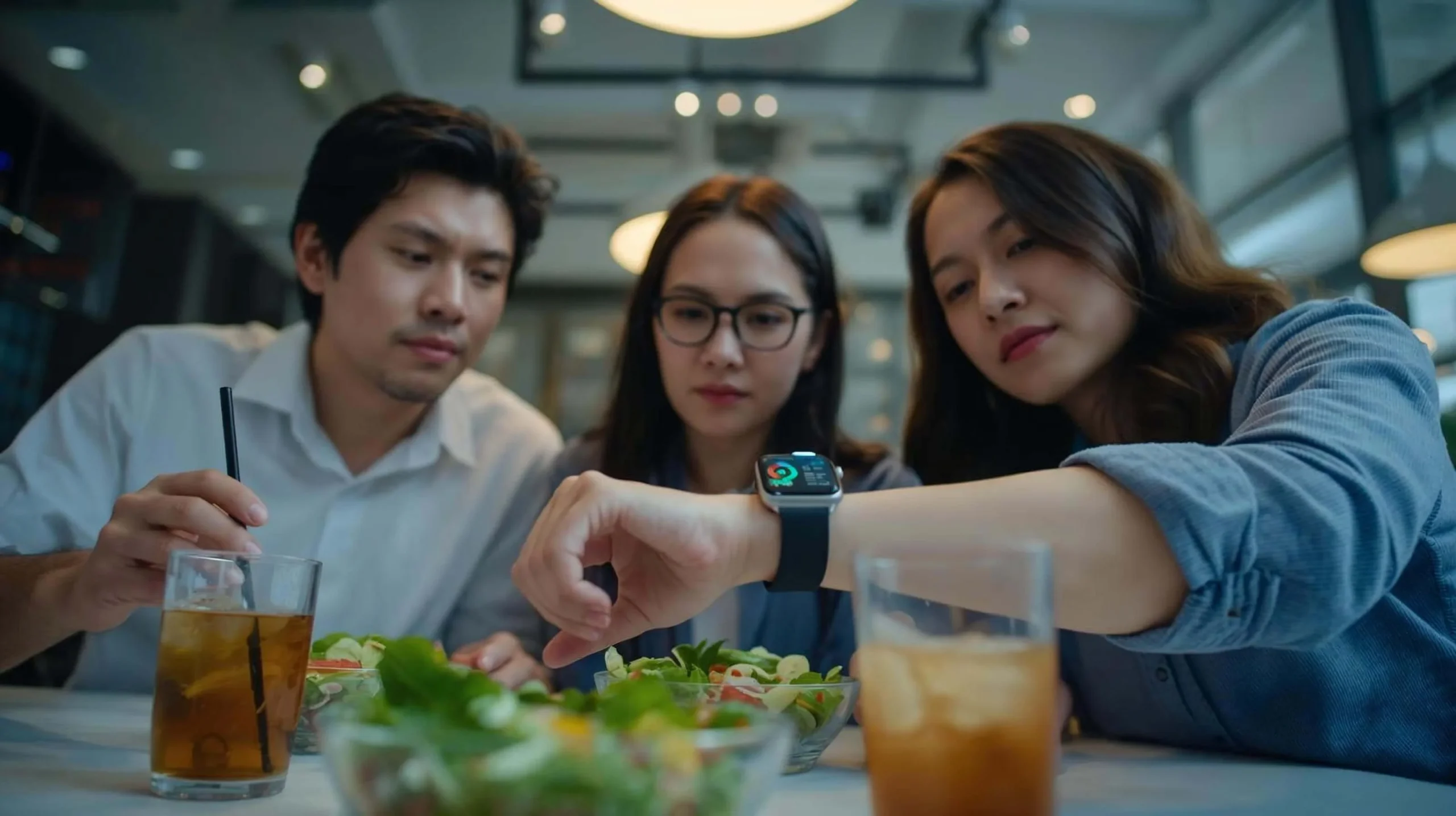
Listen closely to the conversation at the table next to you at Raffles City basement.
Five years ago, the lunchtime chatter followed a predictable script: BTO queue numbers, the humidity, or office politics. Today? It sounds like a medical conference run by amateurs.
“My deep sleep was only 45 minutes last night,” a young executive says, poking at his salad. “I think my cortisol is spiking.”
“You need to take magnesium,” his colleague replies instantly. “And check your glucose after that ice lemon tea. That sugar spike will kill your afternoon focus.”
Nobody laughs. Nobody thinks this is weird. They nod solemnly.
This is the new hum of Singapore. A quiet, pervasive anxiety about the “invisible” mechanics of our bodies. We aren’t sick—at least, not in the traditional sense. We aren’t coughing; we aren’t feverish. But we are worried. We are obsessed with optimization. And this shift from “feeling fine” to “tracking everything” is fundamentally rewriting our social interactions.
The Rise of the “Worried Well”
In the past, health was binary. You were either healthy, or you were in the hospital. Today, health is a spectrum, and we are all convinced we are sliding down the wrong end of it.
It’s the era of the “Worried Well.”
You can blame the technology, of course. The Apple Watch, the Oura Ring, the continuous glucose monitor (CGM). They have given us a dashboard for a machine we don’t fully understand. When your wrist buzzes to tell you your “Heart Rate Variability is Low,” you don’t just think “Oh well.” You think: Is it stress? Is it the laksa? Is it a silent stroke?
But it’s also cultural. In a hyper-competitive society like Singapore, where we have optimized our careers, our housing, and our children’s education, the body is the final frontier left to conquer.
We treat our biology like a KPI. And like any KPI, if the line isn’t going up (or down, in the case of cholesterol), we panic.
The “Kiasi” Evolution
Singaporeans have always been kiasi (afraid to die). But the flavor of that fear has changed.
Old school kiasi was reactive. It was avoiding fried food because you had a sore throat (“heatiness”). It was wearing a mask when the haze came. It was tangible.
New school kiasi is predictive. It is theoretical. It is fearing “inflammation” because a TikTok wellness influencer said seed oils are bad. It is fearing “insulin resistance” even though you aren’t diabetic. It is a fear of the invisible.
I have a friend who spent $300 on a gut microbiome test because he felt “sluggish.” The test told him to eat more kimchi. He did. He still feels sluggish. But at least now he has data.
| The Metric | The Old Conversation (Traditional) | The New Conversation (Modern) |
|---|---|---|
| Tiredness | “Did you work late?” | “What was your REM sleep score?” |
| Diet | “Don’t eat so much oily food.” | “Is that gluten-free? Does it spike insulin?” |
| Exercise | “Go jogging on weekend.” | “Zone 2 training for mitochondrial health.” |
| Supplements | Vitamin C for flu | Magnesium, Ashwagandha, NMN (Anti-aging) |
| Doctor Visit | Only when in pain | “Screening for Life” / Wellness check |
The “Healthier SG” Effect
We cannot ignore the top-down pressure. The government is actively engineering this anxiety—for a good cause.
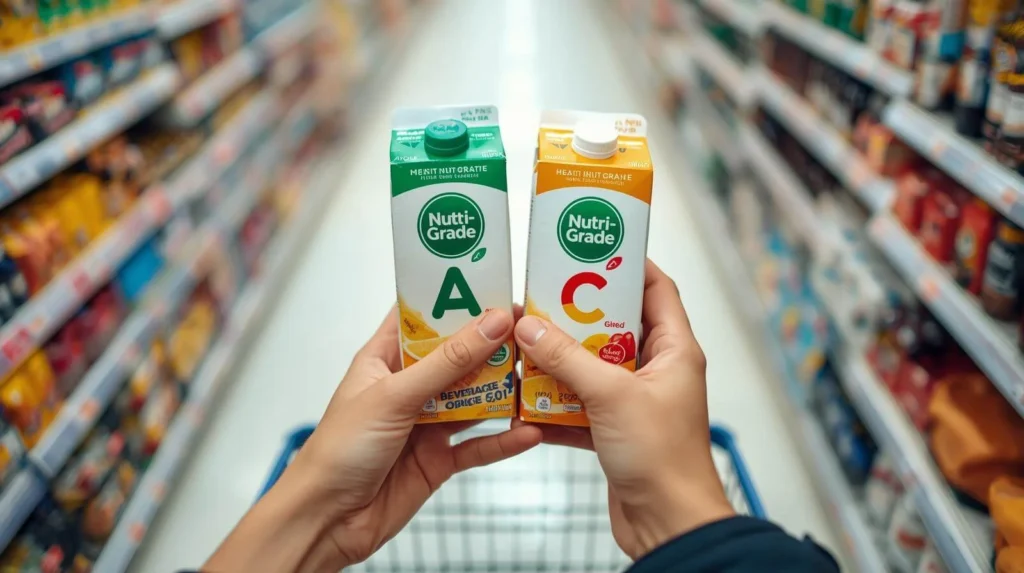
The Ministry of Health (MOH) realized years ago that an aging population would bankrupt the hospital system if we didn’t stop getting sick. So, they launched Healthier SG. They pushed the “Nutri-Grade” labels on our drinks. They gave us step trackers.
Policy papers at MOH describe this as “shifting the centre of gravity from acute care to preventive care.”
But on the ground, at the supermarket aisle, it looks like a mother staring paralyzed at two cartons of milk, trying to decide if the “C” grade oat milk is worse than the “B” grade dairy milk. The policy works, but it adds a layer of cognitive load to every single decision we make.
We are now hyper-aware of the sugar in our Milo. We are suspicious of the salt in our fishball noodles. The joy of eating is being slowly replaced by the calculation of nutrients.
The Comparison Trap
Here is the darker side of the trend: Health has become a status symbol.
In the office, wearing a Garmin Fenix or an Apple Watch Ultra signals something. It says: “I have the time and the money to care about myself.”
Comparing sleep scores has become a subtle flex. The colleague who says, “I got a 90 sleep score last night,” is essentially saying, “I am disciplined. I am in control.” The colleague who admits to a score of 50 is admitting to chaos.
This creates a new form of inequality. The “Bio-Hacking” lifestyle is expensive. Organic food costs more. Gym memberships cost more. Wearables cost more.
This quiet shift toward health optimization is also reshaping how Singaporeans spend their money.
In the heartlands, residents aren’t necessarily spending less — they’re spending differently, prioritizing essentials, wellness, and perceived “long-term value” over indulgence.
A deeper look at how everyday spending habits in Singapore’s heartlands are changing reveals the same underlying anxiety at work.
The wealthy get to optimize their longevity; the working class is still just trying to afford the cai fan with one meat and two veg.
The Doctor’s Dilemma
Talk to any General Practitioner (GP) in the heartlands, and they will roll their eyes—lovingly, but tiredly.
“Every day, I have young patients coming in,” says Dr. Lee, who runs a clinic in Bedok. “They are fit. They are healthy. But their watch told them their heart rate dipped to 48 bpm while sleeping. They think their heart is stopping. I have to explain to them that it means they are athletic.”
This is the paradox. We have never been healthier, statistically. We live longer than almost anyone else on Earth. Yet, we have never felt more fragile.
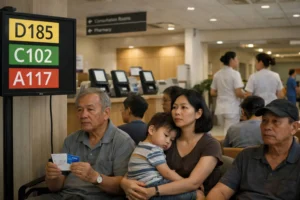
We are searching for problems that aren’t there yet. We are diagnosing ourselves with conditions we read about on Reddit. The waiting rooms are filling up not with the sick, but with the anxious.
Is It All Bad?
Not necessarily. Being aware is better than being ignorant. Catching high blood pressure at 30 is better than catching a stroke at 50.
But the conversation needs to change. We need to stop treating our bodies like machines that need to be debugged every morning. We need to remember that a human body is noisy. It fluctuates. Your heart rate will go up when you are stressed. You will sleep badly sometimes. That isn’t a malfunction; that’s just life.
Maybe we need to mute the notifications for a weekend. Maybe we need to eat the char kway teow without checking the glycemic index just once. Because worrying about your health is becoming the biggest health risk of all.
👟 From the Ground
“I saw an uncle at the park connector yesterday. He wasn’t wearing a smartwatch. He wasn’t checking his pace. He was just walking, hands behind his back, looking at the trees. He looked peaceful. Then a runner sprinted past him, checking his wrist, looking stressed. I know which one is technically ‘fitter’, but looking at them, I wasn’t sure which one was actually healthier.”