
Is Polyclinic Cheaper Than GP? Singapore Fees (2026)


It starts with a scratchy throat. Then comes the mental calculation: Do I trade my morning for a cheaper bill, or pay a premium to be back in bed in an hour? Here is the ultimate playbook for Singapore’s primary care dilemma.
🚀 TL;DR: Too Busy to Read?
- ✅ Polyclinic: Best for chronic meds & cheapest rates. Expect a 1-2 hour wait.
- ✅ Private GP: Best for fast MC (15-30 mins) and personal touch. Use CHAS for subsidies!
- ✅ Telemedicine: The “lazy” (but smart) choice for common flu. No travel needed.
The Everyday Question Singaporeans Ask
It’s 7:15 AM on a Wednesday. You wake up with a pounding headache and that unmistakable “I am not going to work today” feeling. Before you even reach for the thermometer, your brain is already processing the great Singaporean dilemma: “Aiyah, should I go Polyclinic or the GP downstairs?”
“Should I go GP or polyclinic?” — What people really mean
When locals ask which is better polyclinic or GP in Singapore, they aren’t questioning the medical qualifications. Doctors in both places are highly trained. What they are actually asking is: “How much of my day am I willing to sacrifice?”
It is a negotiation between your wallet and your watch. How to choose between GP and polyclinic Singapore comes down to personal priorities in that exact moment of vulnerability.
The two experiences feel totally different
If you’ve noticed how people talk about appointments, MCs, and “just in case” check-ups differently now, this shift is part of a bigger change in everyday health culture — see how clinic and health conversations are changing in Singapore.
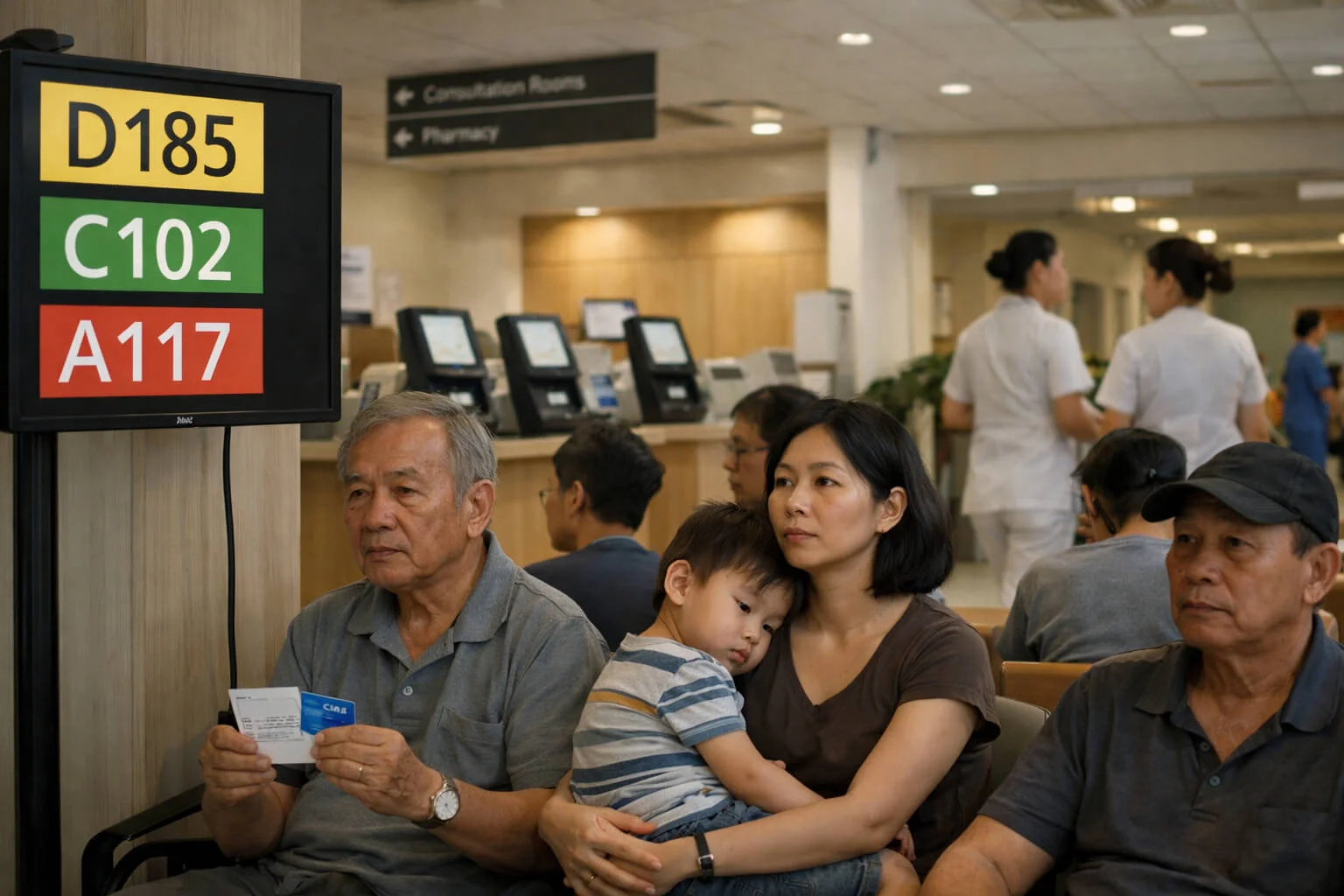
If you choose the polyclinic, you are entering a mega-system. It’s brightly lit, highly organized, and buzzing with hundreds of people. You are a number on a giant LED screen. If you choose the neighbourhood GP, the experience is smaller. You sit on a worn leather sofa. The clinic assistant might recognize you. The radio plays softly in the background. Both get the job done, but the emotional cost of the wait is vastly different.
Polyclinic vs GP — The Simple Comparison
Let’s strip away the emotions and look at the hard factors.
| Factor | Polyclinic | Neighbourhood GP |
|---|---|---|
| Cost (Citizens/PRs) | Lower (subsidised consult + meds) | Higher (consult + meds add up) |
| Waiting time | Often longer, especially peak days | Usually faster (15–45 mins typical) |
| Booking | HealthHub slots; walk-ins limited | Walk-in friendly; some digital queues |
| Best for | Chronic care, subsidised meds | Fast MC, minor acute issues |
Cost (Why the gap exists)
Polyclinics are heavily subsidized by the government for citizens and Permanent Residents (PRs). A standard consultation for a citizen might cost under $16. Medication is often incredibly cheap.
At a private GP clinic Singapore, the baseline consultation fee usually ranges from $35 to $60+, excluding medication. If you have a CHAS card, this gap narrows significantly, but the polyclinic almost always wins the absolute price war.
💳 Using Your CHAS Card at Private GPs
Don’t let the private fee scare you. Here is the typical subsidy for common illnesses (Cough, Flu):
*Note: Merdeka and Pioneer Generation get even higher subsidies, ah!
Waiting time (Why it varies)
The polyclinic waiting time Singapore residents tolerate is legendary. With an appointment, you might see the doctor in 30 minutes. Without one? You could be sitting there for two hours just for a “walk-in” slot, if available.
Conversely, the GP appointment Singapore wait time is generally much faster, averaging 15 to 45 minutes depending on the morning rush. You are paying the premium for speed.
Convenience (Location, hours, walk-ins)
Polyclinics operate on strict government hours. They close for lunch. They do not do late nights. Neighbourhood GPs, however, are dotted across every HDB void deck. Many open late into the night (8 PM – 10 PM) to catch the after-work crowd. For sheer accessibility, the family doctor Singapore wins.
Booking & Walk-In Reality (How It Works on the Ground)
The digitalization of healthcare has changed the game. “Walk-in” is slowly becoming a thing of the past.
Appointment mindset vs walk-in mindset
Ten years ago, you walked in, took a queue number from a machine, and sat down. Today, how to book a polyclinic appointment Singapore requires digital strategy. Polyclinics heavily discourage walk-ins for non-emergencies. If you just show up, you might be turned away or asked to book for the next day.
GPs are traditionally the champions of the walk-in clinic Singapore model, but even they are shifting. Many now use apps like MaNaDr or their own portals to manage digital queues.
HealthHub booking habits
HealthHub booking Singapore is practically a national sport. Slots for polyclinics are typically released on the app at specific times (often 10:00 PM the night before, or early morning). If you log in at 7:00 AM, you are competing with thousands of others. The app loads. You click. “No Slots Available.” It is a familiar frustration.
Peak hours people complain about
The polyclinic queue Singapore hits its peak on Mondays. Everyone who got sick over the weekend converges at 8:30 AM. The period just before closing time is another danger zone as staff rush to clear the backlog.
Who Each Option Fits (Non-medical scenarios)
Choosing isn’t a one-size-fits-all. It depends on who you are on that specific day.
🤔 Which one should you visit today?
Answer these 2 questions to decide:
➡️ Head to Polyclinic.
➡️ Visit your Neighbourhood GP.
Don’t forget to check your HealthHub app first, lah!
Working adults with time pressure
For the PMET rushing to get a Medical Certificate (MC) before a 10 AM Zoom call, the private GP is the only logical choice. Time is money. Sitting in a polyclinic for three hours to save $30 doesn’t make financial sense for someone who is paid by the hour or has pressing deadlines.
Seniors and caregivers
For the elderly managing chronic conditions (like hypertension or diabetes), the polyclinic is the holy grail of primary care Singapore. The medication subsidies are massive, and the system is set up for routine, long-term monitoring.
Families with kids
Logistics matter. Bundling a sick, crying toddler into a taxi to wait in a crowded polyclinic is a nightmare. Parents often default to the neighbourhood GP purely because it’s a 3-minute walk from their HDB block, offering the path of least resistance.
The Waiting Room Experience (What to Expect)
What to expect at a polyclinic vs GP Singapore goes beyond the clinical outcome. It’s about the vibe.
Why polyclinics feel “systematic”
A polyclinic feels like an airport. You register at a kiosk. You watch a screen. You go to “Zone B.” You see the doctor. You go to the pharmacy. It is an impressive, efficient machine, but it can feel impersonal. You rarely see the same doctor twice.
That “waiting-room dread” isn’t just about time — it’s often quiet, low-level health anxiety that builds in daily life.Read how quiet health anxiety shows up in Singapore.
Why GPs feel “personal”
The neighbourhood GP is intimate. The chairs might be older, but the doctor knows your history without reading a screen. They know you work in logistics and that stress causes your eczema. That relationship is why many pay the premium.
The hidden friction points
In polyclinics, the friction comes from the multi-step process (waiting to register, waiting to see doctor, waiting for medication). In GPs, the friction is usually the unpredictability of walk-in crowds. One family of four walking in ahead of you can add 40 minutes to your wait.
How People Reduce Waiting Time (Without Gaming the System)
You can’t skip the queue, but you can be smart about how to reduce waiting time at clinics Singapore.
Timing strategies
Avoid Mondays entirely if possible. For polyclinics, late morning (around 10:30 AM) sometimes sees a lull after the morning rush. For GPs, visiting right at the start of their evening shift (e.g., 6:00 PM) often beats the post-dinner crowd.
Preparation checklist
Bring your physical NRIC and any CHAS card. Use Singapore clinic appointment tips: complete the pre-registration on HealthHub before you arrive. If paying by Medisave (for eligible chronic conditions), have your details ready. Fumbling at the counter holds up the entire line.
There is a special kind of dread that comes with realizing you forgot your IC after waiting 45 minutes. Preparation is your best shield against clinic anxiety.
Is a Polyclinic Cheaper Than a GP in Singapore?
Yes, generally, polyclinics are much cheaper than private GPs if you are a Singapore Citizen (SC) or a Permanent Resident (PR). This is because polyclinic consultations and medications are heavily subsidized by the government.
For a Singaporean adult, a standard polyclinic consultation fee is around $15 to $20. In contrast, stepping into a private GP clinic will typically cost you anywhere from $30 to $80 just for the consultation, depending on the clinic’s location and whether you are visiting during after-hours. However, if you are a foreigner or an expat without PR status, the price gap narrows significantly, and sometimes a private GP might actually be the more convenient and similarly priced option.
Quick Comparison: Polyclinic vs. Private GP
To help you decide where to go for your next visit, here is a quick breakdown of the costs, waiting times, and subsidy differences between the two:
| Feature | Polyclinic | Private GP Clinic |
|---|---|---|
| Consultation Fee (SC Adult) | ~$15 – $20 | ~$30 – $80+ |
| Waiting Time | Longer (1 to 3 hours, unless booked via HealthHub app) | Shorter (Usually 15 to 45 minutes) |
| CHAS Subsidies | Not needed (Already heavily subsidized natively) | Applicable (Depends on CHAS Blue, Orange, or Green tiers) |
| Best For… | Chronic disease management, regular check-ups, budget-friendly care | Urgent acute illnesses (fever, flu, food poisoning), MCs, quick in-and-out |
Common Mistakes People Make
Choosing based on assumptions
Many assume the Polyclinic is automatically the best choice for everything. But for a simple one-off issue like a common cold, the combination of a GP consultation + retail pharmacy medication (buying your own Panadol) can sometimes rival the Polyclinic in efficiency and reasonable cost.
Not checking what services are available
Turning up at a GP for a complex blood test or X-ray might result in being referred to a hospital anyway. Polyclinics have labs on-site. Know what equipment your issue requires.
Turning a quick visit into a long one
GP vs polyclinic for minor issues Singapore guidelines suggest keeping it focused. Don’t go in for a cough and suddenly bring up your knee pain from five years ago. This backs up the queue for everyone else.
Quick answer:
- Fastest: Neighbourhood GP (usually 15–45 mins).
- Cheapest (Citizens/PRs): Polyclinic (subsidised consult + meds).
- Best for chronic care: Polyclinic (routine monitoring + meds).
- Best when time is tight: GP or teleconsult for simple MC.
☁️ Feeling Too Sick to Even Walk?
In 2026, Telemedicine is the real MVP for non-emergencies.
Quick Decision Checklist (Save this)
If your head is pounding and you can’t think, use this heuristic:
If you value speed, do this:
Look at your phone. If your regular GP has a digital queue app, book it from bed. If not, walk to the nearest private GP right when they open. You pay with cash; you save with time.
If you value cost, do this:
Open HealthHub. Secure an appointment. Accept the wait. Bring a book, put on your noise-canceling headphones, and enjoy the heavily subsidized healthcare system working for you.
If you value convenience, do this:
Consider Teleconsultation. If it’s just a standard flu that needs an MC, skip both the Polyclinic and the GP. Open DoctorAnywhere or MaNaDr, and consult from your couch.
If you’re wondering why queues feel longer lately, here’s a deeper breakdown of the bigger drivers behind it — why clinics feel busier in Singapore.
Official Context
The Ministry of Health (MOH) regulates both Polyclinics and private GPs. For the most accurate appointment booking and to view real-time availability, residents should use the official HealthHub Portal or the specific app for the respective Polyclinic clusters (SingHealth, NHG, or NUHS).
🕰️ One Small Moment
“I was sitting in a neighbourhood GP clinic in Toa Payoh. The doctor’s door opened, and an elderly auntie shuffled out. The doctor, a younger man in his 30s, followed her to the reception. ‘Auntie Lim, remember ah, drink water, not just Kopi,’ he said, in perfect Hokkien. She swatted his arm and laughed. You can digitize the booking system, and you can regulate the prices, but you can’t code that kind of community.”
Editorial Note
This guide is informational and reflects common real-world experiences in Singapore’s primary care system.
Prices, subsidies (e.g., CHAS), clinic policies, and appointment availability can change by provider and patient profile (Citizen/PR/Foreigner).
Always verify the latest details via HealthHub and official MOH sources.
Last updated: 23 Jan 2026.
What’s your “Clinic Survival” tip? 🇸🇬
We’ve all been stuck in a long queue at 8 AM. How do you beat the wait? Do you swear by a certain polyclinic or have a favourite GP who never fails?
Share your experience in the comments below! Your tip might help a fellow Singaporean save an hour of their morning.