
Why Household Costs Quietly Rise in Singapore

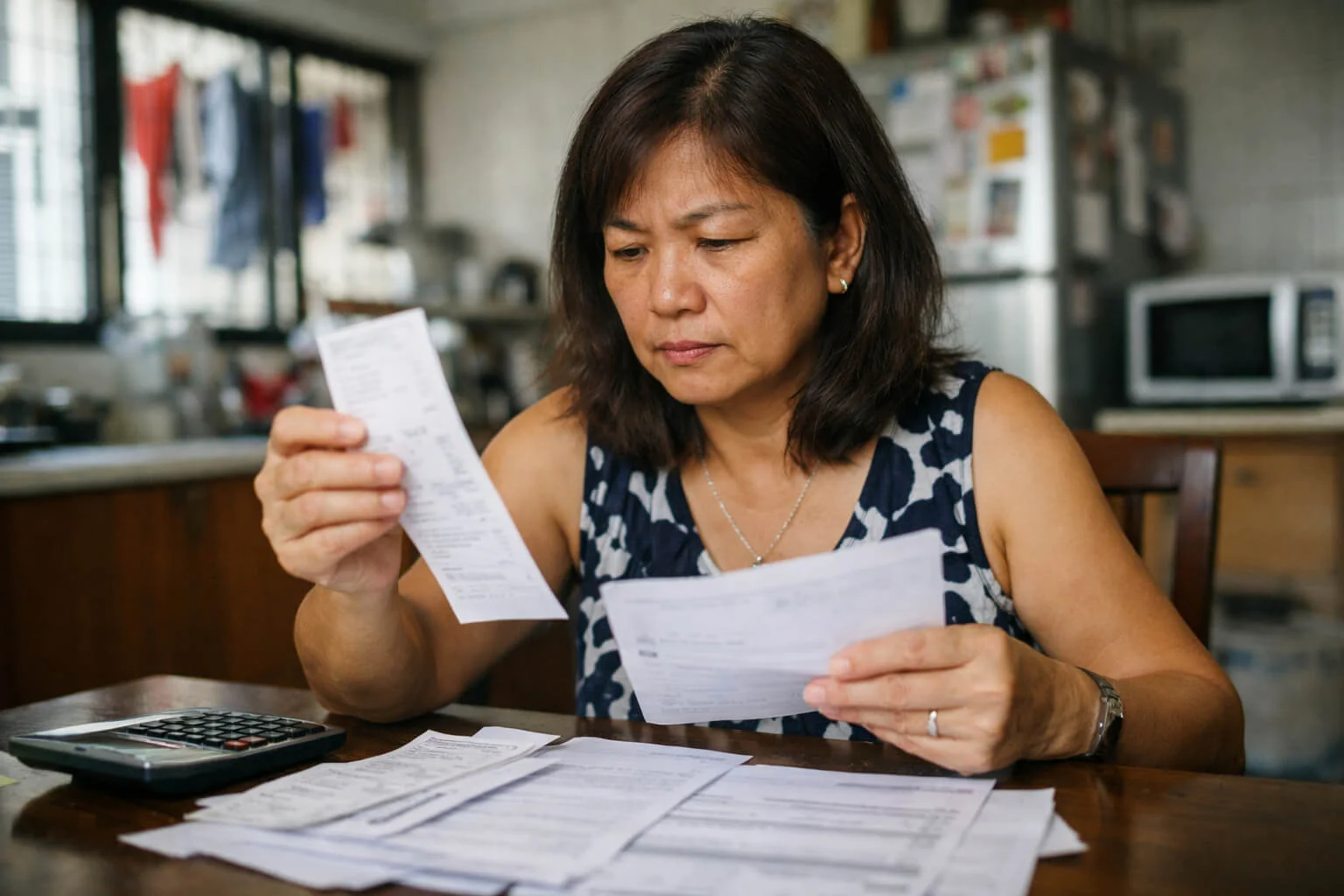

It isn’t usually a single giant bill that breaks the budget. Instead, it is the “drift”—the extra 50 cents on a kopi, the slightly higher electricity tariff, and the subscription you forgot to cancel. Here is how the cost of living quietly reshapes itself.
🕒 Fast Food for Thought
- The “Silent Leak”: It’s not just GST; it’s the 50-cent kopi hike and uncancelled apps.
- Shrinkflation: Your $5 chicken rice is still $5, but is the portion getting smaller?
- The Fix: Audit your “Lazy Tax” (Grab/Foodpanda) and re-anchor your spending baseline every 6 months.
Many Singapore residents don’t notice cost increases until their savings shrink. Here’s how micro-price shifts quietly reshape household spending habits.
In a fast-paced city like ours, we are conditioned to look for big economic shifts: GST hikes, property cooling measures, or COE record highs. However, the most significant impact on your wallet often comes from a singapore household cost increase that happens incrementally. We call this “Cost Drift”—the slow, almost imperceptible rise in daily expenses singapore guide readers often mention when they wonder where their paycheck went by the 20th of the month.
If you’re tracking broader employment trends, you may also want to read our Singapore job market signals guide to understand hiring shifts and sector momentum.
Understanding the cost of living singapore residents experience requires looking beyond the headlines. It’s about noticing the small price increases adding up singapore-wide, from the grocery aisle to the digital apps on your phone. If your singapore monthly expenses rising feels like a mystery, it is time to look at the micro-signals of urban inflation.
Understanding Cost Drift in Everyday Life
Cost drift is the silent expansion of your “baseline” spending. In Singapore, this often happens because we adapt to new price norms without realizing it. What used to be a $5 lunch becomes $6.50, and because it happened over twelve months, our brain treats it as “normal.” This unnoticed monthly expense increase singapore is hard to track because it doesn’t trigger the “alarm” that a sudden $100 fee would.
The psychology behind this is called “anchoring.” We often anchor our expectations to old cost memories (like the $3.00 chicken rice of 2018), leading to a constant sense of why daily expenses feel higher singapore today. When the drift happens across multiple categories—food, transport, and utilities—the cumulative effect is a significant singapore household cost increase.
New hires often misunderstand salary components — especially CPF deductions and bonuses. Our detailed Singapore payslip breakdown guide explains what actually affects your take-home pay.
Groceries and Food Spending Patterns
The supermarket is the frontline of cost drift. You might notice subtle price adjustments in supermarkets where a housebrand item increases by 10 cents, or a “2 for $X” promotion is replaced by a “2 for $Y” deal.
Another factor is portion size and value perception changes. Shrinkflation—where the price stays the same but the weight drops—is a classic example of everyday cost increase singapore households face. When you combine this with the Dining at hawker centres or food courts vs cooking cost shifts, where even a simple hawker meal now requires a more deliberate budget, the drift becomes a steady current.
If you’re preparing for offer discussions, review practical phrasing examples in our Singapore salary negotiation guidebefore responding to recruiters.
Transport and Mobility Expenses
While public transport is heavily regulated, fare adjustments over time are a reality of an aging infrastructure and rising energy costs. But for many, the real transport cost singapore drift comes from “convenience spending.”
The decision to take a ride-hailing car because it’s raining or you’re running five minutes late is a micro decision that adds up monthly. In 2026, with fluctuating surge pricing and platform fees, three “emergency” rides a month can quietly add $60 to your singapore monthly expenses rising total.
📊 Quick Check: Is “Cost Drift” Hitting You?
How many of these apply to you lately?
Utilities and Home Running Costs
Utility bill rising singapore concerns often peak during the hotter months. As we use more air-conditioning to combat the humidity, we become more sensitive to electricity and water usage. However, bills often rise even without lifestyle changes due to global energy market shifts. It’s the bills that rise without lifestyle changes—like the carbon tax or water tariff adjustments—that contribute most to the singapore household cost increase over a three-year period.
Digital and Subscription Creep
This is perhaps the most “invisible” part of the cost drift in urban living singapore. We live in an app ecosystem.
* **Streaming and Service Layering:** You start with Netflix, then add Disney+, then a news subscription, then a gym app.
* **Auto-Renewal Blind Spots:** $12.90 here and $9.90 there feels small, but “subscription creep” can easily account for $100 of everyday cost increase singapore residents ignore.
| Small Monthly Drift | Est. Cost / Month | Annual Impact |
|---|---|---|
| Daily 50¢ Kopi Hike | $15.00 | $180.00 |
| Unused News/App Sub | $12.90 | $154.80 |
| Weekly “Lazy” Delivery Fee | $24.00 | $288.00 |
*Based on average 2026 consumer habits in Singapore.
Recognising and Tracking Changes
How do you stop the drift? It requires household budget reflection methods that go beyond just looking at your bank balance.
1. **Year-Over-Year Comparison:** Don’t compare this month to last month; compare this January to last January.
2. **Awareness Techniques:** Spend one week tracking every single “micro-spend” (anything under $5).
3. **The “Subscription Audit”:** Every three months, look at your credit card statement and manually cancel one service you haven’t used in 30 days.
✨ The “10% Re-Anchoring” Strategy
If your monthly bills have quietly risen, try the 10% Cutback this month:
Pick just one category (e.g., dining out) and reduce it by 10%. Instead of major lifestyle changes, this micro-adjustment effectively counters the cost drift without feeling the pinch.
A personal note: I used to think I was great at budgeting because my “big bills” (rent, insurance, car) were fixed. Then I did an audit of my “Grab and Food Delivery” history for six months. I was shocked to find that my “lazy tax”—spending on convenience—had drifted up by nearly $150 a month over two years. I hadn’t become richer; I had just become more “comfortable” with spending. Now, I try to “re-anchor” myself by occasionally checking the prices of housebrand items to stay sharp.
Don’t Leave Money on the Table!
Make sure to maximize your CDC Vouchers at heartland shops before they expire. Also, check your U-Save rebates status via the SP App to offset the recent water and electricity tariff adjustments. Every dollar saved here fights the drift!
Quick Checklist (Save This)
✅ Do This
- Compare your utility bills year-over-year to spot usage vs price drift.
- Review all “Auto-Renew” subscriptions once a quarter.
- Opt for housebrands for basic pantry staples to offset grocery price increase singapore.
- Use the “SimplyGo” app to track your monthly public transport spend.
- Audit your food delivery apps for “hidden fees” like small order surcharges.
- Set a monthly “convenience budget” for ride-hailing and stick to it.
- Check for inflation impact singapore households updates via official consumer price indices.
- Re-evaluate your telco plan; newer SIM-only plans are often cheaper.
- Use cashback or rebate cards specifically for the categories where you spend most.
- Be mindful of “lifestyle inflation”—upgrading your habits as soon as you get a raise.
❌ Avoid This
- Do not assume your “fixed” expenses stay fixed forever.
- Do not ignore 50-cent increases in your daily coffee or lunch; they add up.
- Do not leave your air-con running on the “lowest” temperature (high energy drift).
- Do not stay on “legacy” insurance or banking products without checking for better rates.
- Do not fall for the “2 for $X” trap if you only need one.
- Do not ignore managing household spending singapore because “everything is expensive anyway.”
- Do not forget to use your CDC vouchers before they expire.
- Do not overlook the cost of bottled water vs carrying your own.
- Do not subscribe to apps “just for the trial” without a reminder to cancel.
- Do not neglect to track your “cash” spending; it’s where drift is hardest to see.
For readers considering income diversification, our Singapore side hustle guide covers legal considerations and realistic options.
Official Context & Financial Resources
For official data on consumer prices and household support, visit:
💬 Join the Conversation, Lah!
Where have you noticed the most “stealth” price increases lately? Was it your favorite bubble tea shop or your monthly electricity bill?
Tell us in the comments below! We’re compiling the best “Budget Hacks 2026” from our readers to feature in our next guide.
Editorial Note
This article reflects observed everyday spending patterns and behavioural trends among residents in Singapore. It is intended for general awareness and discussion, not financial advice or economic forecasting.