Why Your $5 Chicken Rice Feels Smaller Lately (It’s Not Just You)



That $5 bowl of noodles isn’t filling you up anymore because the volume has been quietly reduced by 15%. This strategy is called shrinkflation Singapore consumers face daily. Businesses do this because customers are highly sensitive to price hikes but relatively blind to subtle volume changes. Surging rent, supply chain disruptions, and severe manpower shortages force F&B owners to protect their food margins Singapore style—by silently shrinking the product instead of sparking outrage with a new price tag.
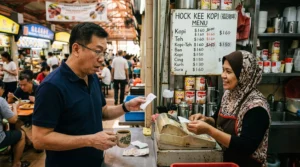
You sit down at your neighborhood kopitiam. You order the exact same plate of chicken rice you have been ordering every Tuesday for the last three years. The uncle charges you the usual $4.50. You sit down, pick up your fork, and realize something is off. The plate is the same size, but the mountain of rice looks more like a small hill, and the chicken slices are paper-thin.
You finish the meal in record time and walk away feeling strangely hungry.
This is not a glitch in the matrix. It is a highly calculated business maneuver. While everyone actively debates the growing gap highlighted in discussions about cost of living vs salary singapore households manage, there is a silent adjustment happening on our plates and in our grocery aisles. It is the art of the hidden price increase Singapore style. Rather than dealing with the severe backlash of printing new menus with higher numbers, operators are simply giving you less.
Welcome to the era of smaller portions Singapore residents just have to stomach.
The Psychological Barrier of the Price Tag
Why do businesses reduce portion size instead of raising prices Singapore consumers might actually understand? It all comes down to behavioral economics and the psychology of perceived value pricing.
Human beings are incredibly sensitive to absolute numbers. If a cup of kopi goes from $1.20 to $1.30, the cognitive friction is immediate. People complain, they take photos of the price board, and they threaten to boycott the stall. The price is a hard, undeniable metric. Volume, however, is a soft metric. Unless a customer brings a digital weighing scale to the hawker centre, a 10% reduction in noodle weight is almost imperceptible to the naked eye.
When you ask how businesses increase prices without customers noticing, this is the exact playbook. They rely on our visual habits. We look at the size of the bowl, not the density of the ingredients inside it. A grocery store will keep the cereal box the exact same height and width but make it slightly thinner. You grab it off the shelf, pay the same retail price, and only realize the deception when the bag inside is half-empty.
The Brutal Math of F&B Margins
To understand why food portions are getting smaller Singapore style, you have to look at the severe operational cost pressure businesses are drowning under. The cost of running an eatery goes far beyond the raw ingredients.
Commercial rent renewals are currently ruthless. Utilities have spiked. But the most critical factor destroying restaurant cost management is labor. Securing reliable staff is so difficult and expensive that many operators are desperately restructuring. You can see this shift in the way why singapore businesses small teams rely on multitasking just to keep the doors open. When an owner cannot afford to hire an extra prep cook, the menu has to be simplified.
Instead of dealing with complex, ingredient-heavy dishes, portions are standardized and shaved down. If a stall sells 300 bowls of noodles a day, cutting just 20 grams of meat from each bowl saves them 6 kilograms of raw protein daily. Over a month, that hidden adjustment pays the utility bill. It is survival math.
Expert Insight / Sector Analysis
“The concept of shrinkflation Singapore experiences is heavily tied to the country’s reliance on imported food. We import over 90% of our nutritional needs. When global supply chain costs surge due to geopolitical tensions or climate issues, local distributors pass those costs down immediately. F&B operators know that crossing certain price thresholds—like the $5 hawker meal or the $20 cafe main—triggers intense demand destruction. Shrinking the portion is the only remaining lever to maintain viability without triggering a massive drop in footfall.”
Labor Strategies and Operational Shifts
The manpower crunch forces more than just portion control. It forces a complete redesign of the business model.
When local hiring becomes financially unsustainable, companies scramble for alternatives. They start exploring why singapore smes hire contract workers to handle peak hour rushes without committing to full-time benefits. Others look outward, relying on the reasons why singapore companies hire international workers to fill back-of-house roles that local residents shun.
Even with these labor adjustments, the margins remain razor-thin. This is why you see massive central kitchens taking over. A single central facility pre-cooks the meals, packages them in strict, machine-controlled portions, and sends them to the outlets. This is why meals feel smaller but cost the same Singapore diners notice. The human element of an “extra scoop” from a generous hawker uncle is replaced by a digital scale in an industrial estate ensuring every single serving is exactly 180 grams. Not a gram more.
Digital Deception and The Shift Online
The phenomenon is not restricted to physical dining. The rise of delivery platforms has created the perfect environment for visual scaling tricks.
When you scroll through a delivery app, you are looking at highly optimized, close-up photography. There is zero physical context. A $14 rice bowl looks massive on a smartphone screen. When it arrives, the container fits in the palm of your hand. This disconnect is one of the subtle reasons why singapore businesses shifting online sales channels find it easier to manage portion size expectations. You cannot physically compare the product to anything else on the shelf or on the next table until you have already paid for it.
Furthermore, these digital platforms take a massive commission cut. To protect their food margins Singapore operators often create specific “delivery menus” where the prices are either marked up, or the portion reduction Singapore diners hate is aggressively applied just to offset the platform fee.
Real-World Shrinkflation Examples Singapore Restaurants Use
You see it everywhere once you know what to look for.
The classic curry puff that used to require two hands to hold without dropping crumbs is now a two-bite snack. The premium cafe latte is served in a thicker ceramic mug that holds 30ml less liquid than before. The famous fishball noodle stall that used to give you five handmade fishballs now gives you four, and they slice the fishcake incredibly thin.
Even large fast-food chains are participating. A standard “regular” fries serving today looks suspiciously like the “small” serving from five years ago. This gradual price increase strategy is brilliant because it happens slowly. By the time you realize how small the burger has become, you have already accepted it as the new normal.
Supply Chain Realities
We cannot solely blame greedy business owners. The reality of food cost increases Singapore faces is rooted in global logistics.
A cafe owner paying for premium dairy, imported coffee beans, and fresh Australian beef is watching their supplier invoices jump by 15% every few quarters. They cannot absorb that hit. Many businesses are actively looking into why singapore companies outsource vs hiring internal procurement teams, relying instead on massive supply aggregators to negotiate bulk discounts. Even then, the raw ingredient costs are punishing.
If they raise the price of a flat white to $8, the cafe empties out. So, they keep it at $6.50, but they pull a slightly shorter espresso shot and use a smaller cup. The customer perception of value remains somewhat intact because the price on the chalkboard hasn’t changed, but the actual value delivered has plummeted.
Navigating the Shrinking Plate
How shrinkflation affects consumers Singapore households is straightforward: you are spending more money to achieve the exact same level of caloric satisfaction. You end up buying a side dish because the main course wasn’t enough, entirely defeating the purpose of the “stable” price.
A personal note: I used to buy a specific brand of potato chips from the local supermarket every Friday. The bag was $4.50. Six months ago, the bag changed from a matte finish to a glossy finish. It looked more premium. The price was still $4.50. But when I picked it up, the air-to-chip ratio felt absurd. I checked the small print at the bottom corner. It went from 180g to 150g. A 16% reduction in volume, masked by a shiny new bag design. They didn’t raise the price; they just sold me more nitrogen gas.
✅ Do This
- Check the “price per 100g” label on supermarket shelves, not just the retail price tag.
- Support transparent hawkers who explicitly state volume (e.g., 200g of meat per serving).
- Compare the physical depth of takeaway containers, as many have false, raised bottoms to look full.
- Track your daily expenses Singapore style by noting how often you need to buy extra snacks after a “full” meal.
❌ Avoid This
- Do not assume a brand redesign is just for aesthetics; it usually hides a volume reduction.
- Do not rely entirely on delivery app photos to judge portion size expectations.
- Do not attack frontline F&B staff for smaller portions; these are corporate management decisions.
- Do not ignore the long-term impact of inflation Singapore food prices have on your monthly budget planning.
The reality of Singapore food pricing is that nothing is truly immune to inflation. Whether you pay for it with a higher number on your receipt or an emptier feeling in your stomach, the cost is being passed down to you. The next time you order your favorite dish, pay attention not just to what you are paying, but to exactly what you are getting in return. The era of cheap, massive portions is over. We are now paying for the illusion of stability.
Ege Sg is a seasoned analyst focusing on Singapore’s evolving economic landscape and consumer trends. Based on the ground in Singapore, he specializes in dissecting how global supply chain shifts and local manpower crunches directly impact the daily lives of residents—from the price of kopi to the shrinking portions of hawker favorites. His work aims to bridge the gap between complex fiscal policies and the actual “heartland” experience.
This analysis is part of SG Vital’s 2026 Living Cost Series. Fact-checked against MTI and SingStat data for accuracy and local relevance.
Frequently Asked Questions
Official Context & Economic Resources
To understand the official metrics regarding consumer price indexes, inflation rates, and fair trading practices, refer to these local authorities: