The Real Reason Some Singapore Shops Always Look Empty
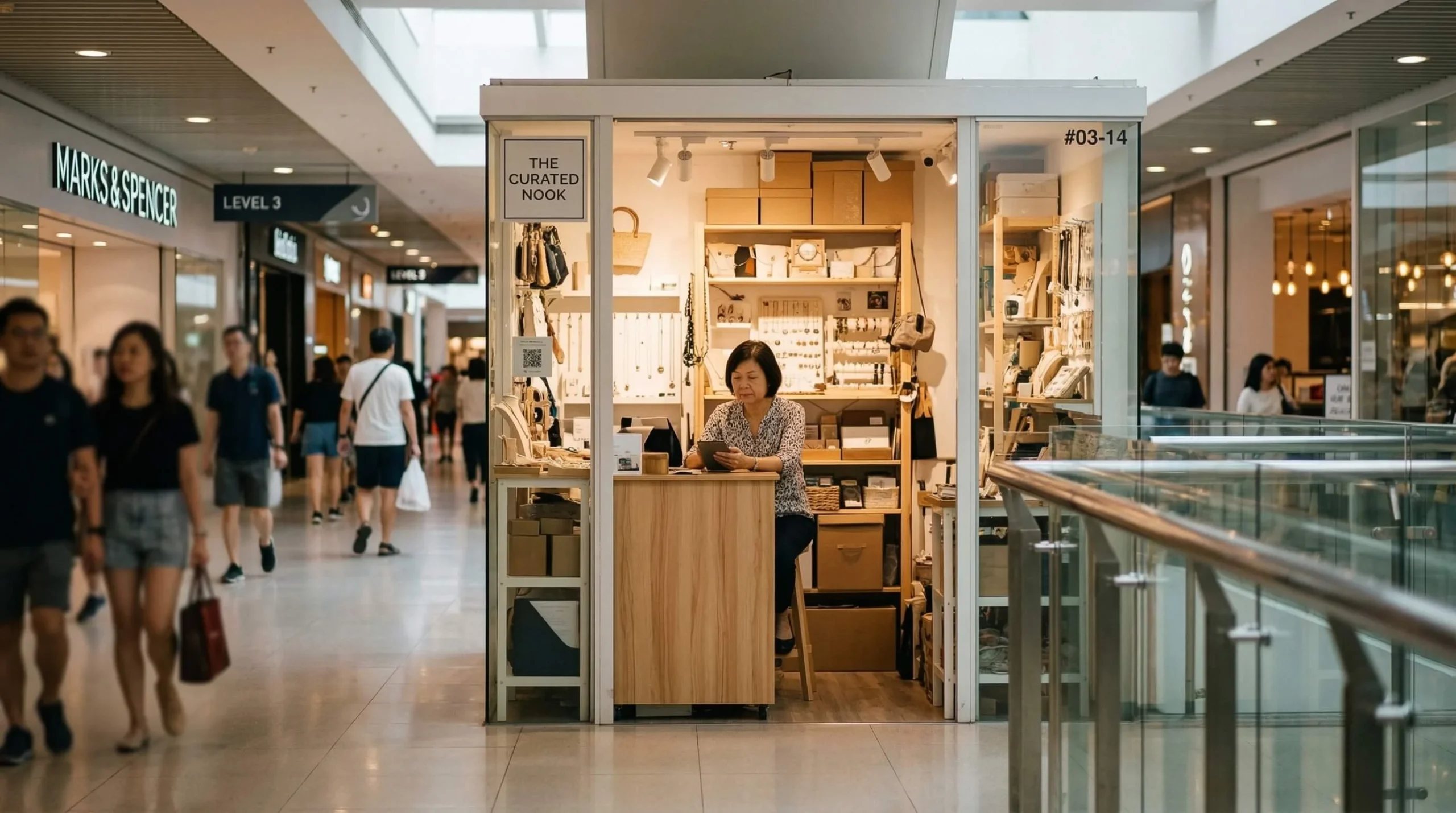

You walk through a mall or heartland shopping centre and see the same small shop that’s been there for years. Hardly any customers inside, lights on, but the place looks almost empty most days. Yet it never closes. This “empty shops Singapore” phenomenon puzzles many people — how do they pay the rent? Why don’t they shut down? The answer is rarely what people assume. Many of these shops survive through business models that don’t rely on constant foot traffic. This guide explains the real reasons some stores look empty but stay open for years in 2026.
TL;DR – Why Empty Shops Survive
- Many operate on low foot-traffic models: appointment-only, wholesale, online orders or niche products.
- High margins on specialty items or corporate contracts can cover rent even with few walk-in customers.
- Some are loss-leaders or part of larger landlord strategies to keep mall occupancy looking healthy.
- Owners often have low personal overheads or other income sources.
- It’s not always struggling — sometimes it’s smart, quiet business strategy.
Have you ever walked past the same quiet shop for years and wondered how it’s still open? In Singapore, some stores look empty almost every day — yet they survive for a decade or more. The truth is that many of these businesses run on strategies most shoppers never see.
The Business Models That Don’t Need Crowds
Many shops that look empty are not struggling — they simply don’t need constant walk-in customers to survive. Some run on appointment-only systems, others focus on wholesale or corporate contracts, and many have moved most sales online while keeping a physical showroom for credibility. The empty shopfront is just the visible part; the real money often comes from channels you can’t see.
If you’re running your own small business and feeling the same pressure, our why SMEs fail Singapore guide shows how cash flow and rent decisions can make or break a shop in the first few years.
Why Some Singapore Shops Look Empty but Stay Open
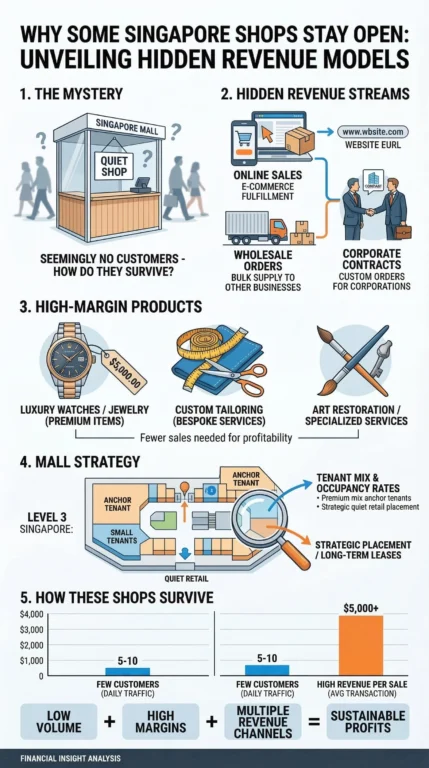
Many Singapore shops appear empty because their revenue does not depend on daily walk-in customers. Instead, they rely on high-margin products, online sales, wholesale orders or appointment-only services. Even a few transactions per day can cover rent in high-value niche businesses.
High Rent + Low Foot Traffic = Smart Strategy?
Commercial rents in Singapore are expensive, yet some shops stay open with very few customers. The secret is high margins. A specialty watch repair shop or custom tailoring business may only need 3-4 customers a day to cover costs if each sale is S$300–800. The owner isn’t relying on volume — they’re relying on value.
Why some shops stay open without customers?
Because their revenue comes from high-value, low-frequency sales or invisible channels like wholesale and online orders, not daily foot traffic.
💡 Did You Know?
Some Singapore malls deliberately keep certain units occupied even with low sales because a completely empty shopfront hurts the entire mall’s image and foot traffic. Landlords sometimes offer lower rents or flexible terms to “anchor” shops that bring steady (even if invisible) wholesale or online revenue.
The Landlord and Mall Strategy Angle
Malls don’t want completely empty units because it hurts the overall image and scares away other tenants. Some landlords keep “quiet” shops with lower rents or flexible terms because they help maintain occupancy rates and foot traffic flow. It’s not charity — it’s part of tenant-mix strategy.
If rising costs are making you feel financially stuck even with a good salary, our middle class financially stuck guide explains how the same pressures affect both individuals and small businesses.
Other Hidden Revenue Streams
Some “empty” shops earn most of their money through corporate bulk orders, online platforms, or as showrooms for bigger businesses. Others are run by owners who have other income sources and treat the shop as a passion project or semi-retirement activity. The shopfront is more about presence than daily sales.
If you’re planning for the long term, our how much to retire in Singapore guide shows how some shop owners use these low-key businesses as part of their retirement strategy.
Mini Quiz: Why Does That Shop Look Empty? (Tap to reveal)
- Hardly any customers but it’s been open 8 years:
Click for answer
Likely niche or appointment-based model.
- Shop is always quiet but owner drives a nice car:
Click for answer
Wholesale or online revenue — not walk-in sales.
- Prices seem high and few people browse:
Click for answer
High-margin specialty items that need very few sales to survive.
When an Empty Shop Is Actually a Warning Sign
Not every quiet shop is thriving. Some are slowly bleeding money and the owner is hoping for a turnaround or waiting for the lease to end. The difference is usually visible in maintenance — thriving quiet shops look neat and cared for, while struggling ones start looking tired.
How empty shops survive Singapore?
Through high-margin niche products, wholesale revenue, online sales or landlord support. Survival depends on keeping overheads low and having multiple revenue streams.
✅ What Smart Shop Owners Do
- Diversify revenue (online + wholesale + showroom)
- Keep fixed costs as low as possible
- Focus on high-margin items instead of high volume
- Build repeat corporate or loyal customers
❌ Common Mistakes
- Relying only on walk-in traffic in low-footfall locations
- Taking on expensive long leases too early
- Keeping the shop open just because “it’s always been there”
Real Stories from Singapore Shop Owners
“My watch repair shop looks empty most days but I only need 4-5 customers a day to cover everything. Most of my work comes from referrals and corporate clients.” – Mr Tan, 12 years in business
“People think I’m struggling because the shop is quiet. Actually 70% of my sales are online and wholesale. The physical shop is just for credibility.” – Sarah, online + offline hybrid owner
Expert Insight – Retail Consultant (15 years advising Singapore SMEs)
“The shops that look empty but survive have usually moved beyond the old ‘more customers = more money’ model. They focus on margin per transaction and multiple revenue streams. The ones that close are often the ones still waiting for walk-in crowds that no longer exist.”
A Personal Note
I’ve walked past the same “quiet” shops for years and always wondered how they stay open. After talking to several owners, I realised many are doing better than they look. The lesson is simple: in Singapore retail, visible busyness doesn’t always equal success. Quiet can be profitable if the model is smart.
Official Resources & Further Reading
Noticed any “always empty but still open” shops?
Tell us in the comments — what do you think keeps them going? Have you seen one suddenly close or thrive unexpectedly? Your observations help everyone understand the real retail picture in Singapore.
Some Singapore shops look empty but stay open for years because they’ve built business models that don’t depend on constant walk-in traffic. Understanding these strategies helps consumers see the bigger picture and business owners learn what actually works in our high-cost environment. The ones that survive quietly are often the smartest operators of all.
While these retail realities affect your daily spending, don’t forget the bigger financial picture. Our middle class financially stuck guide, salary guide by industry, cost of living 2026 guide, emergency savings guide and how much to retire in Singapore guide all help you stay ahead of these small but constant pressures.

About the Author: Ella Dirlasso
Ella is a senior business correspondent with over 8 years of experience analyzing Singapore’s SME landscape and retail economy. Her on-the-ground reporting helps Singaporeans decode market trends, cost-of-living changes, and the hidden mechanics of local heartland businesses.