After the Announcement, Singaporeans Are Reacting More Quietly Than Expected



Five years ago, a major policy shift would have sparked a week of angry Facebook essays. Today? We just forward the link, calculate the cost, and go back to work.
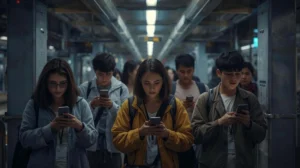
The breaking news notification lit up phones across the MRT carriage at exactly 6:00 PM.
I watched. I waited for the groan. I waited for the “Walao eh!” from the uncle in the corner. I waited for the furious typing of a 500-word rant on Facebook.
Nothing happened.
A lady in a blazer read the headline—something about a new levy adjustment or a transport fare tweak—and simply swiped the notification away. A student looked at it, sighed, and went back to TikTok. The uncle just closed his eyes.
The silence was deafening. And it was telling.
Something fundamental has broken—or perhaps evolved—in the Singaporean psyche. We used to be a nation of vocal complainers. We were famous for it. We had opinions on everything from the color of the HDB void deck to the font size on the ERP gantry. But recently, a new mood has settled over the island. It isn’t agreement. It isn’t happiness. It’s a ruthless, exhausted pragmatism.
The Death of the “Keyboard Warrior”
To understand this silence, you have to look at where the noise went.
In the mid-2010s, social media was the town square. Every announcement was met with a firestorm of comments. “Keyboard Warriors” were the unofficial opposition, dissecting every government press release with anger and sarcasm.
But today, scroll through the comment sections of the major news outlets. The fire is gone. You see a few bots. You see a few tired jokes. But the passionate, multi-paragraph essays? They have vanished.
“Complain also no use,” says Mr. Lim, a taxi driver I spoke to later that night. “Write long long for what? Government already decide. Better I save my energy, drive two more trip, cover the cost.”
This is the shift. We have moved from a “Political” mindset to an “Operational” mindset. We have realized that the feedback loop is often a placebo. So, we stopped engaging with the *theory* of the policy and started focusing entirely on the *logistics* of surviving it.
The “Workaround” Culture
We are skipping the grief stages. We used to go: Denial -> Anger -> Bargaining -> Depression -> Acceptance.
Now, we go: Announcement -> Acceptance -> Calculation.
When the plastic bag charge was announced, there was a brief grumble. Then, silently, everyone just started buying bulk bin liners from Shopee. The problem was solved logistically, not debated philosophically.
When the plastic bag charge was announced, there was a brief grumble. Then, silently, everyone just started buying bulk bin liners from Shopee. The problem was solved logistically, not debated philosophically.
When the ERP 2.0 unit was revealed to be bulky, the online mockery was intense but short-lived. Within weeks, the conversation shifted from “Why is it so ugly?” to “Where is the best workshop to hide it?”
We have become a nation of project managers. We treat every government announcement not as a topic for debate, but as a new constraint in the project of our lives. We don’t protest the constraint; we just optimize around it.
It feels a bit robotic, doesn’t it? Like we are all just NPCs in a game accepting the new patch notes without reading them.
| Reaction Stage | The “Old” Singapore (2015) | The “New” Singapore (2026) |
|---|---|---|
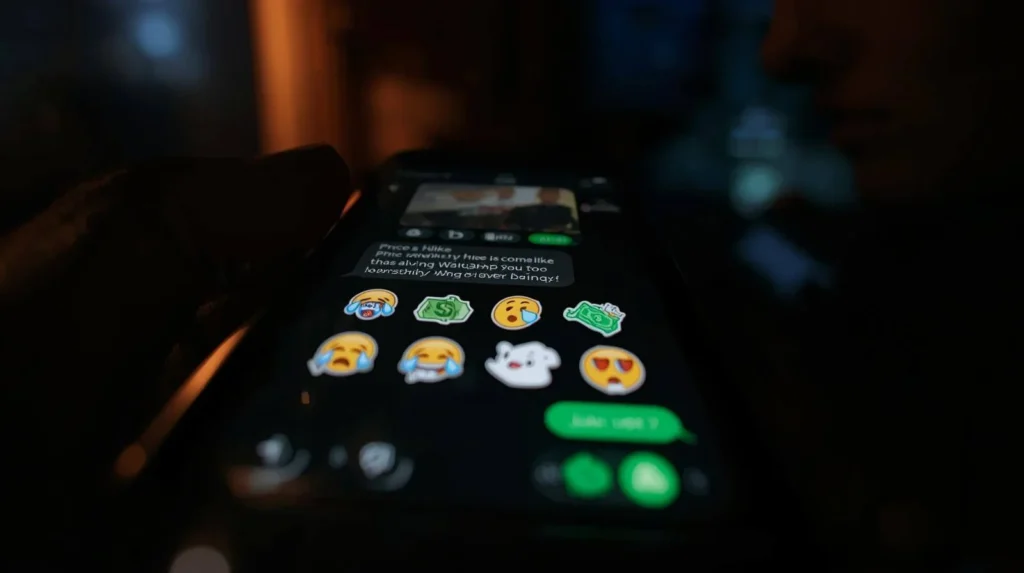
| Immediate Reaction | Share on Facebook with angry caption | Share on WhatsApp: “Eh price up again.” |
| Action | Sign online petition | Check bank balance / adjust budget |
| Conversation | Public debate in comments | Private venting in Telegram groups |
| Mindset | “Why are they doing this?” | “How much will this cost me?” |
The “Dark Social” Retreat
But don’t mistake silence for consent.
The noise hasn’t disappeared; it has gone underground. Marketers call this “Dark Social.” It’s the conversations happening in encrypted WhatsApp family chats, in Telegram groups, and over private dinners.
That is where the real reaction is happening. And because it is private, it is more honest, and perhaps more cynical.
In public, we are polite. We nod at the SDA. We scan the QR code. We accept the fare hike. But in the private group chat, the memes are savage. The resignation turns into dark humor. We aren’t fighting the system anymore; we are mocking it quietly from the safety of our own bubbles.
This creates a dangerous illusion for policymakers. They look at the “social listening tools” and see low negative sentiment. They think, “Great, the citizens are happy.” They are wrong. The citizens have just muted the group chat.
The Cost of Fatigue
There is a weariness in the air. You can feel it in the queues.
We have been through a pandemic, a GST hike, a cost-of-living spike, and a digital transformation, all in five years. We are “change-fatigued.”
The human brain has a limited bandwidth for outrage. When everything is a “crisis” or a “necessary adjustment,” eventually nothing is. We have normalized the state of constant flux. The announcement of a new policy feels less like a shock and more like just another Tuesday.
The “Boiled Frog” Syndrome:
We are adapting so fast that we don’t realize how much the water temperature has risen. We absorb the 10-cent increase here, the 1% hike there, the new app requirement there. We are proud of our resilience. “Singaporeans can survive anything,” we say.
But resilience can look a lot like numbness.
Official Context
The government actively monitors public sentiment through REACH (Listening Points). They acknowledge that “silent majorities” exist, but often interpret silence as tacit acceptance rather than fatigue. The challenge for future policy is to re-engage a population that has learned to tune out.
⏳ After Watching This for a While
“I sat in the train for another five stops. More notifications came in. More people read them. No reaction. The train just kept moving, humming along the tracks. We have become just like the train: efficient, on time, moving exactly where we are told, but completely silent about the destination. It works. But I miss the noise. I miss the passion. I miss the feeling that we believed our voice could stop the train.”