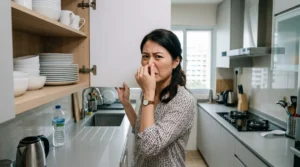
Why Daily Life in Singapore Feels More Tense — Even Without a Crisis

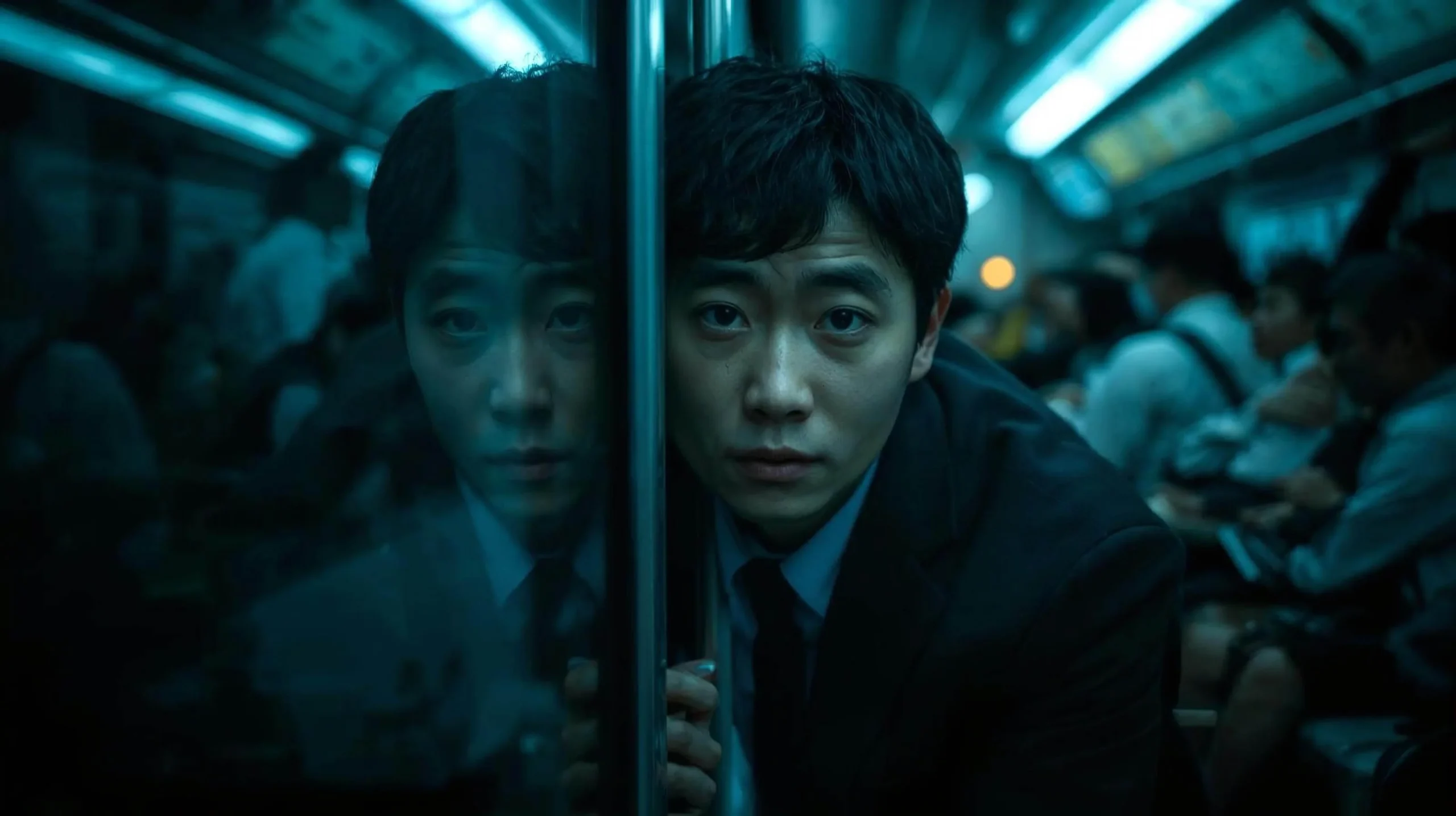

There hasn’t been a crisis. There hasn’t been a lockdown. Yet, if you stand still in Raffles Place or Bedok Central, you can feel it: a humming, low-level vibration of anxiety that wasn’t there five years ago.
It starts in the morning. You step out of your flat. The sky is the same shade of pale grey-blue. The humidity hits you with the same familiar weight. The lift arrives at the same speed.
But when the doors open, and you step in with a neighbour, something is different.
Five years ago, there might have been a nod. A mumbled “Morning.” Today, there is a swift, almost aggressive aversion of eyes. He looks at his phone. You look at yours. You stand in the corners, maximizing the distance between you as if proximity itself is a threat.
This is the new texture of daily life in Singapore. It isn’t defined by a singular, catastrophic event. There are no riots in the streets. The GDP is growing. The cafes are full. But beneath the polished surface of our efficiency, there is a brittleness. A sense that everyone is holding their breath, waiting for a pin to drop.
It is a tension that lives in the shoulders, in the jaw, in the split-second decision to press the ‘Close Door’ button even though you see someone running for the lift. It is the feeling that life in Singapore lately has become a zero-sum game where kindness feels like a luxury we can no longer afford.
Why daily life feels slower in older HDB neighbourhoods
The “MRT Elbow” Phenomenon
To diagnose the mood of a city, you must check its arteries: the public transport system.ƒ
The MRT has always been crowded. That is a fact of urban life. But the *quality* of the crowd has shifted. In the past, the crowd was fluid. It moved. It compressed and expanded like a living organism.
Today, the crowd is rigid. It is calcified.
Watch the doors open at Jurong East during peak hour. There is no longer a negotiation. There is a shove. People do not move into the centre of the carriage; they plant themselves near the door like sentries, guarding their square foot of space with hostile body language.
The silence is heavy. It isn’t a peaceful silence; it is a defensive silence. Every pair of ears is plugged with noise-canceling buds. We have built walls of sound to protect ourselves from the everyday stress in Singapore. If someone accidentally bumps into another, the reaction is instant and disproportionate. A sharp “tsk.” A glare. A muttered curse.
It feels like everyone is walking around with a “battery low” warning flashing in their eyes. We have no buffer left. The slightest friction—a bag catching on a turnstile, an EZ-Link card failing to read—sparks a flash of irritation that feels dangerous.
The Death of “Small Talk”
This tension has bled into our interactions with the people who keep the city running.
I sat at a hawker centre in Toa Payoh and observed the drink stall for thirty minutes. In that time, I counted forty transactions. Do you know how many involved eye contact? Three.
The script has been stripped to the bone. “Kopi O.” “$1.40.” *Beep.* Gone.
The “Uncle, how are you?” is gone. The “Auntie, business okay?” is gone. Singapore daily stress has turned us into transaction machines. We treat service staff not as neighbours, but as vending machines that occasionally talk back.
And the staff feel it too. They are shorter with us. They slam the cup down a little harder. They don’t smile. It is a feedback loop of misery. We give them no warmth, so they give us no warmth, which makes us feel justified in our coldness.
This loss of everyday life Singapore pleasantries might seem trivial, but it is the lubricant of society. Without it, the gears start to grind. The friction increases. Every interaction becomes a potential conflict rather than a connection.
Why older HDB kopitiams feel quieter than before
The “Always On” Fatigue
Why are we like this? Why does Singapore feels different?
It is because the workday no longer has a start or an end. It has become a continuous, low-humming state of being.
Technology was supposed to free us. Instead, it has put the office in our pockets. I see it on the bus: young executives furiously typing on Teams at 7:30 PM. I see it at the playground: fathers pushing swings with one hand while scrolling emails with the other.
We are physically present in our neighbourhood atmosphere, but mentally, we are still in the meeting. We are effectively “at work” 16 hours a day. This creates a state of chronic hyper-vigilance. Our brains are never in “rest mode”; they are always in “standby mode,” waiting for the next notification.
When you are in standby mode, you cannot relax. You cannot be patient. You cannot enjoy the slow walk to the market because your internal clock is racing against a deadline that doesn’t exist.
We are acting like we are in a war zone, except the enemies are emails and the bombs are calendar invites.
| The Situation | The Old Reaction (Relaxed) | The New Reaction (Tense) |
|---|---|---|
| Lift Door Closing | Hold the door for neighbour | Press “Close” frantically |
| Slow Walker | Overtake gently | “Tsk” loudly and aggressive swerve |
| Hawker Queue | Chat with friend | Check phone, look annoyed |
| Wrong Order | “Never mind, small thing” | “Why so simple also wrong?” |
| Red Traffic Light | Wait patiently | Jaywalk if no car within 50m |
The “Space” Invaders
We are also fighting a silent battle for space.
Singapore has always been dense. But recently, the density feels heavier. It feels like there is nowhere to hide. The parks are full. The malls are full. The cycling paths are a battlefield of PMDs and pedestrians.
In public spaces Singapore offers, the unwritten rules of etiquette are breaking down under the pressure of numbers. People play music on speakers. People cough without covering mouths. People stop at the top of escalators.
These are subtle changes in Singapore society, but they accumulate. Each small violation of etiquette feels like a personal attack. We start to view our fellow citizens not as a community, but as obstacles to be navigated.
The “Kampung Spirit” relied on having enough space to breathe. When you are elbow-to-elbow, the spirit evaporates, replaced by a survivalist instinct.
The Comparison Trap
Social media has added a layer of psychological tension that is invisible but suffocating.
Why life feels more stressful in Singapore is partly because we are constantly watching everyone else “winning.” You open Instagram on the bus home. You see your friend’s Omakase dinner. You see your ex-colleague’s Europe trip. You see someone’s new condo key collection.
Then you look up. You are on the bus. You are tired. You are going back to a messy flat.
The gap between the “curated life” we see on the screen and the “actual life” we are living creates a dissonance. It makes us feel like we are falling behind, even if we are doing fine. This generates a background radiation of dissatisfaction. We are running a race we didn’t sign up for, against opponents we can’t see.
The “Cost of Living” Ghost
We said no economic graphs. But we must acknowledge the ghost in the room.
You don’t need a CPI chart to feel the tension of money. You feel it when you order Cai Fan and hesitate to add the fish. You feel it when you look at the Grab fare and decide to walk in the rain instead.
It is the tension of *constriction*. It is the feeling of options narrowing. Why people seem more irritable in Singapore is often because they are doing mental math every minute of the day. Calculating the lunch. Calculating the electricity. Calculating the weekend.
When your brain is constantly processing financial survival, it has no bandwidth left for patience. It interprets a slow barista not just as an inconvenience, but as a waste of time, and time is money, and money is scarce.
What Has Changed in Singapore Daily Life?
Ultimately, what has changed is our capacity for “slack.”
Engineers build slack into systems—loose ropes, extra margins—so that when shocks happen, the system doesn’t break. We have removed the slack from our lives. We have optimized our schedules, our finances, and our interactions to the breaking point.
We are efficient. We are productive. We are “Smart.” But we are also brittle.
Living in Singapore now feels like walking on a tightrope. As long as the wind doesn’t blow, we are fine. But we are terrified of the wind.
The tension you feel isn’t paranoia. It is the collective vibration of 5 million people who are all trying to keep their balance at the same time, without a safety net.
Official Context
The government recognizes the mental strain of modern urban living. The Health Promotion Board (HPB) offers resources under the “MindSG” initiative to help residents manage stress. Additionally, the Land Transport Authority (LTA) runs continuous “Graciousness” campaigns (like Stand-Up Stacey) to remind commuters that a little patience goes a long way in making the journey bearable.
🕰️ One Small Moment
“I was standing at the traffic light in Orchard. It was red. A young man stepped out onto the road, impatient, trying to jaywalk. A taxi honked at him. He spun around and screamed. It was a primal, raw scream. It lasted two seconds. Then the light turned green. He adjusted his backpack, looked down at his phone, and walked across the road as if nothing had happened. But for those two seconds, the mask slipped, and I saw exactly how tired we all really are.”